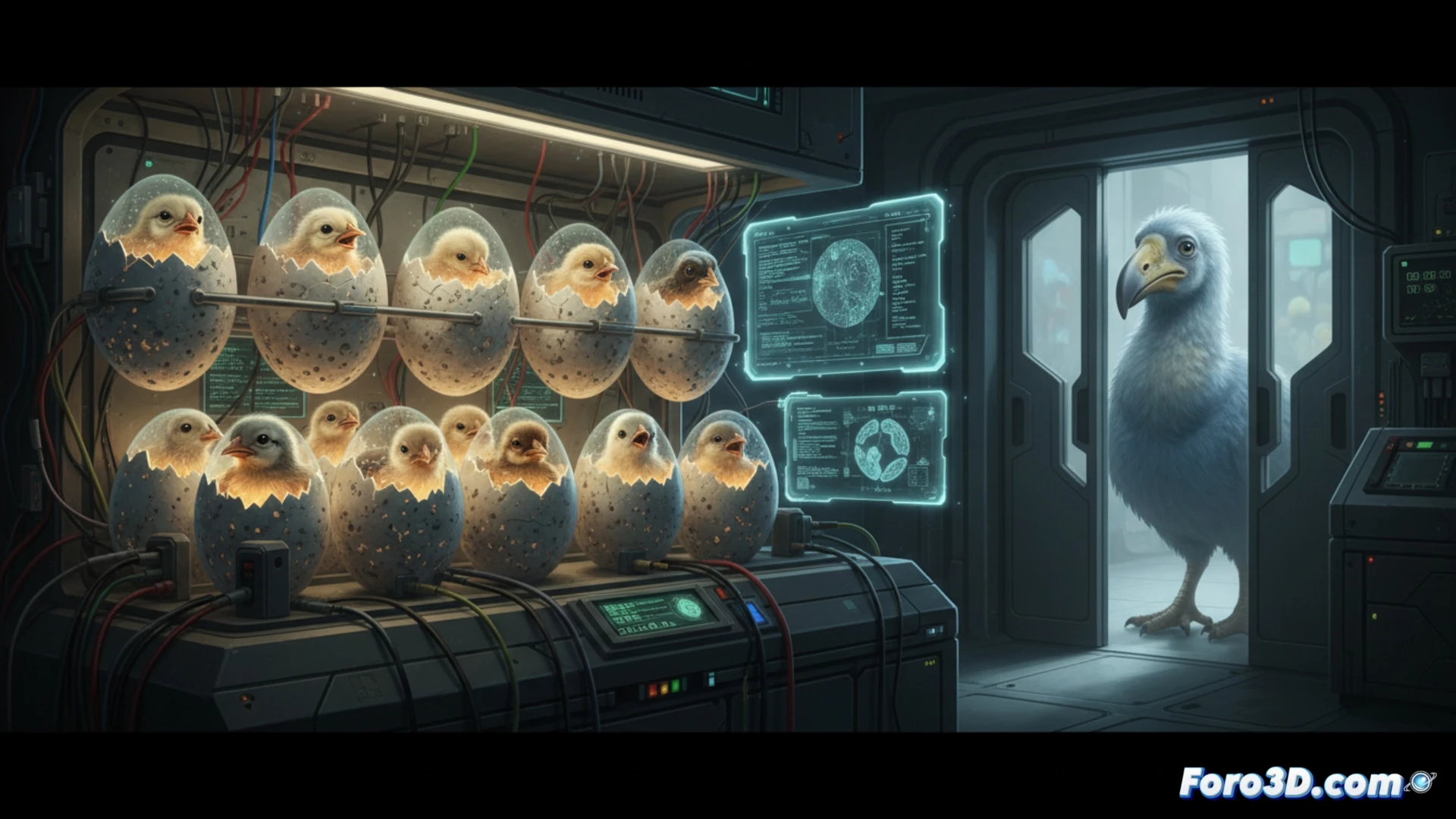
A team of scientists has successfully incubated 26 healthy chicks from eggs manufactured with 3D printers. The breakthrough, which replicates the porosity and structure of real eggs through selective laser sintering, brings closer the possibility of reviving extinct birds such as the dodo or the moa. The technique allows storing genetically modified embryos in artificial eggshells.
Laser sintering to mimic nature 🥚
The process is based on selective laser sintering, which melts layers of powder to create a porous structure similar to that of the original egg. The scientists adjusted the density and thickness to allow gas exchange and embryo protection. The 26 chicks were born without abnormalities, validating the method. The next step is to apply this technology to eggs of extinct species, using genetic material recovered from fossils or museum specimens.
The dodo will no longer have an excuse not to fly 🐦
If all goes well, the dodo could be tripping over stones in Mauritius again in a few years. The curious thing is that the current chicks, upon emerging from the artificial shell, did not know whether to look at their mother or the printer technician. At least, if the dodo returns, it will have a tough nut to crack: knowing that its future depends on an STL file and not a nest.