The Ministry of Health of the Valencian Community and medical unions offer opposing figures on the strike's turnout. While the regional government reports an 8% participation rate, the organizers claim that 90% of doctors supported the protest. This numerical gap reflects the tension between both parties, who accuse each other of lacking dialogue and manipulating data to defend their positions.
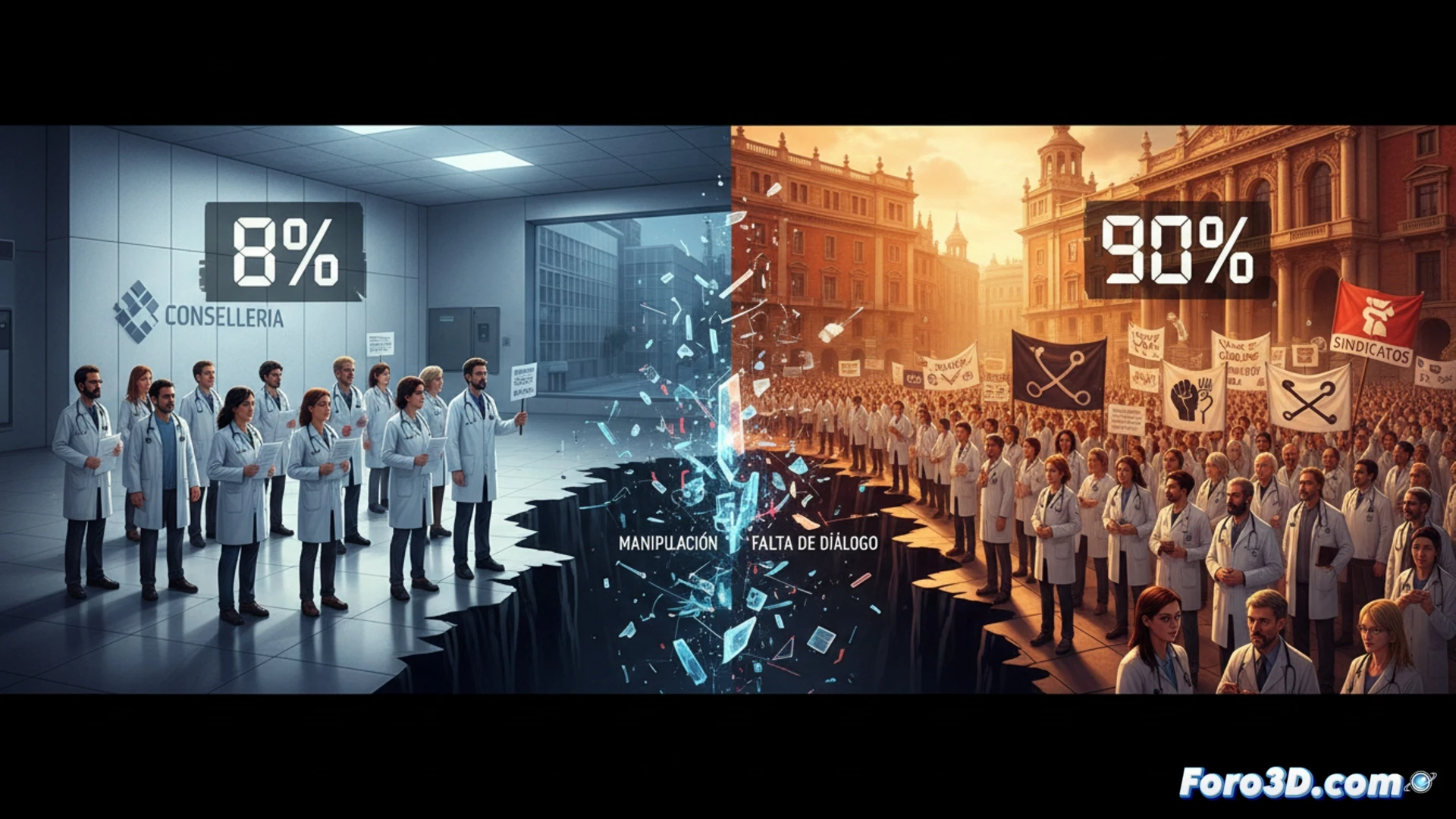
Healthcare big data: when numbers dance according to the algorithm 📊
In a context where healthcare digitalization is advancing, the clash of figures reveals a deeper technical problem: the counting methodology. The Ministry uses electronic timekeeping systems and incident reports to calculate turnout, while unions rely on direct surveys and voluntary counts at health centers. This disparity of sources, without a common validation standard, turns any statistic into a battlefield where each party chooses the algorithm that best suits them.
The magic calculator: 8% for some, 90% for others 🧮
If we add both figures and divide by two, we get a turnout of 49%, an average that likely satisfies no one. But the most curious thing is that, with these numbers, striking doctors would be invisible to the Ministry and massive for the unions. Perhaps the next step will be to install neural counters in white coats, capable of detecting whether a doctor is on strike or simply thinking about requesting a transfer. Meanwhile, the art of counting remains as precise as a football pool.