The development of immersive experiences for Virtual Reality has found a new turning point with Hubris, a title that fully exploits the potential of Unreal Engine 4. Its main technical strength lies in recreating underwater and alien environments with a level of photorealism that, until now, seemed reserved exclusively for high-end monitor games. We analyze how it achieves this visual feat without sacrificing performance on headsets.
Deferred rendering and optimization for stereoscopy 🌊
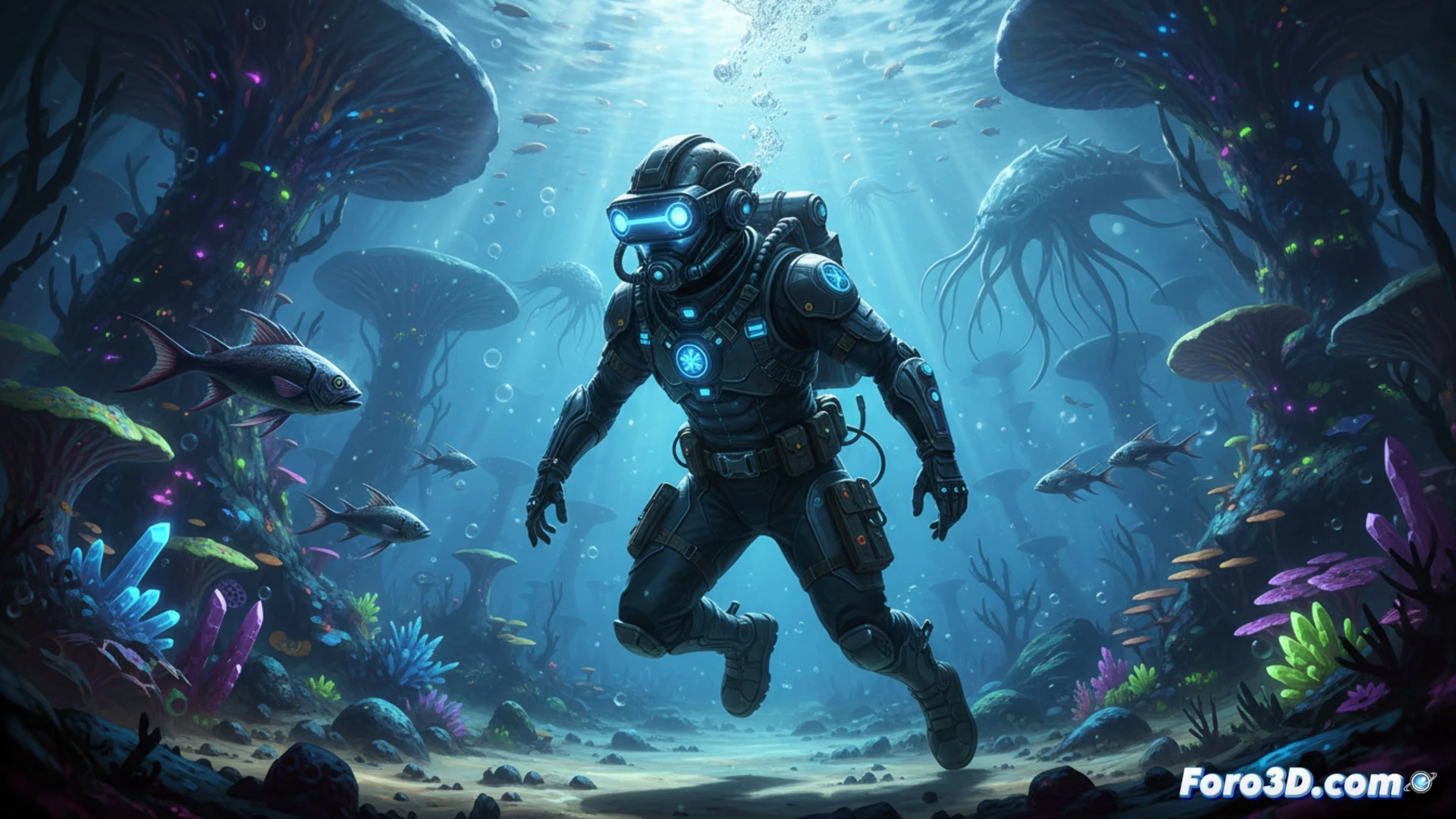
The graphics engine uses advanced global illumination techniques and real-time reflections to simulate light refraction underwater. The development team has implemented a volumetric particle system for aquatic flora and physically based shading (PBR) that gives textures an almost tactile depth. To maintain a rate of 90 frames per second in VR, foveated mesh rendering and dynamic resolution scaling are applied. This approach allows water effects, with their shader-calculated waves and bubbles, to rival AAA monitor titles, demonstrating that the visual gap between both formats is closing.
Immersion as a technical priority 🎮
Beyond the numbers, Hubris demonstrates that graphical realism in VR is not just an ornament, but a functional tool. High visual fidelity reduces cognitive dissonance by immersing the player in an alien world, making interaction with the environment more intuitive. This trend suggests that the future of 3D simulation and training will involve adopting monitor graphical standards, optimized for stereoscopic vision, where every texture and reflection contributes to the sense of presence.
What lighting and post-processing techniques in Unreal Engine 4 does Hubris use to achieve underwater realism that overcomes the uncanny valley barrier in VR?
(PS: and if you get motion sickness with VR goggles, you can always blame the coffee)