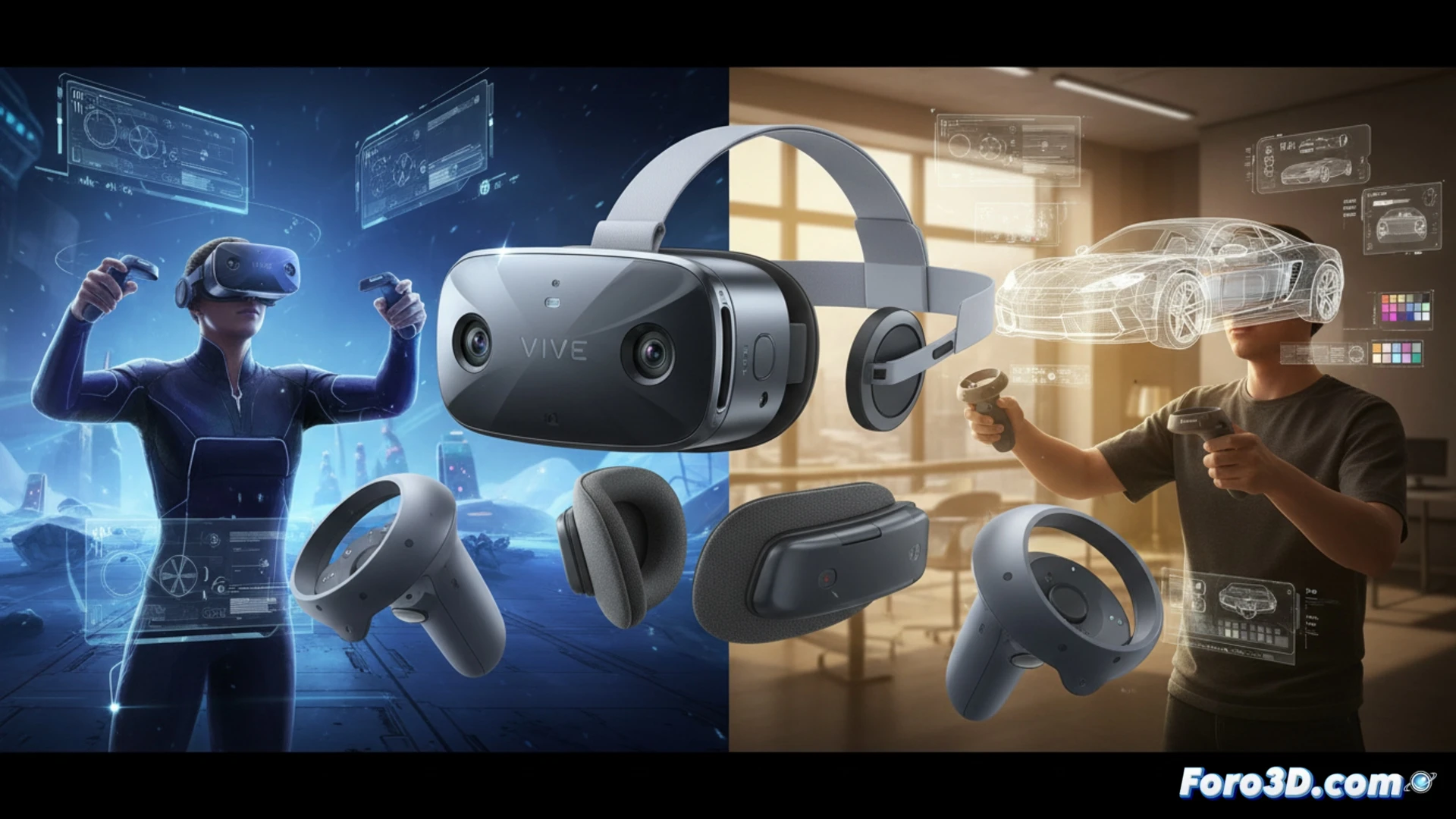
The HTC Vive XR Elite arrive to blur the line between virtual and augmented reality. With a compact and modular design, they promise to be a versatile tool for both intense gaming sessions and reviewing 3D models in industrial design. A device that aims to be the all-rounder of extended reality.
Power and modularity for professional environments 🛠️
The hardware features an optical system with Fresnel lenses and a resolution of 1920x1920 pixels per eye, with a 110-degree field of view. Its rear module with a swappable battery allows for long, tether-free sessions. Wireless connectivity and integrated hand tracking facilitate direct interaction with 3D models, although its performance depends on a powerful PC for complex rendering tasks.
The day the glasses wanted to be a Swiss Army knife 🎭
The modular concept sounds great until you lose the rear battery on the couch and have to play with the glasses as if they were a low-cost VR headband. That said, going from designing a building in 3D to sweating buckets in a rhythm game is a luxury only these glasses allow. The problem is that, like any Swiss Army knife, each function is performed decently but none exceptionally.