3D technology allows the horticulturist to simulate terrain, distribute plantings, and predict crop growth without leaving the computer. With digital models, space errors are avoided, irrigation needs are calculated, and sun exposure is optimized. A clear example is designing a 3D vertical garden to maximize yield per square meter before buying a single seed.
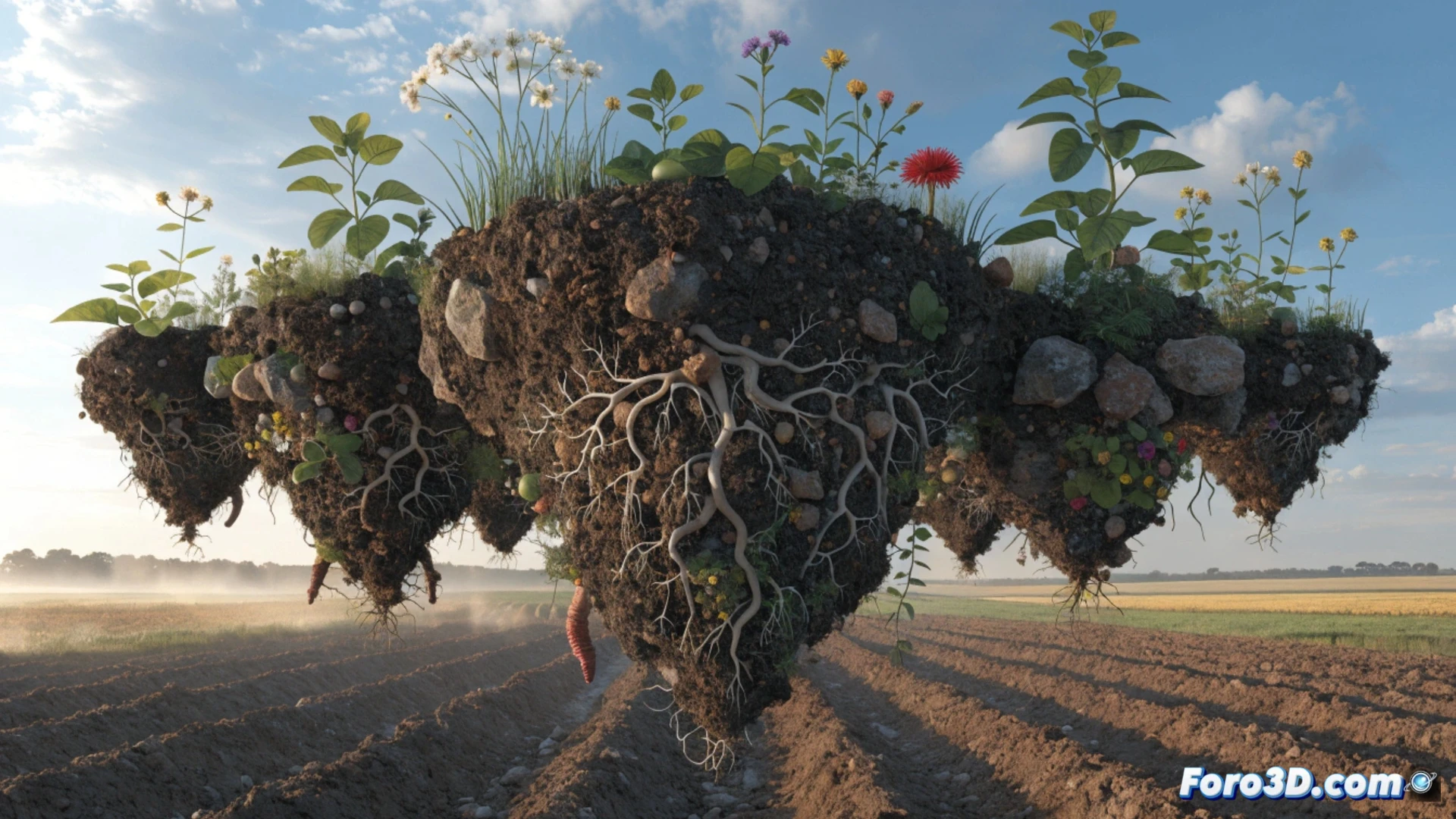
Digital tools for the three-dimensional crop plan 🌱
To model the terrain, programs like SketchUp or Blender are used, which allow drawing beds, slopes, and orientations. With QGIS, real topographic data can be integrated. To simulate plant growth, applications like PlantFactory or the Grove extension in Blender generate trees and vegetables with real-time parameters. This helps visualize shadows, nutrient competition, and access for maintenance. You don't need a top-of-the-line computer, but you do need a decent graphics card.
The virtual garden that needs no fertilizer or irrigation (nor sweat) 😅
The best part is that on the computer, weeds don't exist, snails don't eat the lettuce, and the sun always rises on time. You can design a perfect garden without a drop of sweat, without mosquito bites, and without having to kneel. Too bad that then, in real life, the soil is rough, it rains at the wrong time, and the chickens escape. But hey, at least the digital plan looks nice.