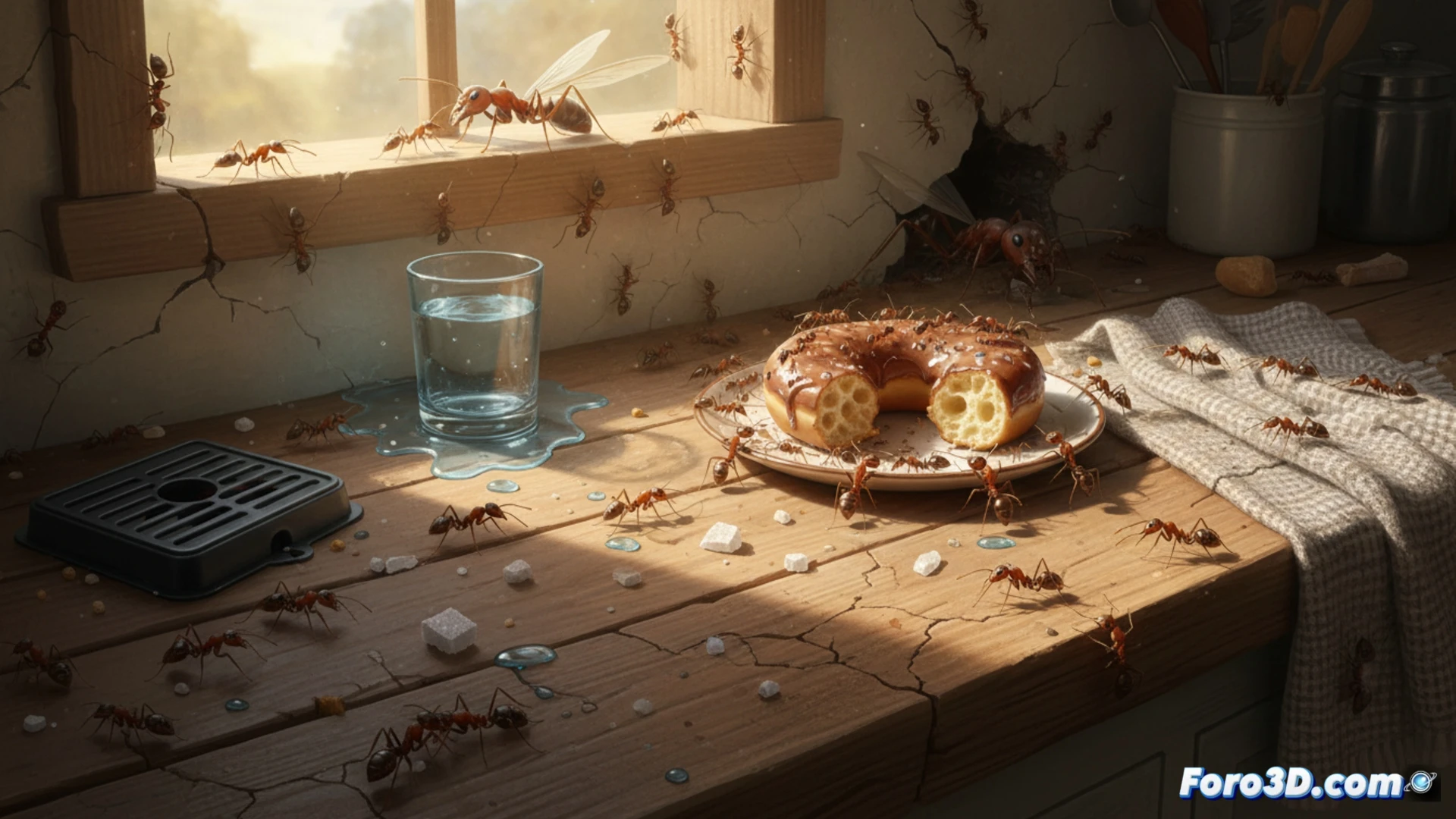
Every summer, ants organize a silent invasion in our kitchens. They search for water, sugar, and crumbs, but completely ignore the toxic bait we place for them. It's not that they are intelligent; it's that their biology and communication system protect them from our traps. Understanding how they operate is key to stopping their advance without resorting to desperation.
The science behind the rejection: pheromones and collective memory 🧠
Scout ants release pheromones to mark routes to food sources. When they encounter poison, they don't associate it with immediate danger; instead, they avoid it if they detect a strange texture, smell, or taste. Additionally, worker ants don't ingest the bait; they carry it to the nest to feed the queen. If the poison acts slowly, the scouts learn to avoid it and communicate the alert to the colony. Thus, the product remains untouched while they follow another path.
The ants' master plan: laughing at your poison 😂
While you place the bait with the faith of a vacuum cleaner salesman, the ants use it as kitchen decoration. They prefer your breadcrumb from last Tuesday, which already has its own name. The poison remains there, lonely, like that friend no one invited to the party. In the end, they take the sugar, and you're left with the full jar, wondering if you should change your strategy or give up and share the coffee.