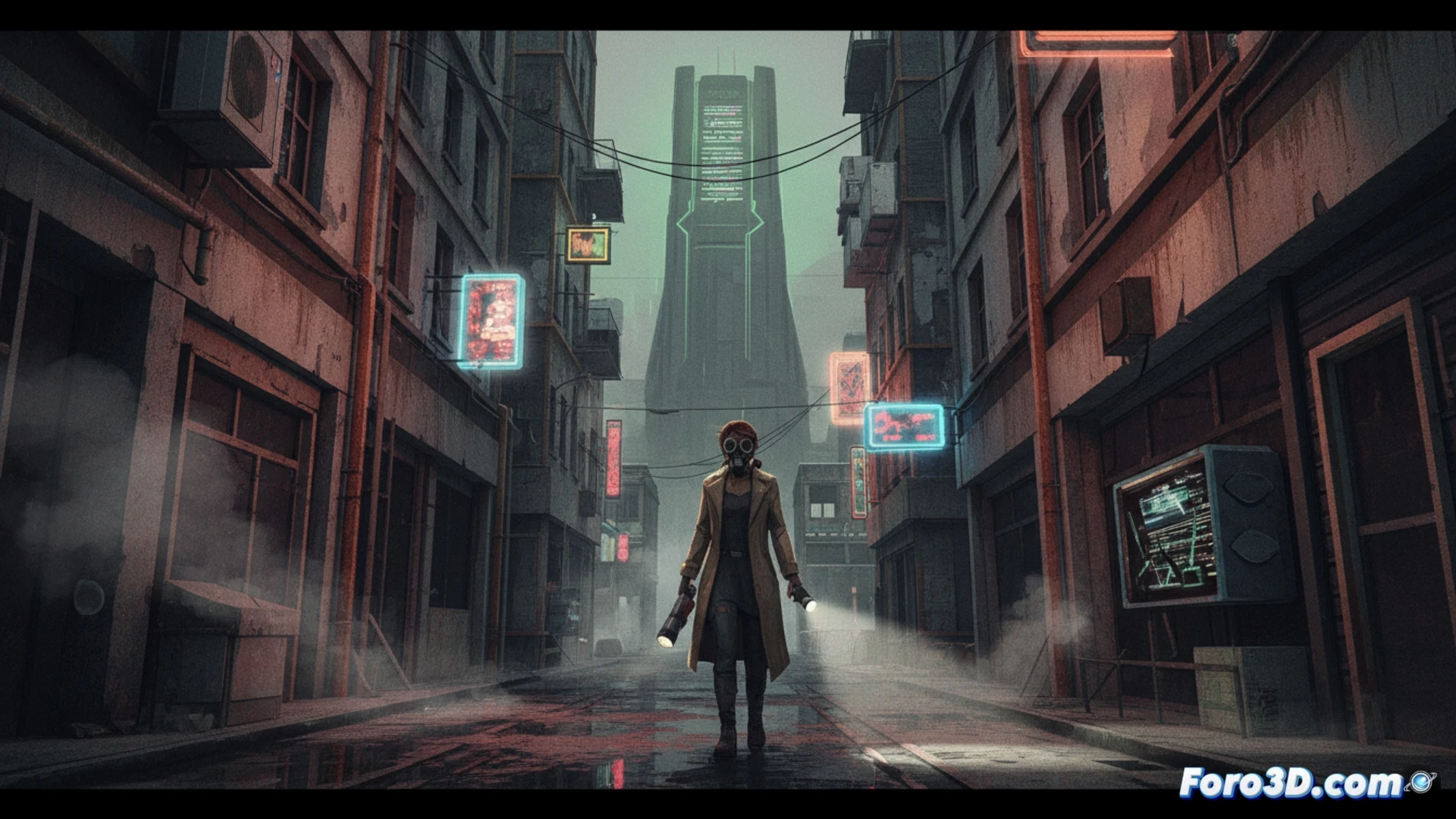
Independent studio Headware Games has released Hollowbody, a title that defies current photorealistic trends to recapture the essence of early 2000s survival horror. Built on Unreal Engine 4, the game uses a hybrid approach that combines modern realism in materials and textures with the characteristic visual filter of consoles like PlayStation 2 and Dreamcast. The result is a tech-noir experience set in a British dystopia, where grime and decay are the true protagonists.
The Technical Trick: Fixed Cameras and Retro Post-Processing 🎮
Hollowbody achieves its nostalgic aesthetic through a precise combination of post-processing techniques in Unreal Engine 4. The team reduced the render resolution and applied specific smoothing to replicate the dithering and chromatic limitations of the 128-bit era. Additionally, they implemented a fixed camera system with carefully composed shots, directly evoking titles like Silent Hill or Resident Evil. To emulate the fog and aliasing of the time, translucent materials with low texture resolution were used, avoiding modern shaders that would overly clean the image. The color palette was limited to cold, desaturated tones, typical of British film noir, while volumetric lighting was reduced to create hard, flat shadows.
Worn Materials That Tell a Story 🛠️
The dystopian setting would not be believable without the texturing work done in Substance Painter. The developers created materials that simulate decades of abandonment: rust, moisture, chipping, and accumulated grime. Every surface in Hollowbody was designed to tell a story of degradation, from the wet cobblestones of London streets to the peeling wallpaper of interiors. The key was combining procedurally generated wear maps with manual brushstrokes, achieving a balance between the organic chaos of reality and the visual legibility required by a fixed camera. This process, exported directly to Unreal Engine 4, allows the engine to render decay without sacrificing performance on modest hardware.
How does Hollowbody recreate the visual aesthetic and oppressive atmosphere of PS2-era horror using Unreal Engine 4, and what technical limitations of the engine are leveraged to evoke that nostalgia without falling into modern photorealism?
(PS: optimizing for mobile is like trying to fit an elephant into a Mini Cooper)