In the golden age of Japanese OVAs, few directors managed to combine mechanical realism and cinematic tension like Hiroyuki Kitakubo. With a career spanning from the futuristic satire of Roujin Z to the visceral horror of Blood: The Last Vampire, this technical master built his reputation on a foundation of obsessive meticulousness and dark atmospheres that sear every frame into memory.
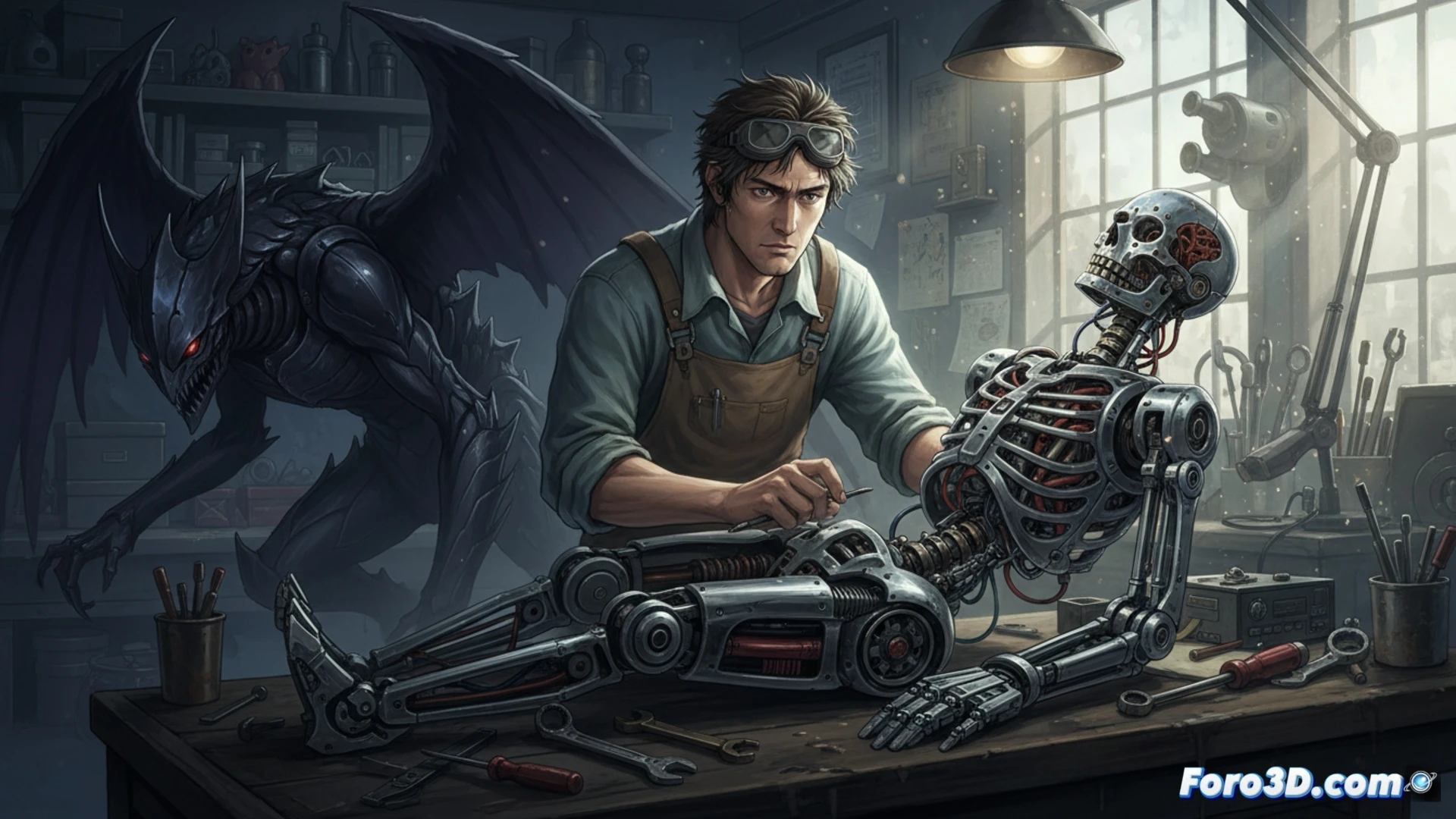
The engineering of detail: how Kitakubo masters machinery animation ⚙️
Kitakubo doesn't draw machines; he dissects them. In his works, every gear, every spark, and every deformation of metal follows a rigorous physical logic. His direction in Roujin Z breaks down the interaction between fragile bodies and cold mechanisms with almost documentary precision. While in Blood, realism shifts to the movement of weapons and bodies in combat, using long takes and choreographies that demand a level of detail in keyframes that few studios were willing to afford.
When technical perfection leaves you without a budget to finish the series 💸
Legend has it that Kitakubo could spend weeks correcting the shine of a nut in a three-second shot. This level of detail comes at a price: his most famous work, Golden Boy, is an erotic comedy where typewriters and cars have more texture than some characters. The result is that while the viewer laughs at the absurd situations, they can't help but wonder if the director was more interested in the car's engine than in the plot.