Hiroshi Sasagawa, legendary director of Tatsunoko Production, laid the foundations of Japanese slapstick comedy. His purely playful artistic vision introduced absurd and surreal humor that marked several generations. With works like Time Bokan and Yatterman, Sasagawa demonstrated that animation could be a vehicle for visual inventiveness and wordplay, leaving an indelible mark on the 70s and 80s.
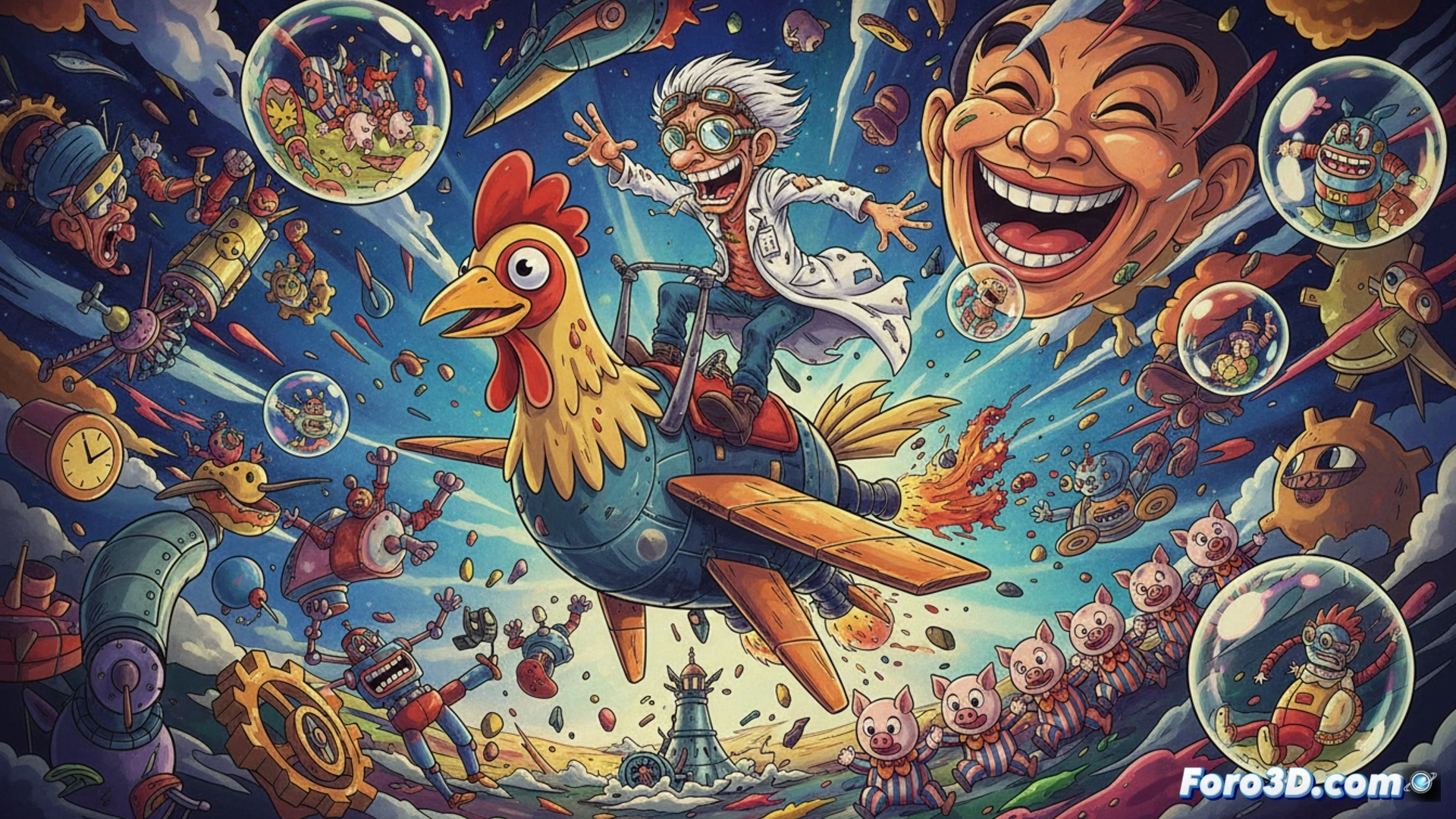
The mechanics of the gag: how Sasagawa programmed laughter 🤖
Technically, Sasagawa developed an animation system based on rhythmic repetition and character deformation. Instead of seeking realism, he prioritized exaggerated expressiveness, using flat backgrounds and contrasting colors so the eye would catch the joke instantly. His team at Tatsunoko employed a limited footage technique, where each key movement was spaced out to maximize comedic impact. This, combined with fast dialogue and visual onomatopoeia, created a frenetic rhythm that kept the viewer hooked without the need for large budgets.
The legacy of a guy who made even robots laugh 😂
The curious thing is that Sasagawa managed to make villains like those in Yatterman more beloved than the heroes. His absurd and repetitive plots taught that losing can be more fun than winning. Even today, watching a bad guy crash into a wall for the umpteenth time reminds us that humor doesn't need logic, just good animation timing and a director who understands that the failure of others, well drawn, is a work of art.