Since the 1970s, Hiroshi Fukutomi has built a solid career in Japanese animation, excelling in directing action and martial arts. His style prioritizes fluid combat choreography and drawing that conveys the physical power of the characters. Works like Fatal Fury: The Motion Picture and Eat-Man showcase his ability to choreograph confrontations with technical precision.
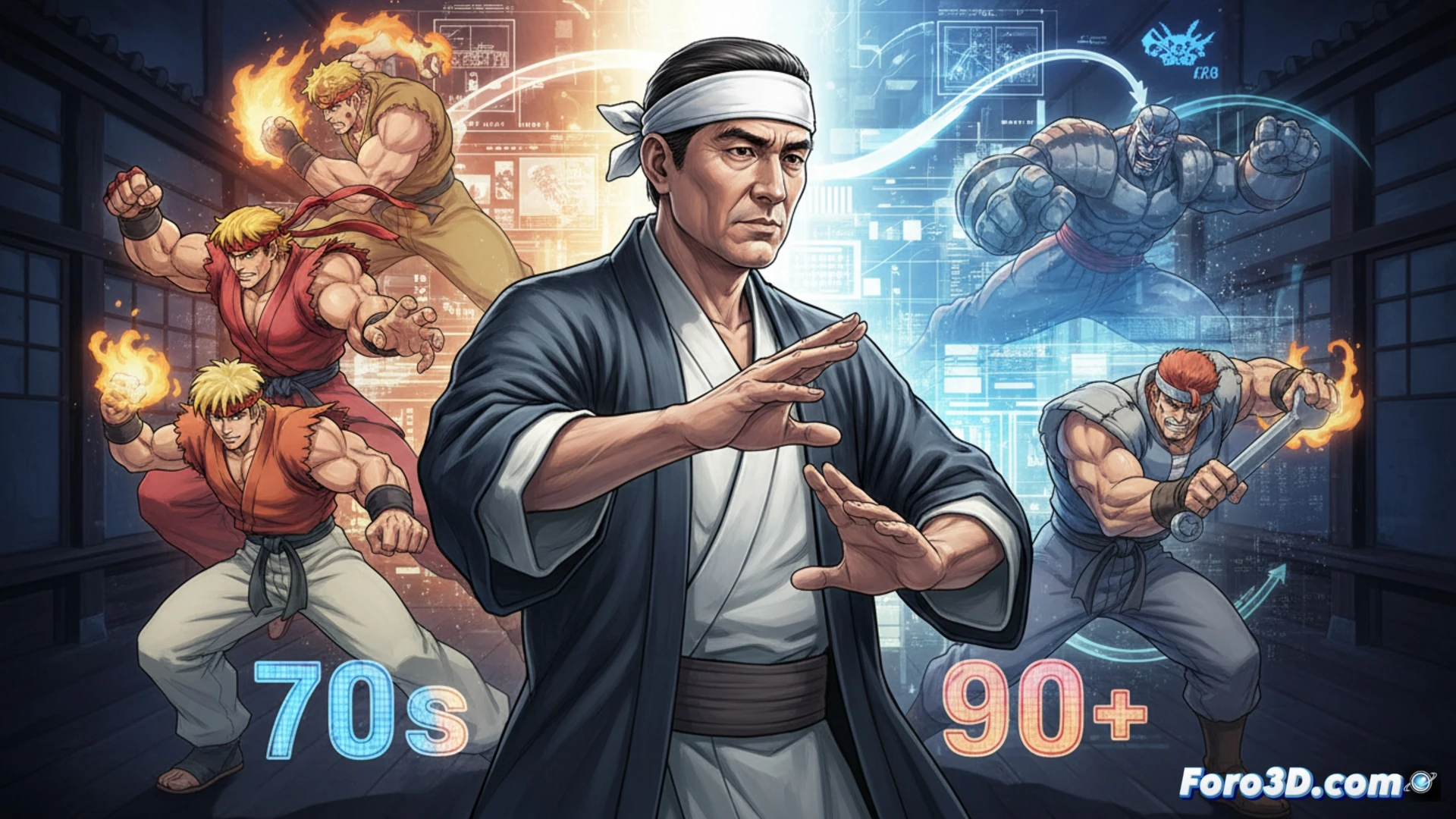
The technique behind fight animation 🥋
Fukutomi applies principles of limited but effective animation, using keyframes to highlight the impact of each blow. In Fatal Fury: The Motion Picture, he makes Terry Bogard's movements have realistic weight and speed, without relying on digital effects. His method is based on breaking down each combat sequence into extreme poses, letting the viewer's eye complete the fluidity. This requires a detailed storyboard and precise control of rhythm, something few directors handle so naturally in animated martial arts scenes.
When the drawing hits harder than the script 💥
Sometimes, in Fukutomi's works, the plot seems like a mere pretext for two characters to beat each other up. In Battle Spirits, the dialogues last just long enough for someone to draw a card and a cosmic battle erupts. It's as if the director thought: Why talk when you can throw a punch that deforms the scenery? His action cinema shows that, sometimes, a well-drawn choreography is worth more than a thousand lines of script.