Hideaki Anno, founder of Studio Gainax and Studio Khara, revolutionized Japanese animation with his avant-garde style. His most famous work, Neon Genesis Evangelion, deconstructed the mecha genre by fusing robot battles with brutal psychological introspection. Anno channels his own struggles with depression into his narratives, using geometric compositions and dense symbolism to explore human fragility and existential emptiness.
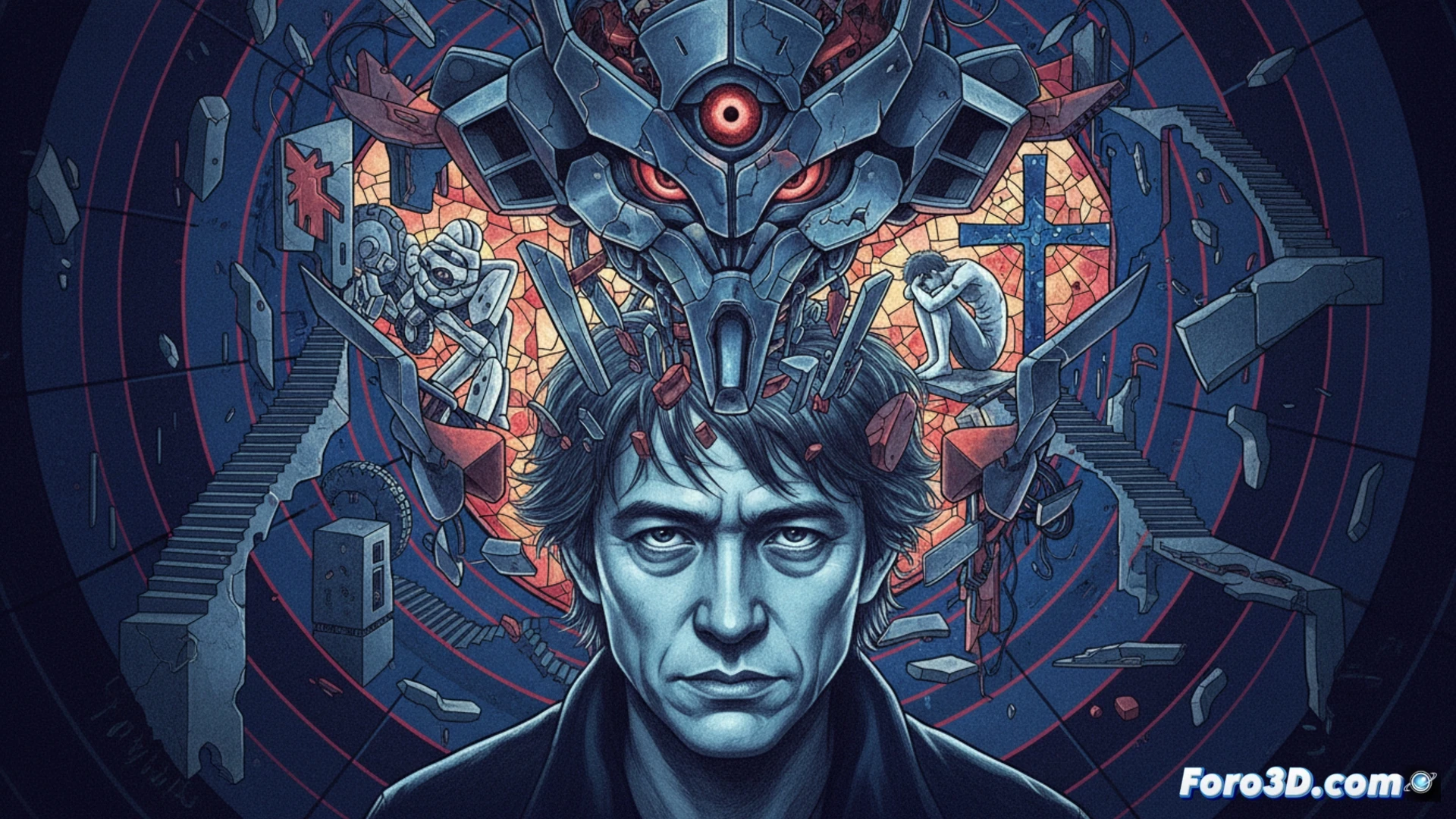
The mechanics of trauma: visual and narrative techniques 🎭
Anno employs techniques such as prolonged fixed shots and the use of awkward silences to generate psychological tension. In Evangelion, the Angels are not just physical enemies, but mirrors of the pilots' psyche. The animation alternates between fluid combat sequences and static scenes of internal dialogue, forcing the viewer to feel the weight of isolation. The use of black-and-white backgrounds during inner monologues is a technical decision that eliminates distractions, leaving only the character's mental conflict.
When your giant robot needs a therapist 🤖
Anno achieved the unthinkable: making millions of fans cry over a teenager piloting a biomechanical robot. While other directors focus on explosions and transformations, he reminds us that the real enemy is not the Angel of the week, but the inability to communicate with your mother. And if that fails, you can always dissolve into a sea of LCL while a lullaby plays. Existential depression with merchandising included.