Hellion, also known as Julian Keller, is a Marvel mutant whose extreme telekinesis makes him a symbol of youthful power and marginalization. Leader of the Hellions at the Xavier Academy, his story explores the conflict between social control and individual freedom. This article analyzes how his figure can be recreated in 3D modeling to enhance narratives of visual activism within digital art.
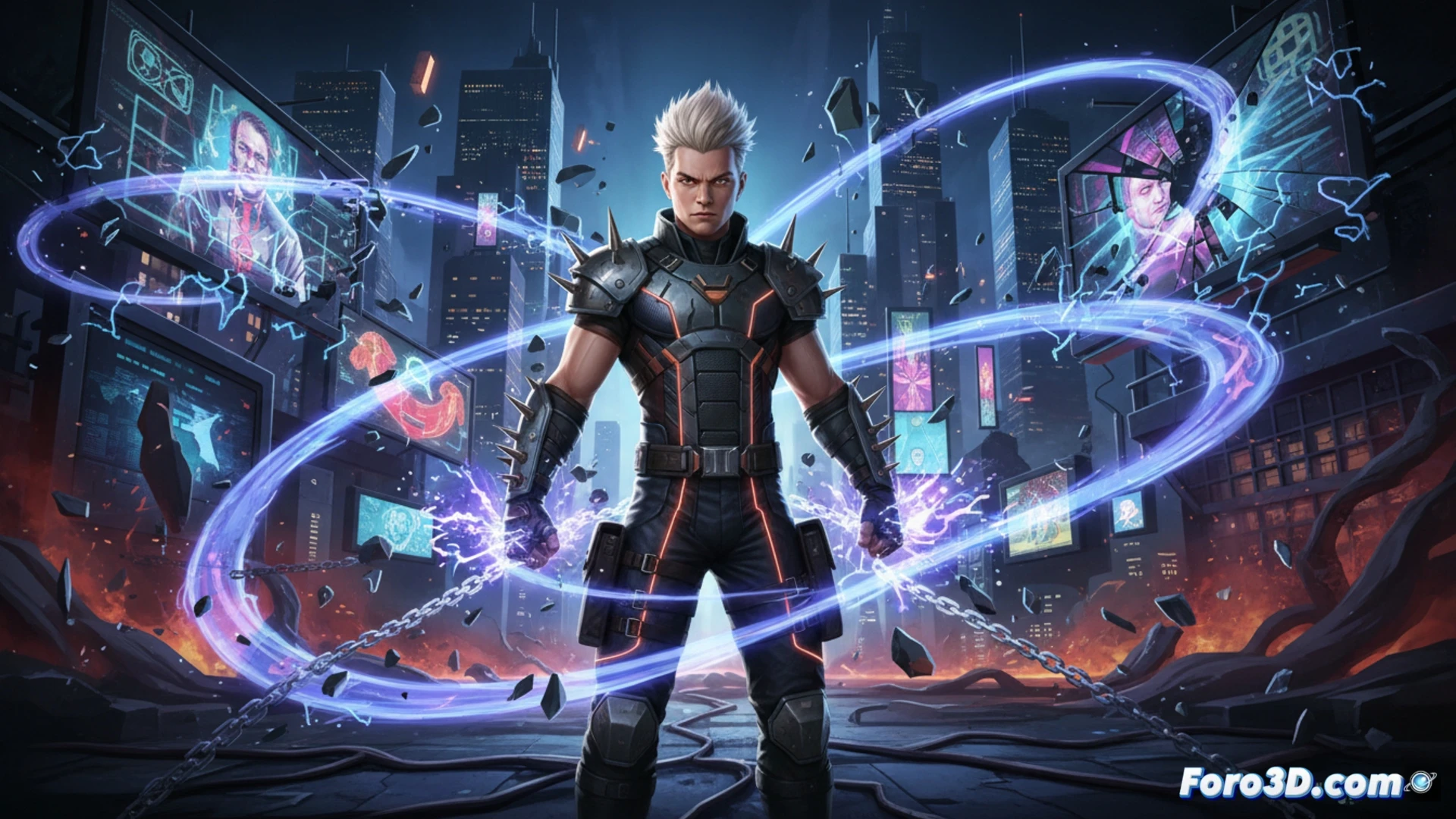
3D modeling techniques to represent telekinesis and exclusion 🎨
To capture Hellion's essence in 3D, it is key to work with particle dynamics and mesh deformations that simulate his telekinetic field. Tools like Blender or ZBrush allow sculpting his defiant posture, adding blue energy effects or floating fragments around him. The design of his uniform, with aggressive lines and dark colors, reinforces the metaphor of a young man armed against a world that fears him. Dramatic lighting, with harsh shadows, can evoke the isolation suffered by mutants as a vulnerable collective.
The symbolic activism of mutants in digital pop culture ✊
Marvel mutants, and Hellion in particular, represent the struggle of stigmatized minorities. By recreating their iconic scenes in 3D, digital artists can bring visibility to themes of exclusion, racism, and resistance. Each render becomes a visual manifesto that challenges prejudices. This approach not only honors the character but transforms digital art into a tool for activism, where telekinesis symbolizes the power to raise one's voice against oppression.
How can 3D modeling of mutant characters like Hellion become a tool for digital activism to make visible youth resistance against systems of social control?
(PS: if your virtual reality installation doesn't change the world, at least let it not lag)