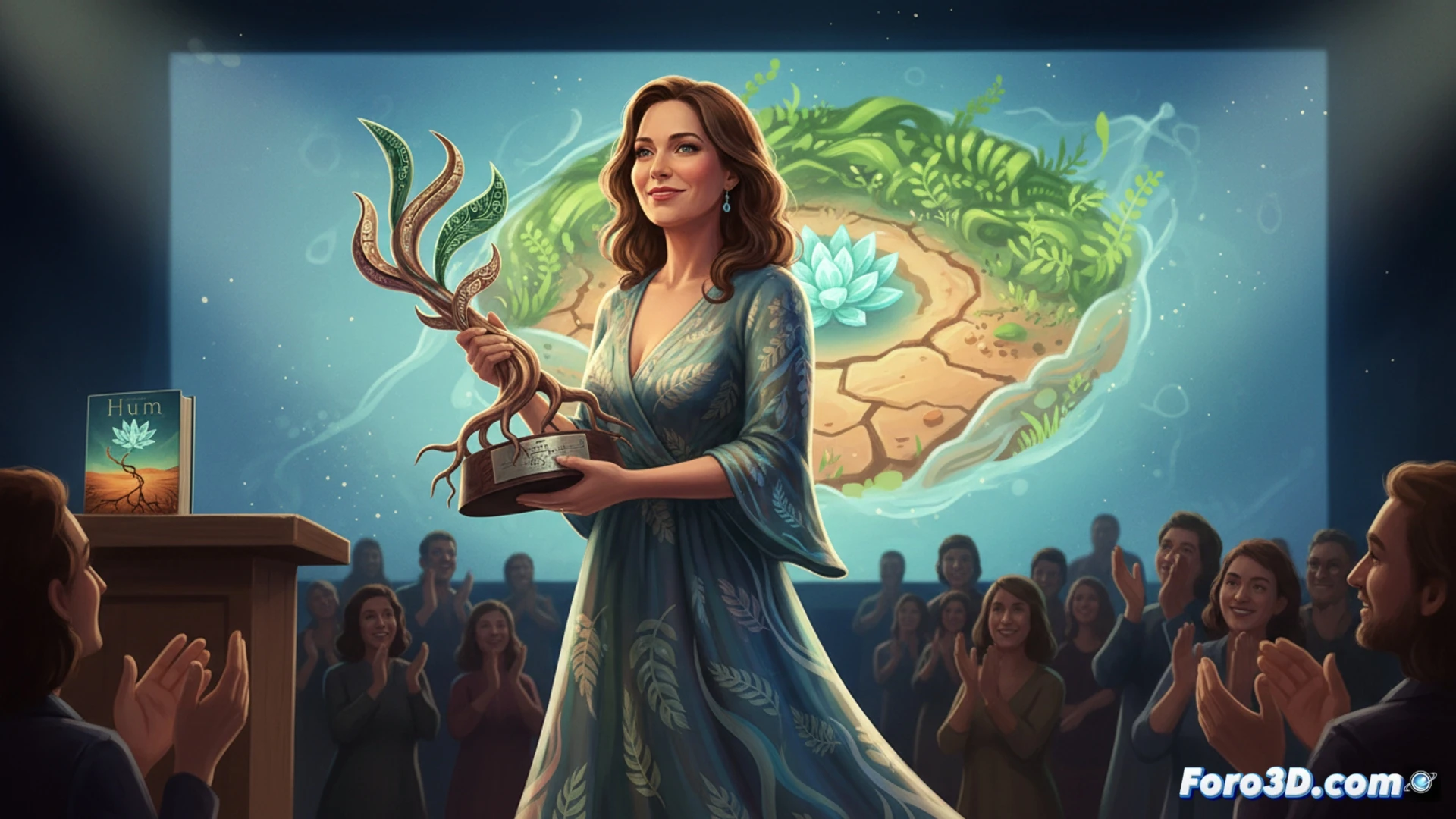
Writer Helen Phillips has been awarded the climate fiction prize for her novel Hum, a work that explores a future shaped by climate change. The author explains that her stories are born from current anxieties, such as the environmental crisis. For the reader, this means that fiction can reflect real problems affecting daily life, from extreme weather to insecurity. Literature helps us understand and face these challenges that already impact our present.
The technical development behind climate anxiety 🌱
Phillips uses a fragmented narrative structure to reflect environmental uncertainty. In Hum, characters interact with artificial intelligences that manage scarce resources, such as water and energy. This technical approach is not distant science fiction: algorithms that predict droughts or automated irrigation systems exist today. The author documented real cases of cities implementing green roofs and air quality sensors. The result is a story that connects literary speculation with technological developments already underway, without falling into catastrophism.
The future according to your smart fridge 🤖
Phillips's novel imagines a world where even the microwave reminds you to eat less meat. Meanwhile, in the present, your robot vacuum cleaner already judges you for not recycling. The author is right to point out that our climate anxiety coexists with appliances that watch us. But hey, if the oven ends up deciding what we have for dinner, at least we'll save the family argument about whether tofu tastes like cardboard. Ironies of progress.