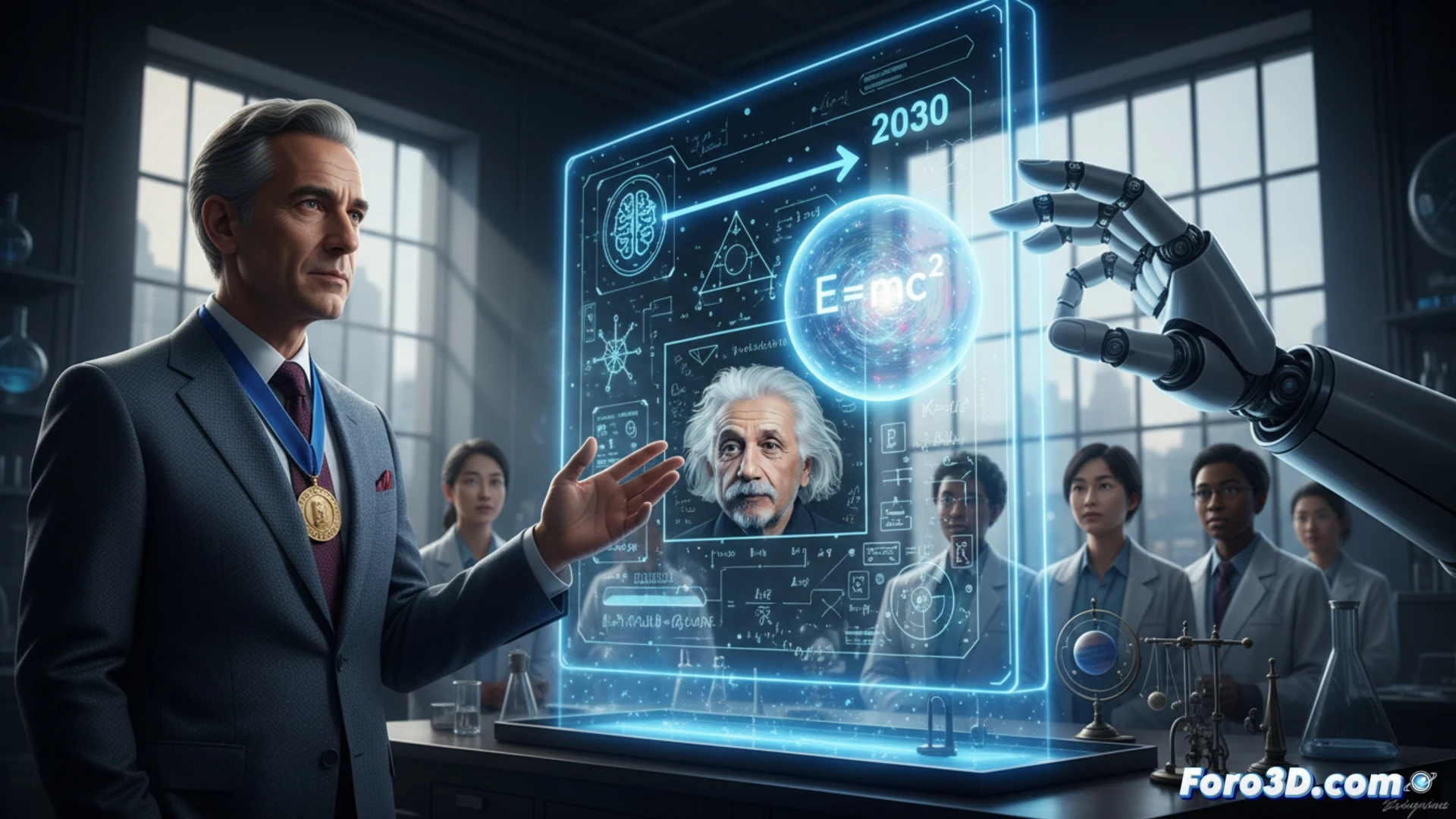
Demis Hassabis, director of Google DeepMind and 2024 Nobel Prize in Chemistry, has once again stirred the debate on artificial general intelligence. His forecast is clear: AGI could arrive around 2030. To demonstrate this, he proposes the Einstein test, a challenge that requires an AI to learn classical physics and then independently discover the special relativity of 1905. Something that current models, despite their power, cannot replicate.
Climate AI: extreme prediction with a one-day margin 🌤️
While AGI remains a distant horizon, Hassabis highlights a relevant practical advance. DeepMind systems are already capable of predicting extreme weather events with a 24-hour lead time. In contrast, traditional methods require weeks of processing to obtain similar results. This capability not only improves disaster response but also demonstrates how specialized AI can outperform classical numerical models in specific tasks, without needing to achieve general intelligence.
The Nobel laureate in Chemistry believes his AI will pass physics in 2030 🧠
Hassabis, who already won a Nobel for using AI to predict proteins, now wants his creation to earn a theoretical physicist's license. The Einstein test sounds like a final exam for machines: learn the usual stuff and then invent the 1905 breakthrough. Meanwhile, humans still don't know if the AI that warns us about tomorrow's storm will grab a coffee or ask for a raise. Let's hope 2030 catches everyone with their batteries charged.