The character Hardball, created by Dan Slott and Stefano Caselli, is an Initiative recruit with the ability to generate extremely dense solid energy spheres. His visual design, based on force fields, offers a fascinating technical challenge for 3D modeling. In this article, we analyze how to recreate his powers with digital tools, exploring their potential for art and visual activism.
Modeling and simulation of spherical force fields 🎯
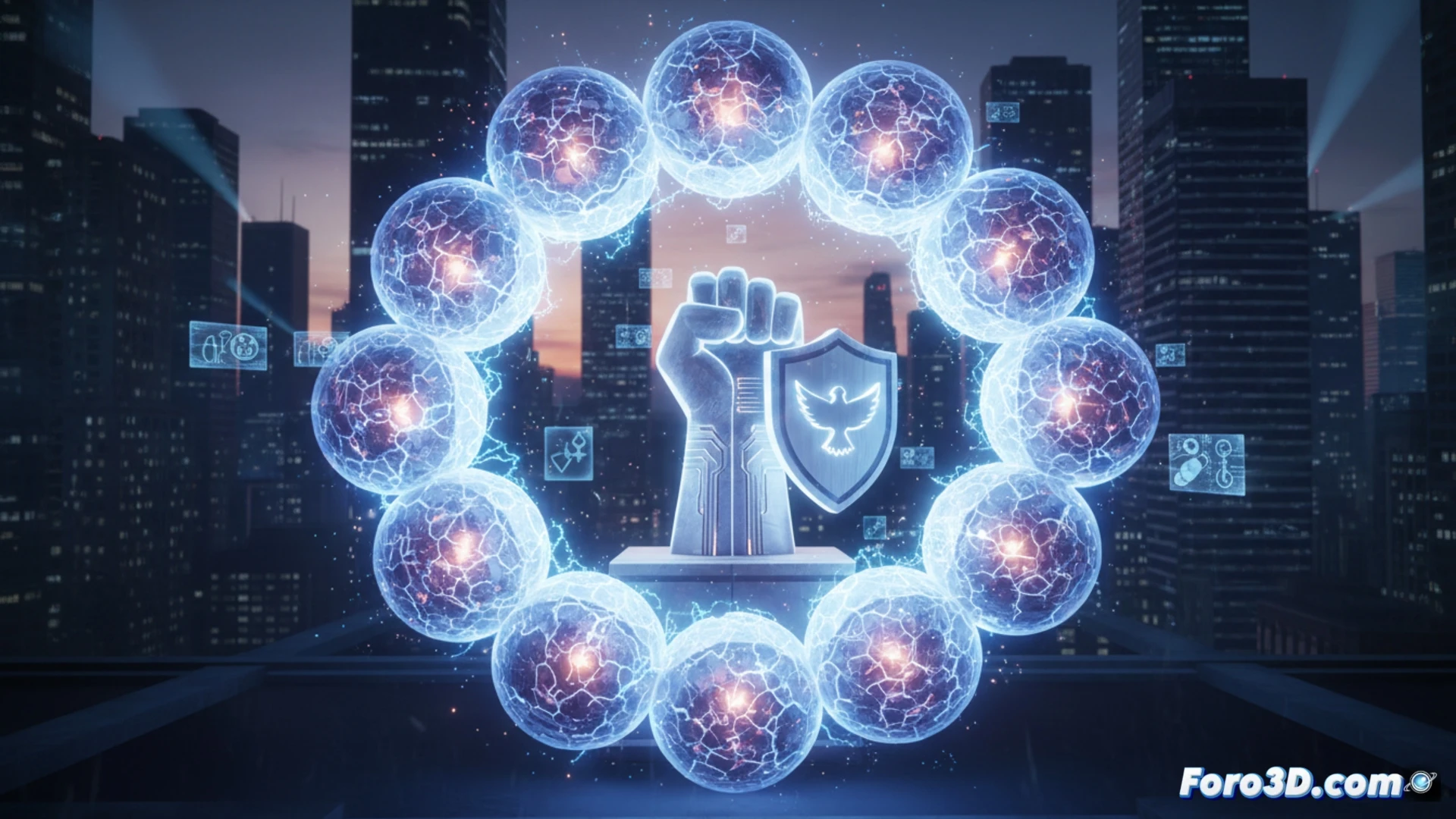
To recreate Hardball in 3D, the first step is to model his body with an athletic silhouette and a high-tech suit, using programs like Blender or Maya. The real challenge is the force fields: translucent spheres that require glass or energy shaders. We can generate them with point particles, dense wireframe meshes, or volume effects, animating their rotation and pulsation to simulate the extreme solidity described in the comic. The key lies in the materials: using procedural textures with spherical noise and light emission to give that solid and vibrant energy look.
Power as a visual metaphor in digital activism 💥
Beyond technical modeling, Hardball's force fields are a powerful metaphor for digital activism. We can integrate his 3D model into virtual environments as visual barriers representing the protection of safe spaces, resistance against oppression, or the creation of privacy bubbles on the internet. By rendering these scenes with dramatic lighting and urban backgrounds, the character becomes an artistic symbol of defense and boundaries, ideal for social critique projects or visual campaigns on social media.
How can the technical representation of Hardball's force fields in 3D be used to amplify a message of protest or resistance in digital art?
(PS: at Foro3D we believe all art is political, especially when the computer freezes)