The work Happy!, created by Grant Morrison and Darick Robertson, presents a narrative universe where the grime of the real world collides head-on with fantasy. A corrupt ex-cop, now a hitman, begins to see a ridiculously optimistic blue winged unicorn. This contrast is not accidental; it is a brutal narrative tool that uses aesthetics to dissect violence and corruption. At Foro3D, we analyze how this visual clash resonates with the techniques of contemporary digital activism.
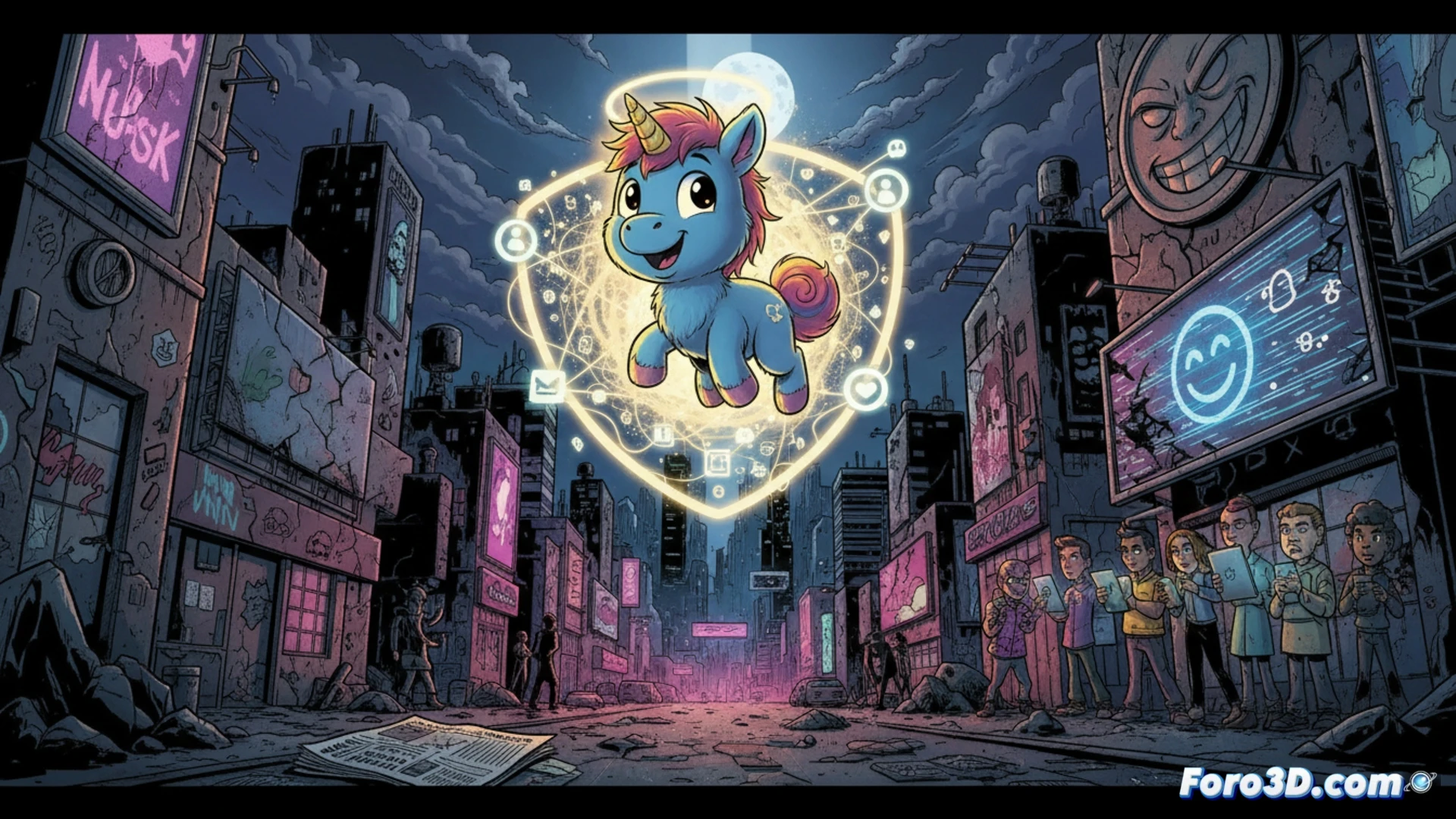
Technical analysis of the aesthetic clash between the visceral and the clean 🎨
Robertson's drawing is deliberately dirty, detailed, and visceral, employing thick, smudged lines that reflect the rot of the criminal environment. In contrast, Happy, the unicorn, has a cartoonish, clean, almost digital design, like a poorly rendered augmented reality asset. This technical dichotomy functions as a visual code: the rawness of the pencil represents corrupt reality, while the artificial sharpness of the character symbolizes an intrusive conscience or idealism. For activist art, this technique is key; just as in the work, overlaying high-definition visual elements onto chaotic backgrounds (as in 3D installations or AR filters) forces the viewer to confront a cognitive dissonance that questions their perception of social reality.
Digital activism as a mirror of narrative dissonance 🔍
The power of Happy! lies in how a fantasy figure becomes the moral anchor in a lawless world. Digital activist art replicates this mechanism by inserting polished, colorful 3D elements into documentaries or visual reports on systemic violence. Like the unicorn, these digital assets act as an artificial reminder of a lost ethic. The question the work leaves us with is whether technology can be that blue unicorn in the midst of chaos, or if its aesthetic cleanliness is just another way to gloss over the rawness of a reality we should not ignore.
Do you think technology helps make causes visible or dehumanizes them?