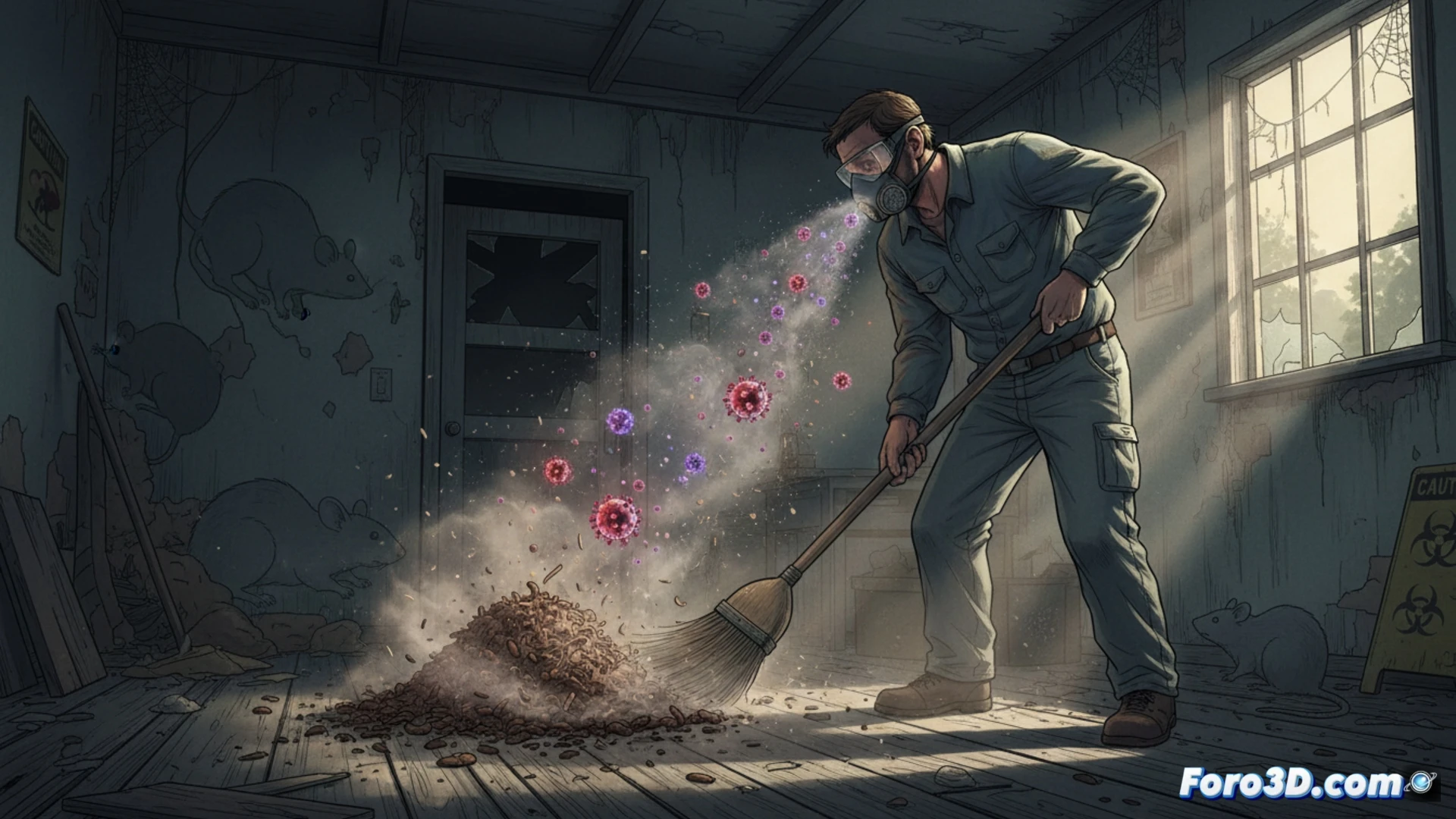
Hantavirus is a real threat primarily transmitted by rodents. Contrary to what many believe, direct contact with the animal is not necessary to become infected. The truth is that a person can become infected by inhaling particles of dust contaminated with urine, saliva, or dried feces from carrier rodents. This airborne transmission mechanism makes it especially silent and dangerous in enclosed spaces.
Technology as an ally in detection and prevention 🛡️
In the field of development, environmental sensors have been created that monitor air quality in risk areas. These devices detect suspended particles and activate forced ventilation systems. There are also mobile applications that record areas with rodent presence, allowing local authorities to coordinate cleaning actions. The combination of hardware and software offers an additional layer of protection, although it does not replace basic measures such as sealing cracks and ventilating properly.
The irony that dust is the enemy and not the rat 😅
It's curious that we spend years fleeing from rats as if they were ninjas, and in the end, the real danger is the dust they leave behind. It's like being afraid of a lion and being attacked by a speck of dust. So now you know: if you see a rat, worry. If you see dust in the basement, worry more. Next time someone tells you to clean the house, remember it's not about tidiness, it's about survival.