While COVID and the flu ravage the lungs, hantavirus chooses a more sinister target: the cells of your blood vessels. It doesn't kill them, it just makes them dysfunctional, like an employee who gets paid without working. With just four proteins, it evades the immune system and can incubate for up to 45 days. Its mortality rate reaches 50%, although survivors emerge without aftereffects. The recent outbreak on the MV Hondius cruise ship left three dead and 150 in quarantine. 🦠
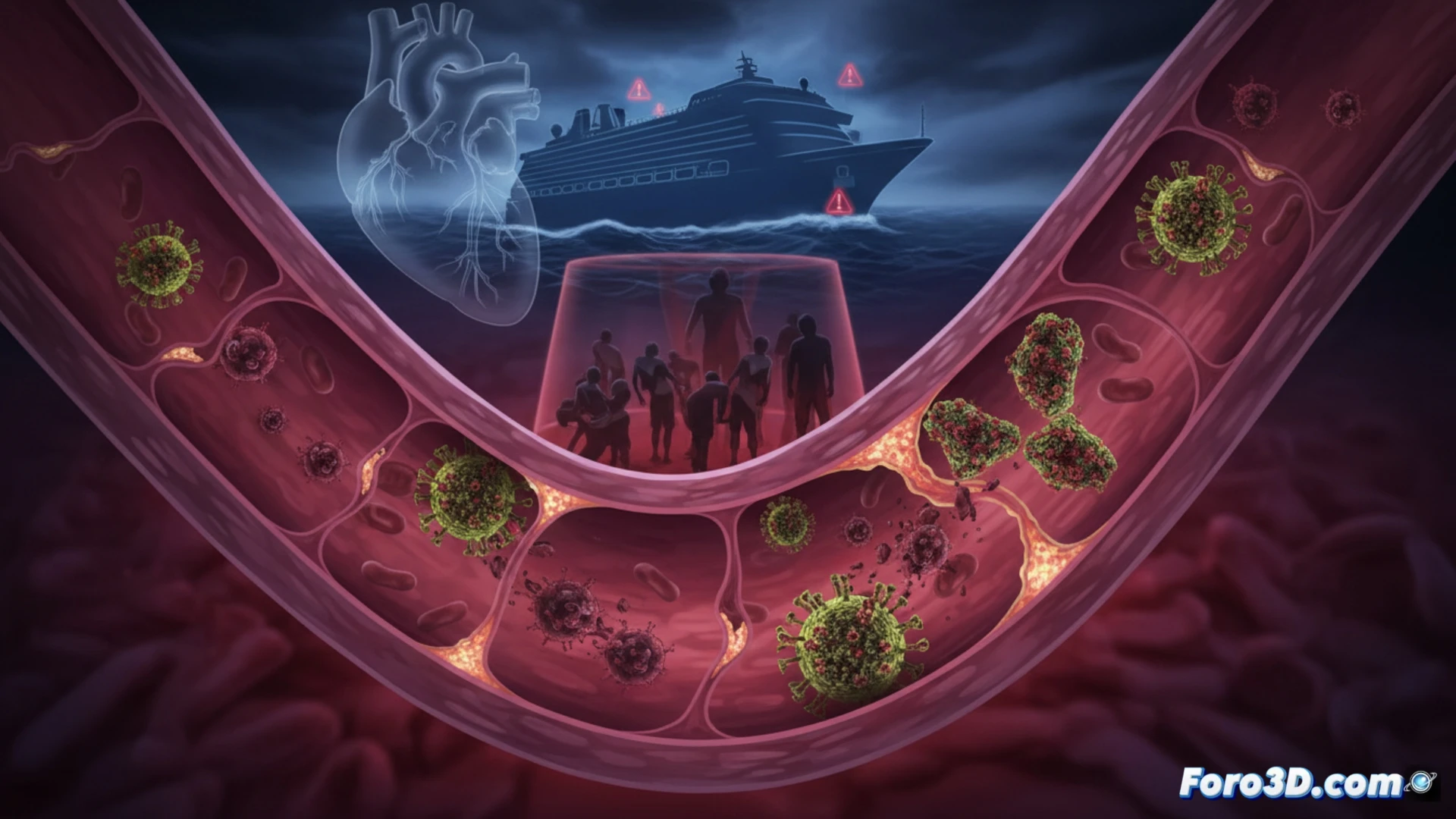
The science behind four proteins and a lethal mechanism 🔬
Hantavirus is a model of viral simplicity: just four proteins are enough for it to infect the capillary endothelium. By not destroying cells, it avoids the acute inflammatory response that alerts the immune system. This allows the virus to replicate unopposed for weeks. Understanding this mechanism opens the door to therapies that block viral adhesion to vessels. If we can decipher how it evades detection, we could design antivirals useful not only against this pathogen, but also against future similar threats.
The cruise of death: all-inclusive, except for the exit 🚢
The MV Hondius promised an unforgettable voyage, and boy did it deliver: 150 passengers in quarantine and three casualties. Hantavirus, that uninvited guest, sneaked into the activity menu. The worst part is that while tourists were watching polar landscapes, the virus worked silently for 45 days. At least the survivors can boast of having returned with a horror story more authentic than any zombie movie.