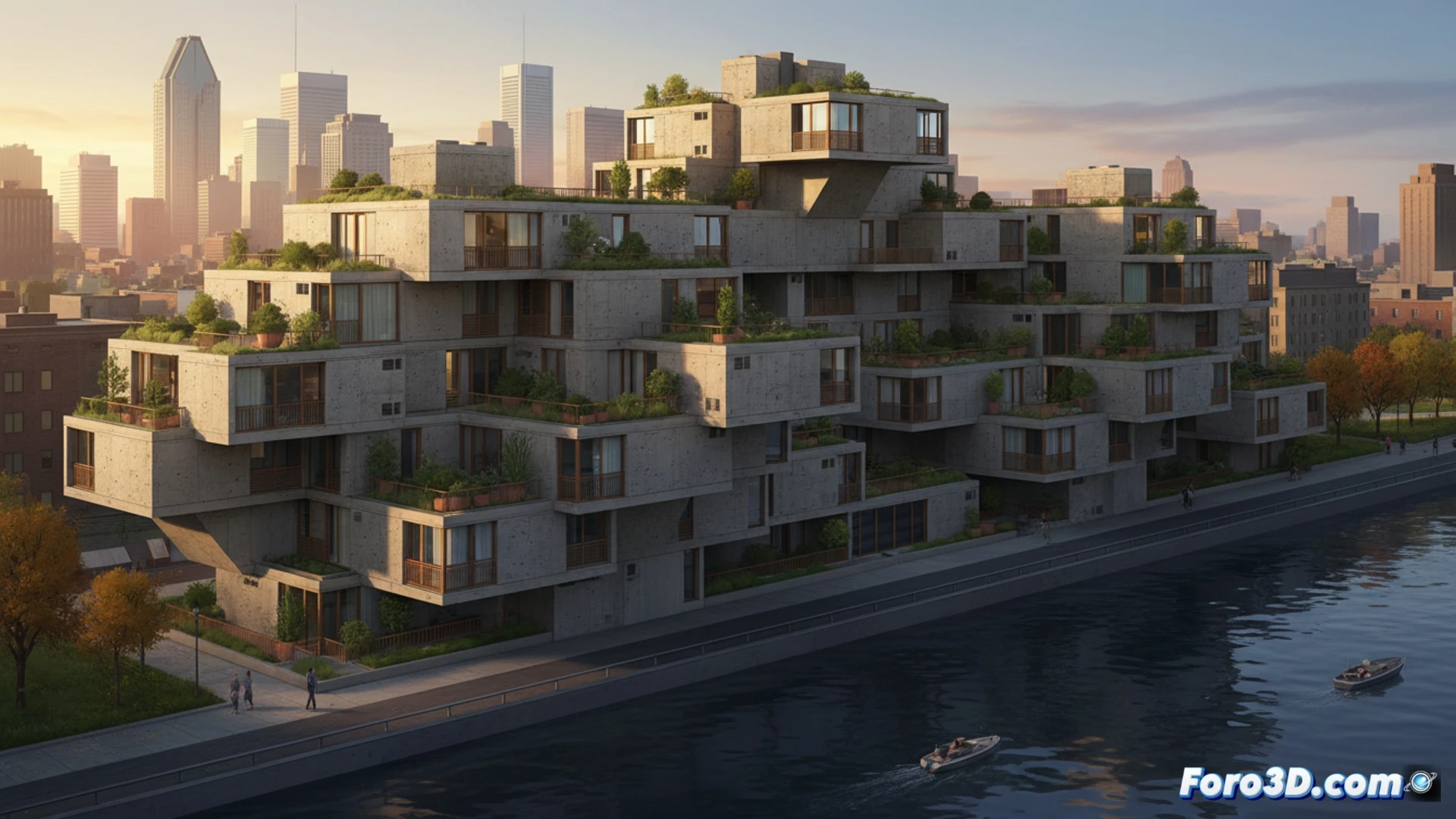
In 1967, Canada debuted Habitat 67, a block of modular housing units stacked like Lego pieces. The idea was to offer an affordable alternative to impersonal apartments and suburbs, giving each family a garden, terrace, and privacy in a dense space. But the complexity of stacking those modules skyrocketed costs, turning the dream into an unexpected luxury.
The engineering behind the hanging cubes 🏗️
Each prefabricated concrete module weighs 70 tons and was assembled with a tower crane in a choreography of precision. The system of technical connections (plumbing, electricity, and ventilation) is hidden in the spaces between the pieces, creating a tangled web that is difficult to access. Half a century later, repairing a pipe or a seal requires custom scaffolding or dismantling entire sections, something that even engineer Moshe Safdie did not anticipate when prioritizing aesthetics over maintenance.
When your home looks like an impossible puzzle 🧩
The residents of Habitat 67 live in a work of art, but also in a logistical nightmare. If a pipe breaks in the module above, the one below gets wet, and fixing it involves calling a professional climber. Worst of all: the terraces, intended for gardens, are now storage spaces for spare parts. At least, if you are a Lego fan, you can console yourself by looking at your facade and thinking that at least the pieces don't get lost under the sofa.