The recent multiplatform release of Gylt, a work by Tequila Works, invites us to dissect its impressive technical craftsmanship. This title, which originally shone as an exclusive, demonstrates how the Unreal Engine 4 can emulate the aesthetic of Laika Studios' stop-motion films. We analyze the workflow that combines Maya, ZBrush, and Substance Suite to achieve that cinematic and narrative finish, where darkness and color are tools of the game.
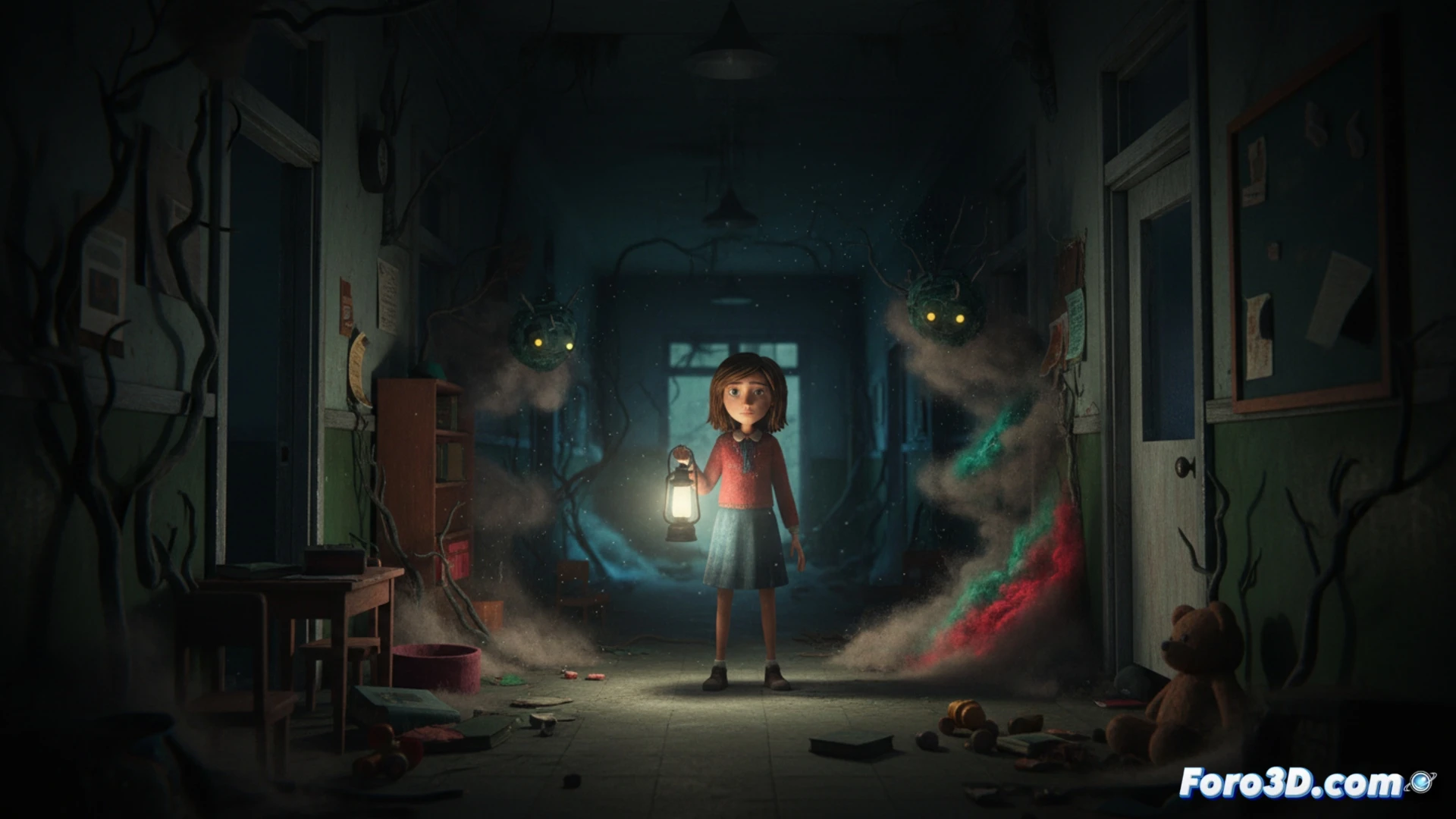
Technical Pipeline: From Digital Sculpture to Real-Time Render 🎨
The artistic process of Gylt begins in Maya, where the blocking and base animation of characters and creatures are performed. The migration to ZBrush is crucial for sculpting the organic details and deformations that mimic the physical modeling of frame-by-frame animation. The real technical challenge lies in integrating these assets into Unreal Engine 4. Volumetric lighting and dynamic materials are managed through Substance Suite, allowing textures to react to light and shadow in real time. This pipeline enables the engine to render a world that feels tangible, with a matte finish and grainy textures reminiscent of celluloid, without sacrificing performance on the new platforms.
Darkness as a Narrative and Technical Engine 🌑
Beyond aesthetics, Gylt uses darkness not only as a visual resource but as a gameplay system. Technically, this is achieved through an intelligent use of light masks in Unreal Engine 4 and roughness channels in Substance Designer. The leap to multiplatform has forced the optimization of these dynamic lighting systems to work consistently across varied hardware. Tequila Works' decision to prioritize a strong visual style over photographic realism demonstrates that a solid pipeline with Maya and ZBrush, combined with a coherent art direction, can generate an unforgettable technical identity.
How does Tequila Works manage to emulate the handcrafted stop-motion aesthetic of Laika in Unreal Engine 4 without sacrificing performance on low-power platforms like the Nintendo Switch?
(PS: a game developer is someone who spends 1000 hours making a game that people complete in 2)