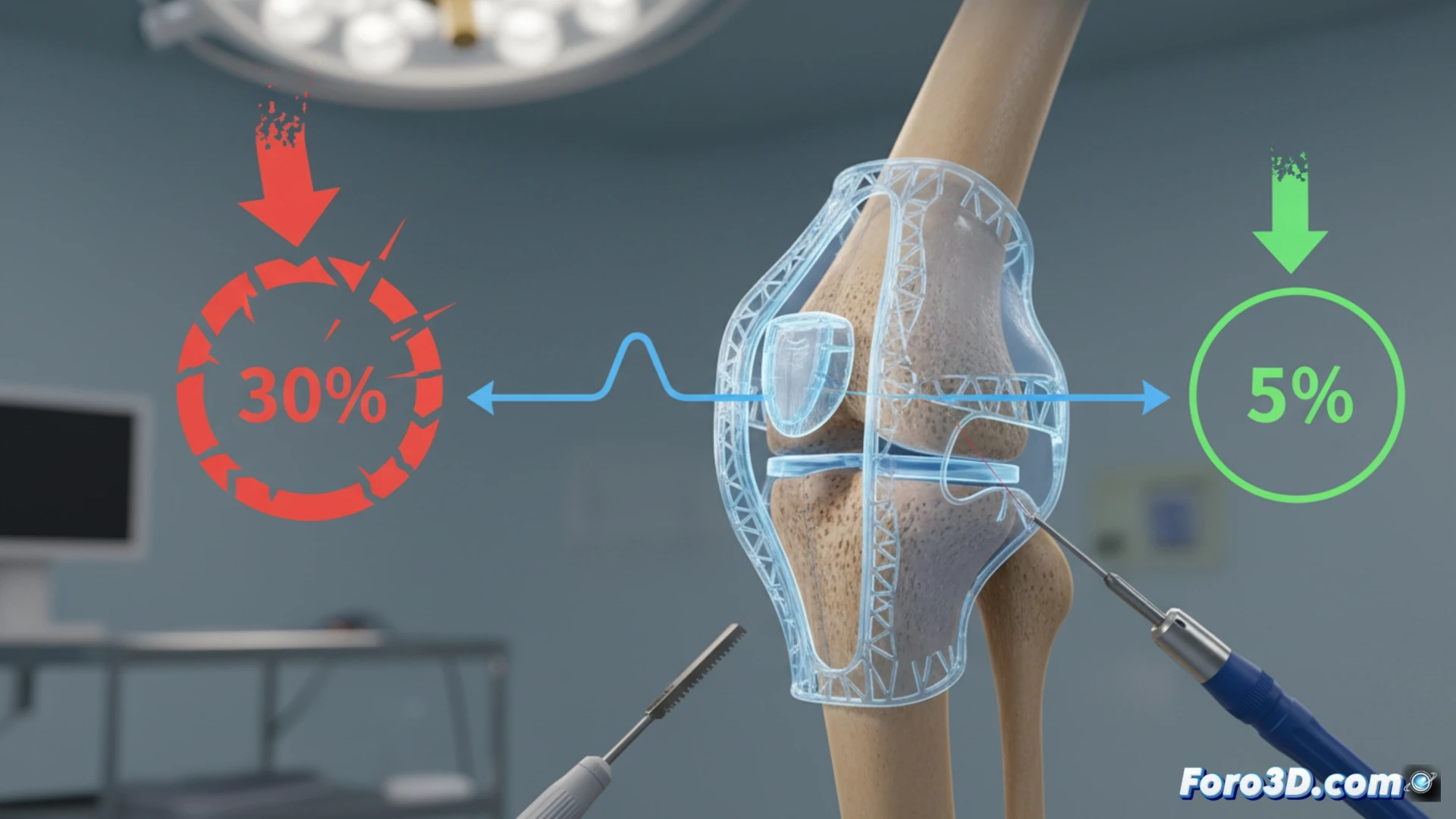
Precision in orthopedic surgery depends on the correct alignment of implants and cuts. Traditionally, standard guides generated a 30% error margin. Now, surgical guides manufactured using selective laser sintering (SLS) reduce that figure to 5%, adapting to each patient's unique anatomy and minimizing deviations during joint replacements and osteotomies.
How SLS Transforms Surgical Planning 🏥
Selective laser sintering (SLS) uses nylon powder or biocompatible materials to create guides from 3D CT scan models. By fusing powder layers with a laser, strong parts with millimeter tolerances are obtained. During surgery, the guide fits onto specific bone references, acting as a mold that directs saws and drills. This eliminates the need for manual adjustments and reduces operative time.
Less Margin for Error, More Margin for Coffee ☕
Before, the surgeon relied on their steady hand and a prayer that the implant wouldn't end up crooked. Now, with SLS guides, the error margin is so small that even a sleepy resident could get it right. Of course, the 3D printing technician has become the new hero of the operating room, while veteran surgeons pretend they always knew how to handle an STL file.