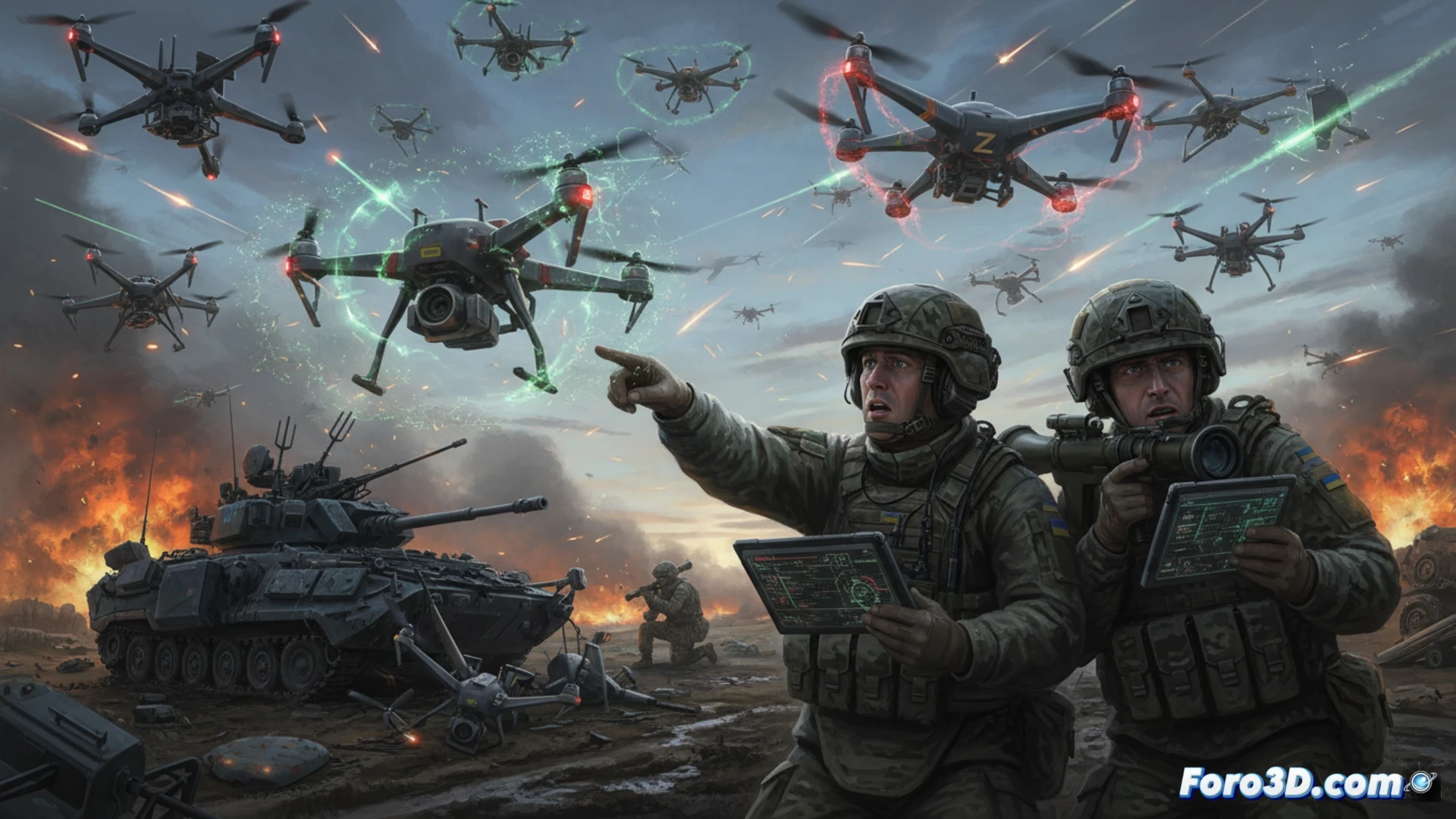
Drone saturation in Ukraine has reached a critical point. Soldiers can no longer distinguish between their own and enemy devices, causing constant friendly fire. Operators cut fiber optic cables without knowing their origin, and electronic warfare blocks their own signals, turning the battlefield into technical and tactical chaos.
Technology that turns against its user 🛡️
Electronic warfare systems have become a double-edged sword. By saturating the spectrum, they block communications on both sides, leaving units without a link. Fiber optic drones, designed to avoid interference, become easy targets when cables are accidentally cut. Friend-or-foe identification fails, and operators prefer to shoot down any drone rather than risk an explosion.
The drone mess: everyone shoots, no one hits 🎯
The situation resembles a paintball game where everyone wears the same uniform. Ukrainian soldiers have started painting their drones with yellow tape to distinguish them, but Russians do the same with red tape. The result: total confusion and the occasional drone shot down by its own side. Meanwhile, electronic warfare laughs from a distance, blocking even the operators' remote controls.