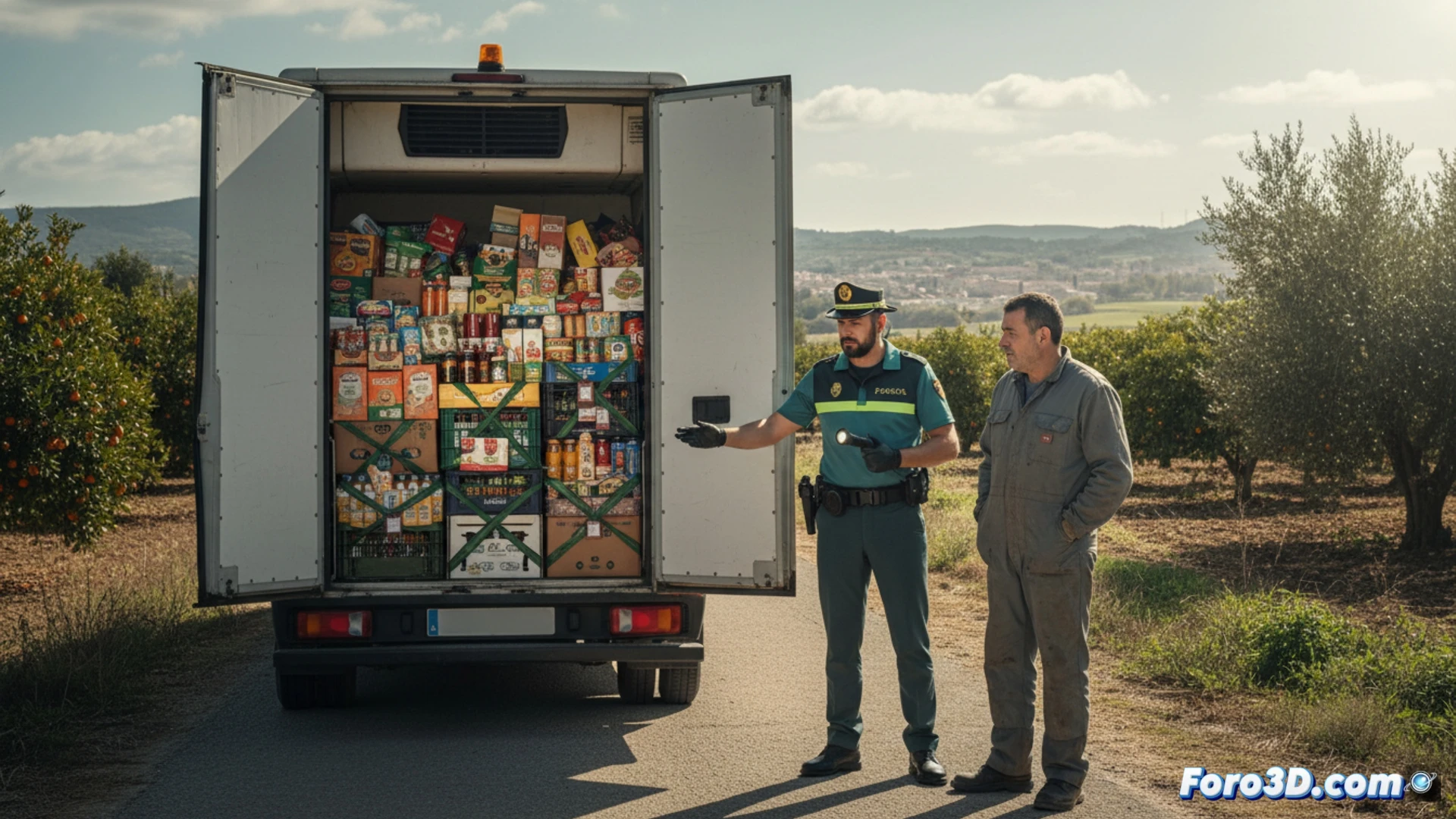
The Civil Guard intercepted a vehicle in Chiva that was transporting allegedly stolen food and alcoholic beverages, valued at over 3,100 euros. The incident occurred during a nighttime checkpoint on the CV-424 road. The driver, a 50-year-old Spanish man, was not the owner of the car and stated that the vehicle belonged to people who supposedly hired him for cleaning work. He said he came from Ripollet (Barcelona) and had to leave the car at a bar in Godelleta. When searching the vehicle, officers found numerous bags of products, many with security seals from a supermarket.
The logistics of illegal distribution and the digital trail 🕵️
This case illustrates how illegal distribution networks use simple but effective methods. The driver acted as a blind link, unaware of the actual cargo. Supermarket security seals, designed to trigger alarms in stores, do not prevent theft during transport. Current digital traceability allows agents to cross-reference license plate data, times, and locations through video surveillance and road control systems. A forensic analysis of the seals and packaging could reveal the exact origin of the batch, facilitating the identification of the network.
The cleaning deliveryman who confused the mop with the shopping cart 🧹
The driver said he was going to do some cleaning, but his van looked more like a mobile supermarket than a home products kit. With 3,100 euros worth of merchandise, the man confused his role: instead of passing the cloth, he passed the bill to a supermarket. Of course, his cleaning alibi has some truth to it: in the end, the Civil Guard cleaned his record with a citation. Maybe he should have made an appointment for the heist.