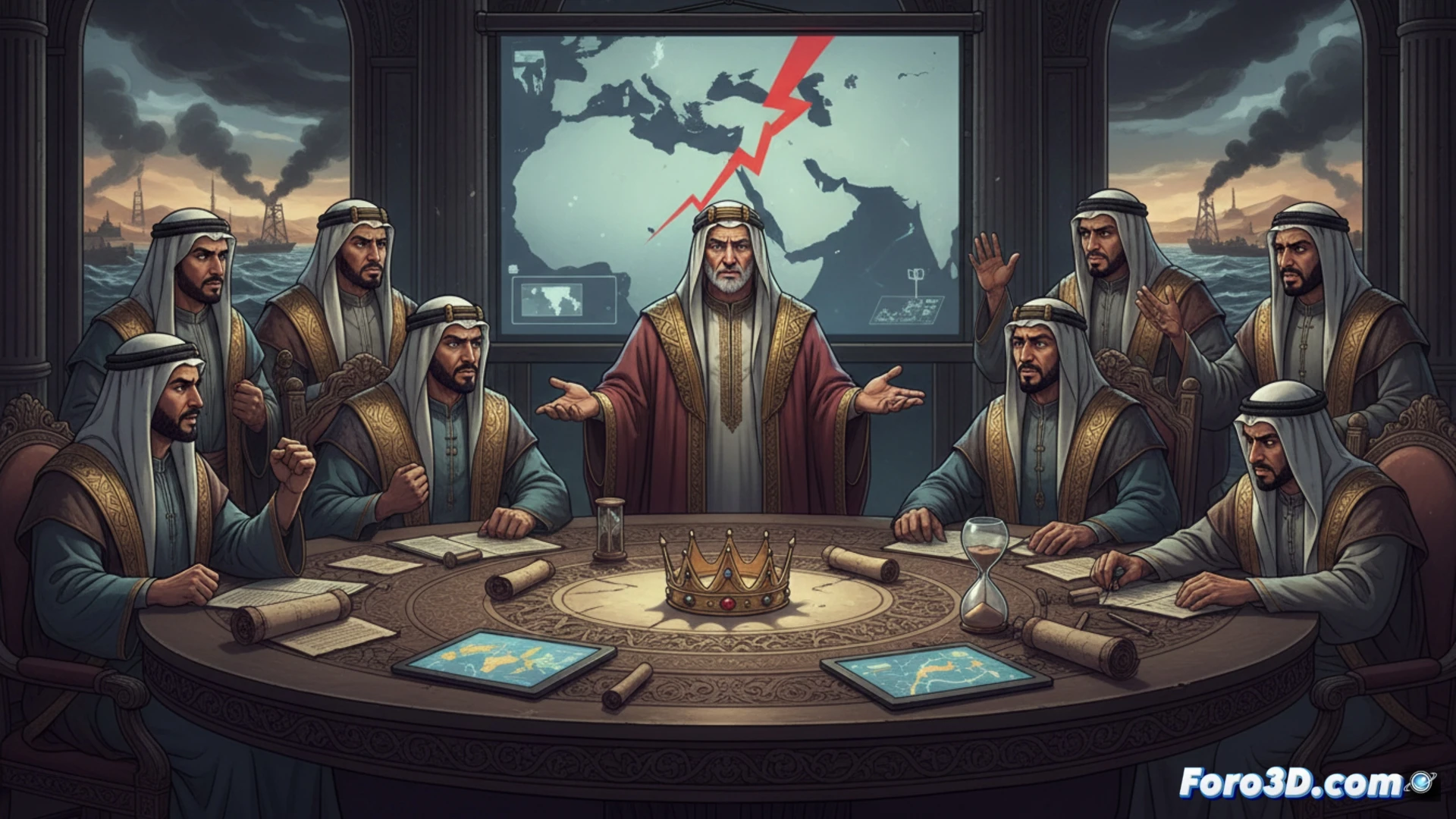
The Persian Gulf monarchies are cautiously facing the possibility that the United States will launch a new offensive against Iran. While Saudi Arabia and the United Arab Emirates seek to avoid conflict to protect their economies and future projects, Qatar and Oman maintain open channels with Tehran. The lack of consensus exposes the internal fractures of a bloc that fears being caught in the crossfire of a regional escalation.
The technological cost of an escalation in the Strait of Hormuz 🛢️
The Gulf's dependence on maritime stability is critical. An attack on Iran could close the Strait of Hormuz, through which 20% of the world's crude oil transits. Air defense systems like the US THAAD or surveillance drones deployed at bases in Oman and the Emirates would be put to the test. Furthermore, artificial intelligence projects for desalination and smart electrical grids, vital for urban survival, would become vulnerable to an Iranian cyberattack.
How to explain to your sheikh that the Expo 2030 plan is going down the drain 😅
Imagine the scene: a crown prince has just bought a football club and signed a contract for a floating city with solar panels. Suddenly, his advisor tells him that Iranian missiles have blocked the Gulf and that crude oil is not flowing. Now he has to explain that smart city projects will have to wait because the priority is buying insurance for oil tankers. In the end, even the mall fountain will have to operate under rationing.