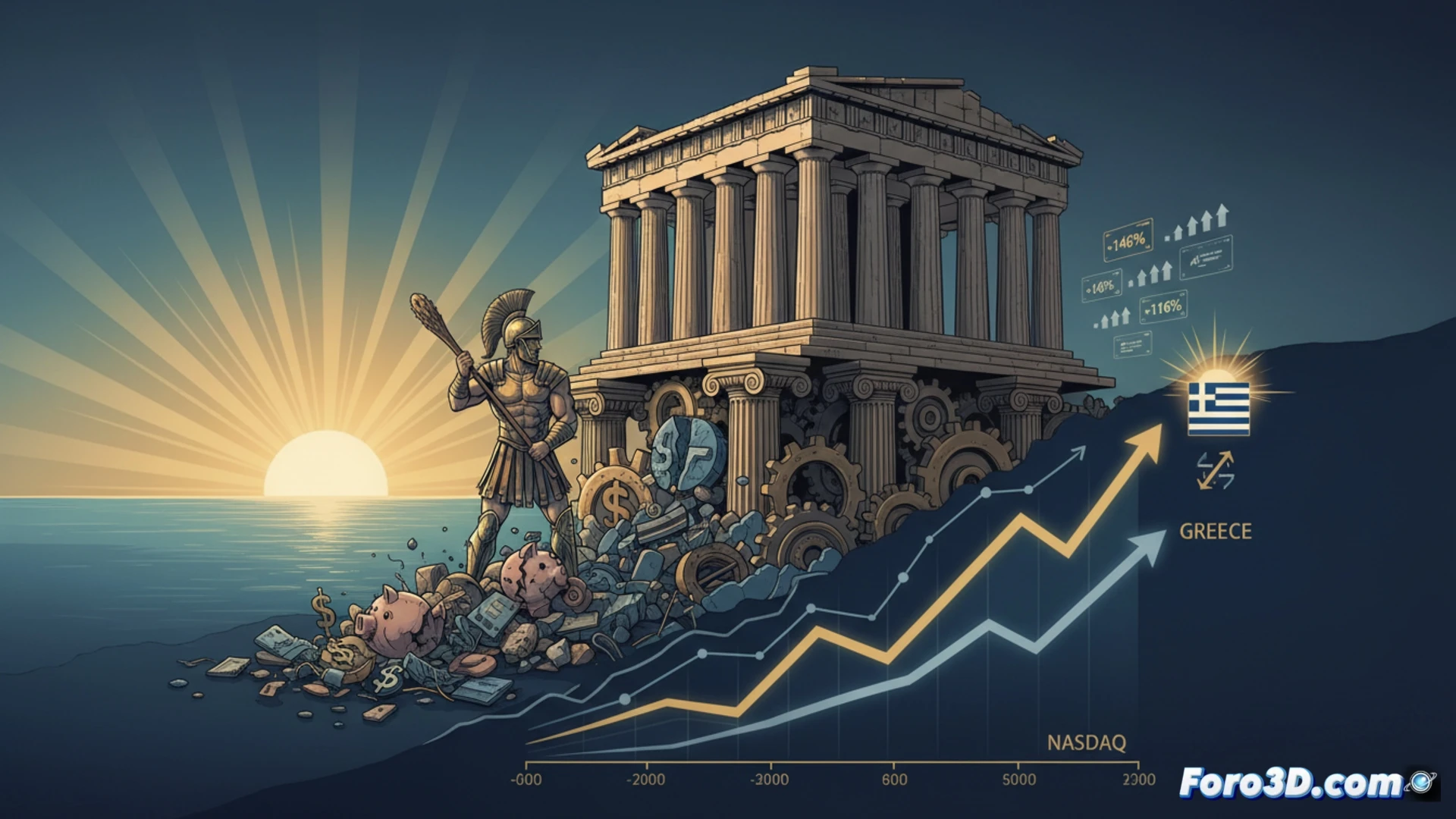
In the last five years, the Greek market has returned 146% compared to 116% for the Nasdaq 100. A remarkable contrast to 2015, when banks closed and the Athex index fell more than 90% from its 2007 peak. The key to this recovery was the cleanup of the banking sector through the Hercules program.
Debt Securitization: The Technical Engine of the Rally 📈
Greece's four largest banks reduced their non-performing loan rate from 47% through the Hercules program, which securitized around 57 billion euros in bad loans. This mechanism allowed risk to be transferred to investors, cleaning up bank balance sheets. Without this restructuring, credit and investment would not have flowed. Financial technology applied to managing distressed portfolios was essential for cleaning up the system and attracting foreign capital.
When Your Savings Dance the Sirtaki in the Market 💃
While Athens was restructuring its debt, Wall Street kept selling dreams of startups with no revenue. Now it turns out that a country that had to close its banks to avoid collapse outperforms the tech empire. Next time an investment fund talks to you about disruptive innovation, ask if they've considered putting money into a Greek bank. Because, honestly, the financial sirtaki seems more profitable than Silicon Valley hype.