Gravity Circuit has managed to capture the essence of the classic Mega Man X not only through its gameplay, but also through impeccable technical execution in its pixel art. Developed in GameMaker Studio and with sprites created in Aseprite, the game demonstrates that homage lies not in copying, but in understanding the principles of fast animation and solid color palettes that defined the 16-bit era. For the indie developer, this title is a case study on how to optimize limited resources to achieve a huge visual impact.
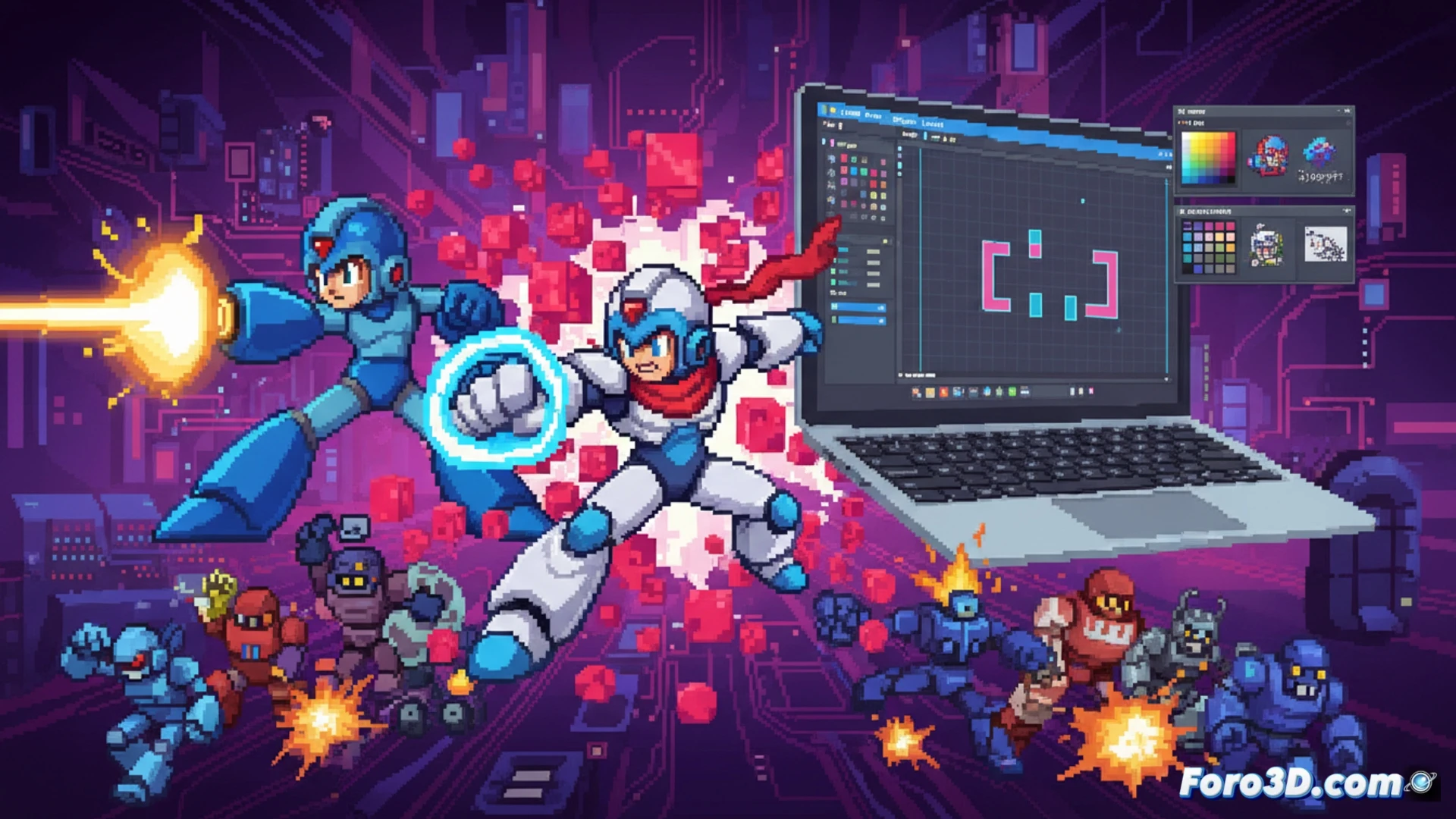
Spriting and programming techniques for fluid combat 🎮
The secret to the fluidity in Gravity Circuit lies in the synchronization between the GameMaker engine and the art generated in Aseprite. While Mega Man X used the hardware of its time to handle 16x16 pixel sprites with 15-color palettes, Gravity Circuit applies a similar principle: sprites with solid colors and no gradients. In Aseprite, the team limits shading to two tones per base color, allowing dash and jump animations to run at 60 fps without sacrificing sharpness. In GameMaker, the pixel-perfect collision mask system is used to maintain hit precision, replicating the impact feel that characterized the Capcom series. The key is to use optimized spritesheets and avoid anti-aliasing, forcing the engine to render clean shapes that the human eye interprets as speed.
Lessons for indies aiming for the retro style ✨
Gravity Circuit reminds us that effective pixel art doesn't need hundreds of colors or complex textures. By limiting the palette to 16 colors per sprite and prioritizing clear silhouettes, developers can reduce production time and ensure the character reads well in motion. To emulate this style, it is recommended to use Aseprite with its indexed color mode and export in uncompressed PNG format. In GameMaker, the draw_sprite_ext function allows scaling without filters, maintaining the hard pixel aesthetic. If your game relies on reaction speed, prioritize animations of 3 to 5 frames for basic attacks and no more than 8 for transitions; this will achieve that immediate response that defines the genre.
In Gravity Circuit, how is the balance achieved between visual and animation fidelity in the style of Mega Man X and the technical limitations of GameMaker and Aseprite without sacrificing combat fluidity?
(PS: shaders are like mayonnaise: if they break, you start all over again)