The Museo del Prado presents In the Italian Style, an exhibition that brings together over one hundred works from 31 Spanish institutions and 25 foreign ones. Curated by Joan Molina Figueras, the exhibition analyzes how Spanish artists assimilated models from the Italian Trecento, such as Giotto and Simone Martini, blending them with French Gothic and Byzantine styles. Twenty-one pieces have been restored for this occasion.
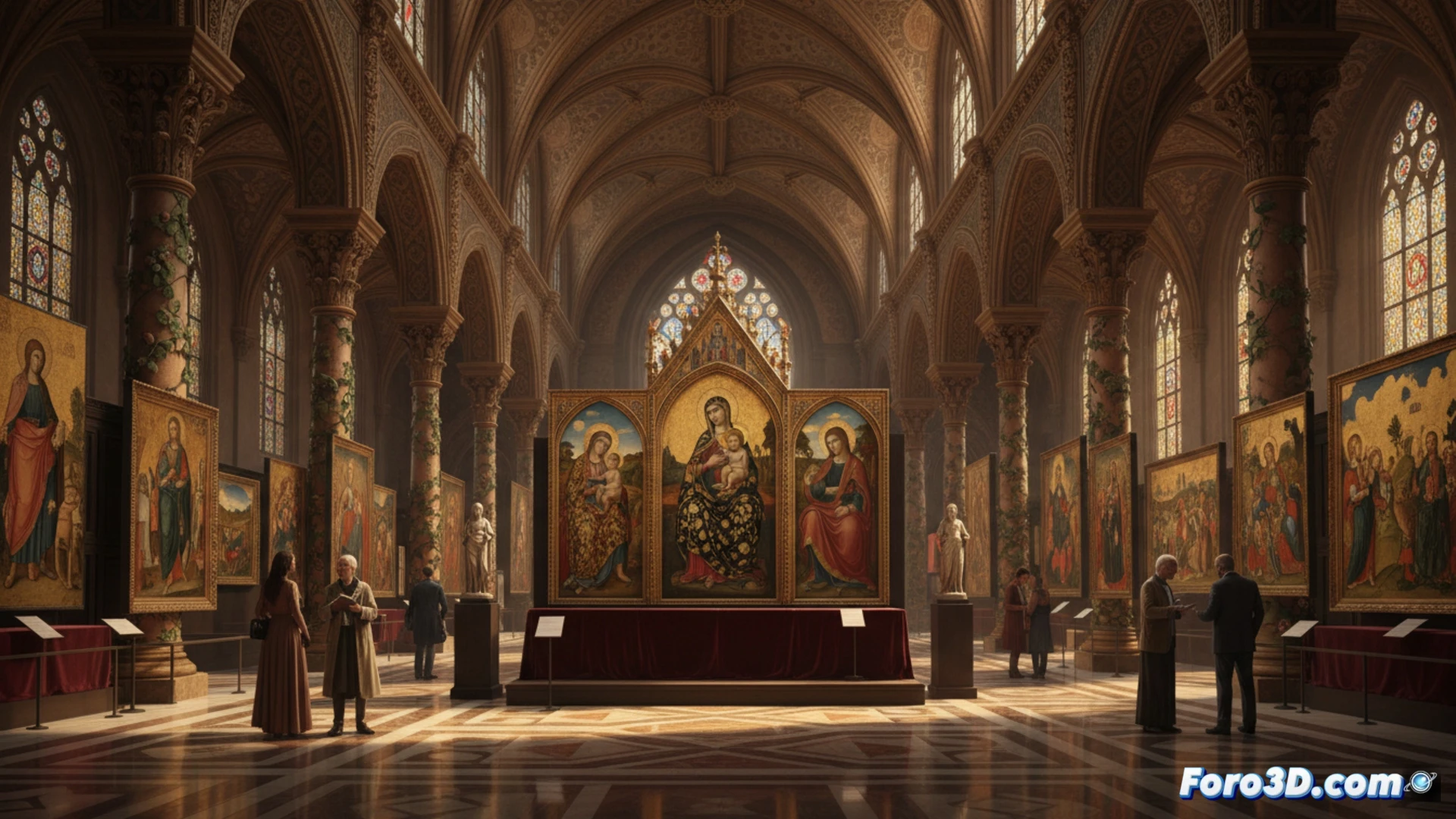
Restoration and analysis: technology serving medieval art 🛠️
The technical team applied X-rays, infrared reflectography, and stratigraphic analysis to 21 works to reveal hidden layers of preparatory drawing and original pigments. These processes allowed the identification of gold leaf gilding techniques, translucent enamels, and the use of imported lapis lazuli. High-resolution digitization facilitated stylistic comparison between Spanish workshops and those of Siena or Florence, documenting previously invisible iconographic borrowings.
When copying Italians was the trend (and no one called it plagiarism) 😏
Fourteenth-century Spanish artists didn't have Instagram, but they already practiced cultural liking: they borrowed Simone Martini's virgins, added a Byzantine gold background, and dressed them in French Gothic folds. The result was a visual medley that today we would call multicultural inspiration. Of course, without copyright or image usage fees. Any resemblance to the Trecento was pure artistic intentionality.