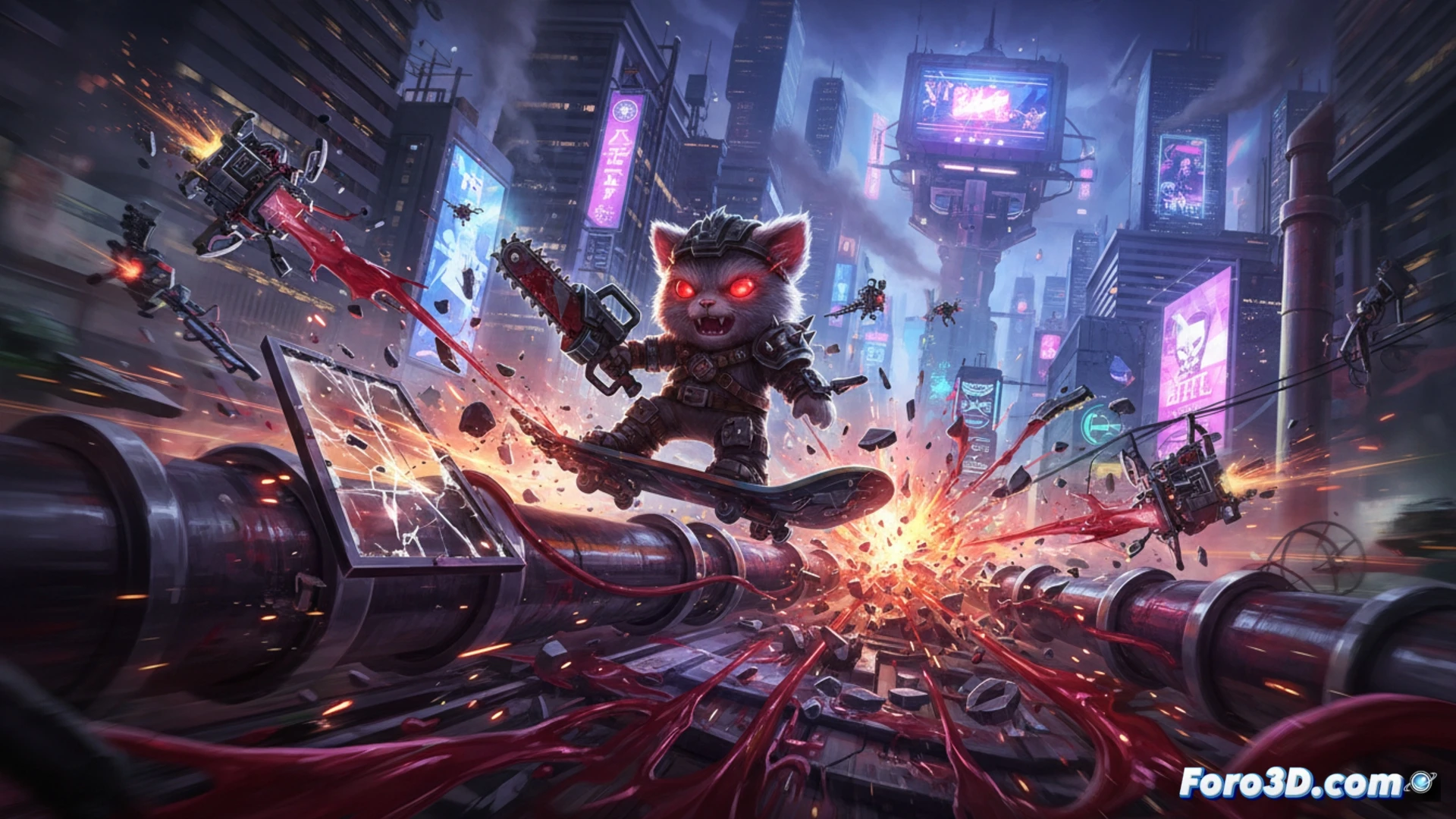
The development of Gori: Cuddly Carnage presents a fascinating case study on how to balance cyberpunk aesthetics with total destruction mechanics. Using Unreal Engine 4, the team has achieved a brutal contrast between its adorable protagonists and neon-drenched industrial settings. The technical key lies in the implementation of physical blood and 100% destructible environments, elements that demand rigorous optimization to maintain real-time fluidity without sacrificing the over-the-top visual style.
Modeling and Texturing: From ZBrush to Substance Painter 🎨
The artistic pipeline begins in ZBrush, where creatures are sculpted with a high level of organic detail, keeping in mind that damage deformation should be visible. Subsequently, those models are retopologized for Unreal Engine 4, reducing the polygon count without losing the cartoonish silhouette. Texturing in Substance Painter is fundamental to achieving the neon glow and metallic wear. Dirt and blood masks are applied that respond to vertex painting channels, allowing the engine to activate destruction zones without needing to load additional textures, optimizing performance during combat.
Lessons for Independent Developers 💡
Gori demonstrates that a small team can achieve a huge visual impact if they master the integration between tools. The key is not in using photorealistic assets, but in understanding how Substance Painter can paint damage maps and how Unreal Engine 4 can manage fluid physics for blood. For any indie studio, this title is a reminder that optimization must be planned from the modeling stage, not at the end of the project. Controlled chaos is viable when every asset knows exactly how it is going to break.
Do you think this asset needs optimization or can it be left as is for mobile? 🎮