Starting May 26, 2026, Google is merging its YouTube, Gmail, and Discover ads into a single campaign type called Demand Gen. The goal is to reach more people without having to manage multiple campaigns. According to the company, advertisers will see a 9.5% increase in return on investment, although they will lose control over the exact placement of their ads.
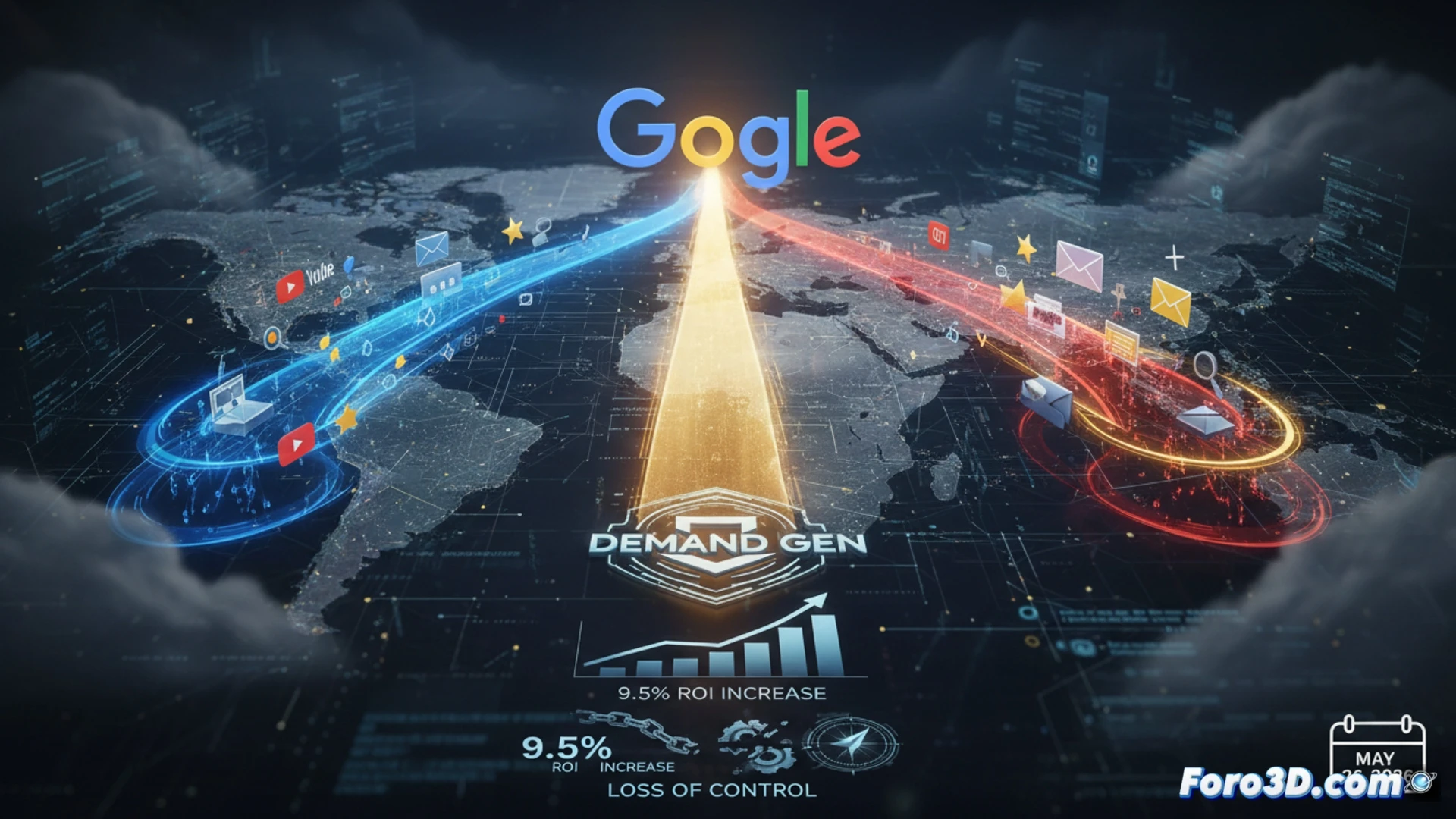
How the new unified Google campaign works 🤖
Demand Gen uses artificial intelligence to place ads in spaces with the highest likelihood of conversion, prioritizing audience over placement. This means the system automatically decides whether your ad appears in a YouTube video, in the Gmail inbox, or in the Discover feed. For technicians who manually adjusted each channel, this means losing granularity; for everyone else, it simplifies management and promises better results without extra effort.
Goodbye to fine control: now Google decides for you 😅
Remember when you could choose for your ad to appear only in kitten videos? Well, forget it. With Demand Gen, Google becomes your tech-savvy brother-in-law: it knows better than you where your money should be. If you're a detail freak, get ready to see your plumbing ad next to a makeup tutorial. But hey, the return goes up by 9.5%, so shut up and trust the algorithm.