A study by the Nagoya Institute of Technology, the most extensive conducted to date, reveals that suffering heatstroke can double the risk of developing cataracts. Analyzing data from a large sample of the Japanese population, researchers found that an increase in body temperature could damage the lens, accelerating its opacity. The research opens a new avenue for understanding the effects of extreme heat on eye health.
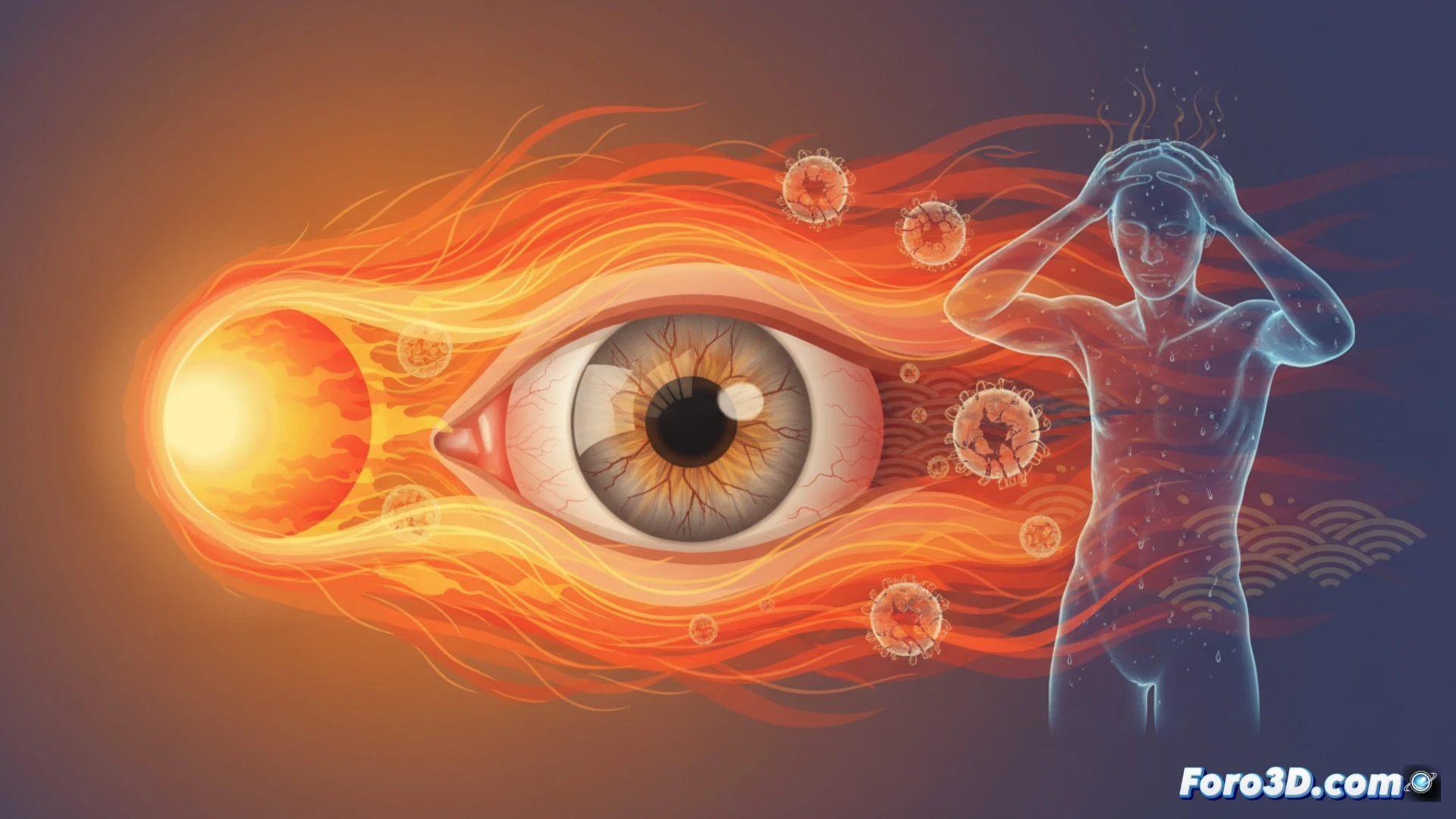
Cellular mechanism: how heat accelerates lens opacity 🔬
The Nagoya team suggests that high internal temperatures denature the proteins in the lens, a process similar to what happens when cooking an egg. When body temperature exceeds 40 degrees for a prolonged period, proteins aggregate, forming clusters that scatter light. This cumulative damage, documented in laboratory models, would explain why episodes of severe hyperthermia are associated with a higher incidence of cortical and nuclear cataracts in the at-risk population.
Eye in the oven: the sun isn't the only thing frying your vision 🔥
So now you know: if you get heatstroke this summer, you won't just have to deal with dizziness and bad mood. Your lens could be slowly cooking, getting ready to fog up like a windshield on a rainy day. And the worst part is there's no turning back: once the proteins are cooked, the only solution is for a surgeon to put in a new lens. Take care of your head, or you'll end up seeing the world as if through a shower curtain.