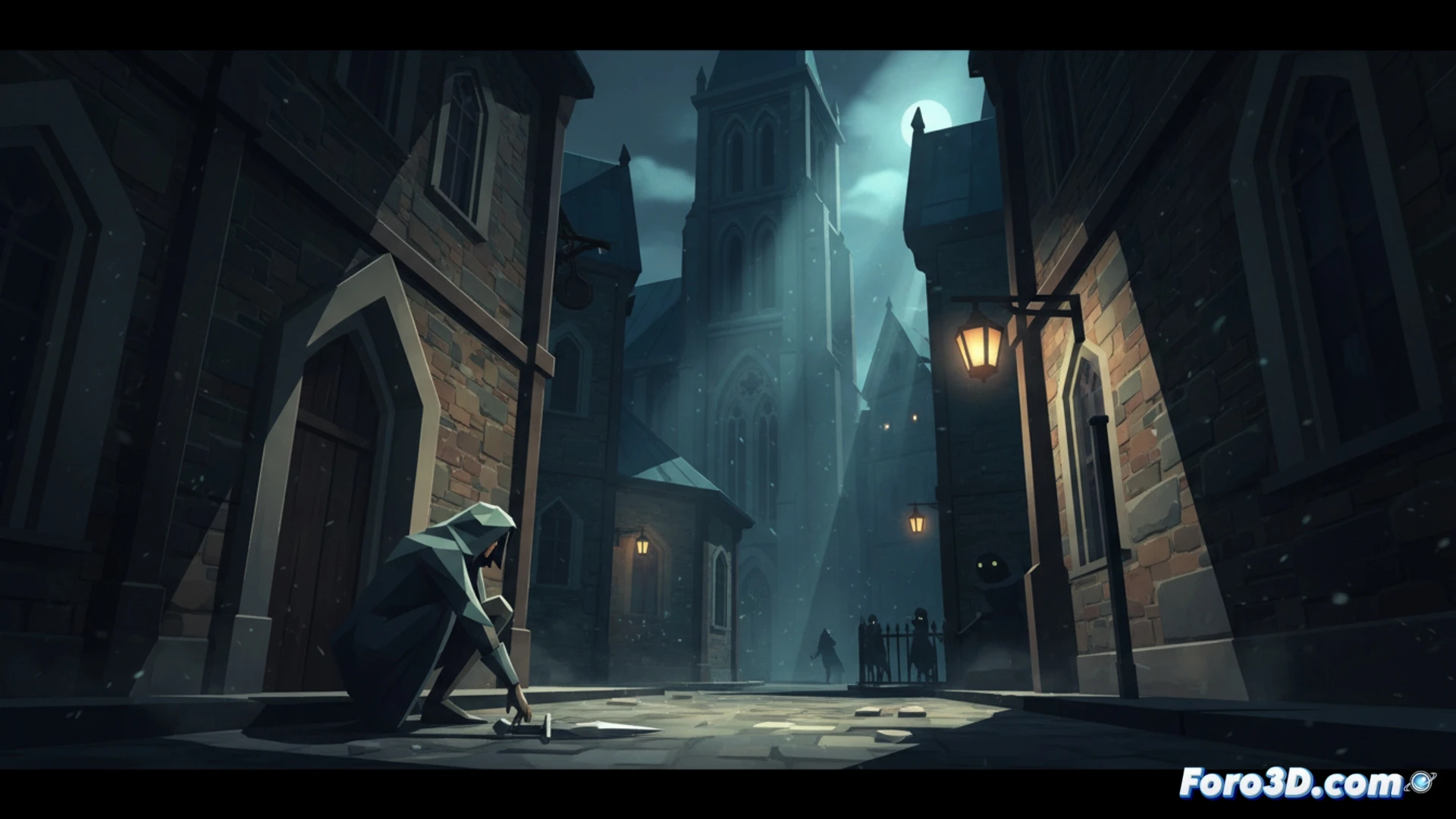
Gloomwood is a clear example of how retro aesthetics are not a limitation, but a design choice. Developed in Unity, this Immersive Sim pays homage to Thief by using low-poly models and dynamic lighting based on real shadows. Far from being a mere visual nod, this combination is functional: darkness and projected shadows are the core mechanic of Victorian stealth. Every asset must be optimized so the engine renders sharp shadows without sacrificing 60 FPS on modest hardware.
Technical Workflow: Blender, Photoshop, and Optimization in Unity 🛠️
Gloomwood's artistic pipeline is a manual of efficiency. In Blender, low-poly assets are modeled with simplified geometry, prioritizing recognizable silhouettes in the gloom. Then, in Adobe Photoshop, retro-style textures are created with limited palettes and hand-painted details, avoiding complex PBR. The trick lies in importing to Unity: materials are configured with the Standard shader (Specular setup) to react to directional light, but with high roughness to avoid reflections that could betray the player. Lights are limited to point and directional sources, and shadows are adjusted with low-resolution cascades (Shadow Resolution 512) to maintain performance. Level design leverages this: lit areas have hard shadows that create hiding spots, while dark areas use Unity's occlusion culling system to avoid rendering what isn't seen.
Lessons for Indie Developers: Prioritize Gameplay Over Realism 🎯
Gloomwood demonstrates that a stealth game doesn't need 4K textures or million-polygon models to be immersive. The key lies in the coherence between art and mechanics. By using low-poly assets with dynamic lighting, every shadow becomes a gameplay resource. For an indie developer, this approach reduces production costs and speeds up prototyping in Unity. The lesson is clear: optimize for the gameplay experience, not the graphical benchmark. Victorian stealth works because the player reads the environment through light, not details.
As a Unity developer, what practical lessons about lighting and shadow design can you extract from Gloomwood to enhance a stealth atmosphere without sacrificing performance in low-poly environments?
(PS: game jams are like weddings: everyone is happy, no one sleeps, and you end up crying)