Girona came out with urgency at Montilivi, needing points to breathe away from the relegation zone. Bryan Gil led the initial attacks, generating constant danger on the wings, but the lack of accuracy in the final meters doomed their efforts. This lack of offensive punch proved costly in the 21st minute, when Atlético de Madrid, on their first clear chance, pierced the home net. A header from Hancko hit the post, leaving the ball dead in the area, and Lookman, assisted by Griezmann, only had to tap it in. The lesson was clear: forgiving Atlético usually comes at a high price.
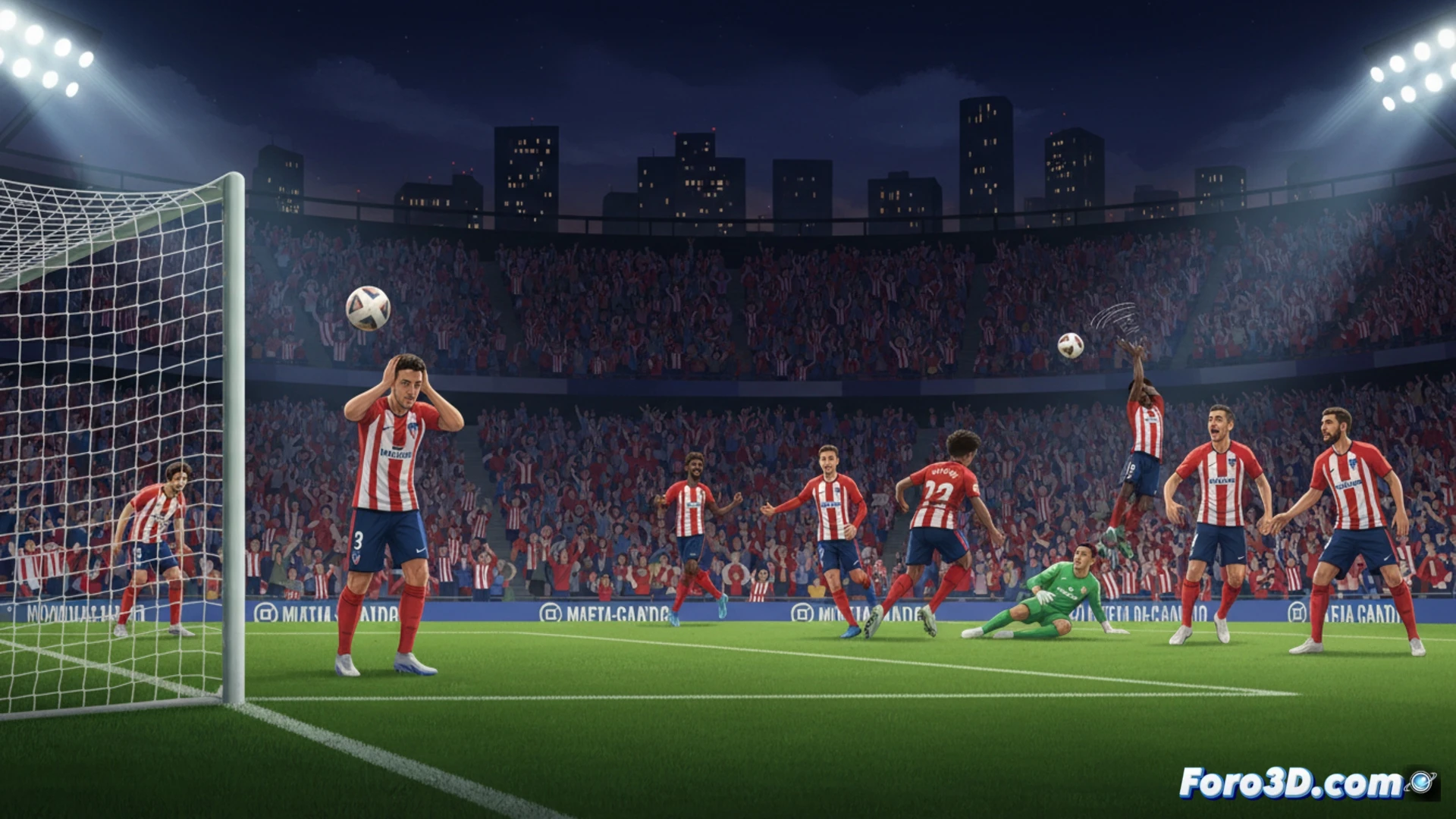
Girona's offensive pattern and the failed defensive transition ⚽
Girona's high pressing system, with advanced full-backs and Bryan Gil as a destabilizing winger, generated numerical superiority in the opponent's half during the first twenty minutes. However, the finishing phase showed notable technical shortcomings: crosses without a clear target and wayward shots from favorable positions. In contrast, Girona's defensive transition revealed a disconnect between the lines. The midfield failed to cover the interior spaces after losing possession, allowing Griezmann to receive the ball unmarked and assist Lookman. This tactical imbalance, combined with the lack of punch in attack, defined a predictable script that Atlético knew how to exploit with surgical efficiency.
The law of minimum effort applied to football 🎯
While Girona sweated buckets to not even score by chance, Atlético arrived, saw, and scored without breaking a sweat. That goal play looked like a tutorial on how to win games without warming up: a post from Hancko, a dream-like pass from Griezmann, and Lookman pushing it in like taking out the trash. If football gave points for offensive aesthetics, Girona would be league leaders; but since it gives them for goals, one must admit that sometimes efficiency is more boring than effective. Or as an old coach would say: it's not that they play badly, it's that you play worse when you have the ball.