The launch of Ghost Song has proven that it is possible to create a sci-fi Metroidvania with a striking visual identity without needing an AAA budget. Developed in Unity, this title stands out for its organic and desaturated aesthetic, where atmospheric lighting and custom shaders transform cavernous settings into living, oppressive spaces. For indie developers, the case of Ghost Song offers practical lessons on how to squeeze the Unity engine to achieve a coherent art direction and solid performance. 🎮
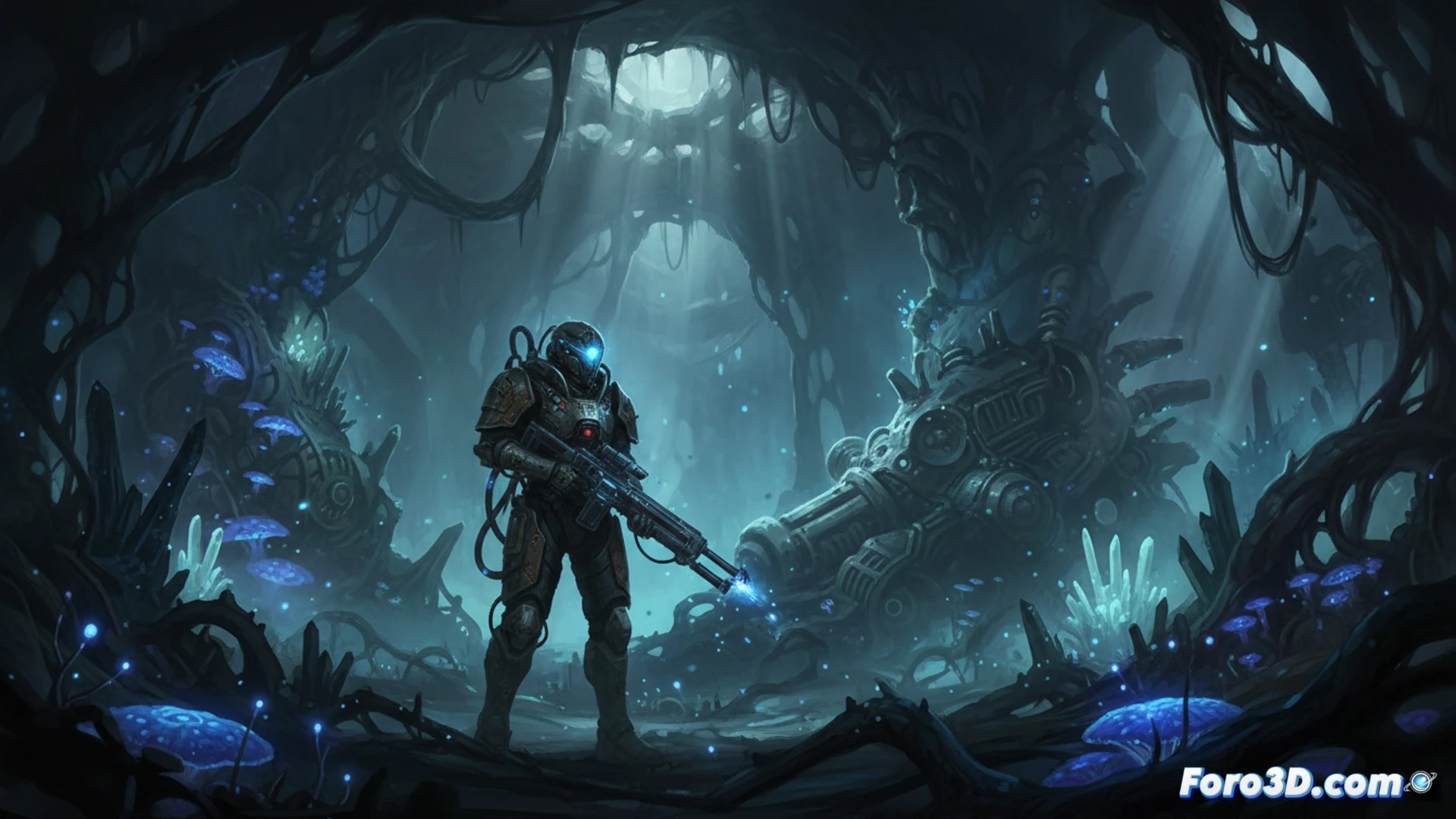
Volumetric lighting and organic surface shaders 🌌
The secret to Ghost Song's atmosphere lies in the combined use of point lights with limited range and variable density fog. Instead of relying on expensive global illumination, the team opted for baked lights in static areas and a particle system to simulate dust and ambient moisture. The shaders for characters and enemies use a roughness map and a simplified subsurface scattering effect, making biological surfaces appear moist and fleshy. To replicate this effect, it is recommended to use Unity's Shader Graph by combining a Fresnel node with a desaturated base color (low saturation HSV values) and a soft emission control for eyes or bioluminescent light points.
Asset optimization and limited color palette 🎨
Ghost Song demonstrates that limiting the palette to gray, blue, and dirty orange tones does not impoverish the game, but rather reinforces immersion. To maintain 60 fps on consoles and modest PCs, the studio reduced the polygon count in background scenes and used 2D sprites for distant decorative elements. The key is to work with texture atlases in Photoshop that share the same color space and to use Unity's Sprite Shape system to create curved platforms without heavy 3D geometry. A final tip: bake your lights in the game scene and use Unity's post-processing profile with a slightly desaturated Color Grading tone to unify the entire image.
What lighting and post-processing techniques were used in Ghost Song to generate that organic and moist atmosphere without sacrificing performance in Unity?
(PS: a game developer is someone who spends 1000 hours making a game that people complete in 2)