The art world bids farewell to Georg Baselitz, the German painter who defied norms by hanging his paintings upside down. Born in 1938 in East Germany, his work became an act of rebellion against any convention. With his death, a chapter of provocation and reflection on identity and history comes to a close. 🎨
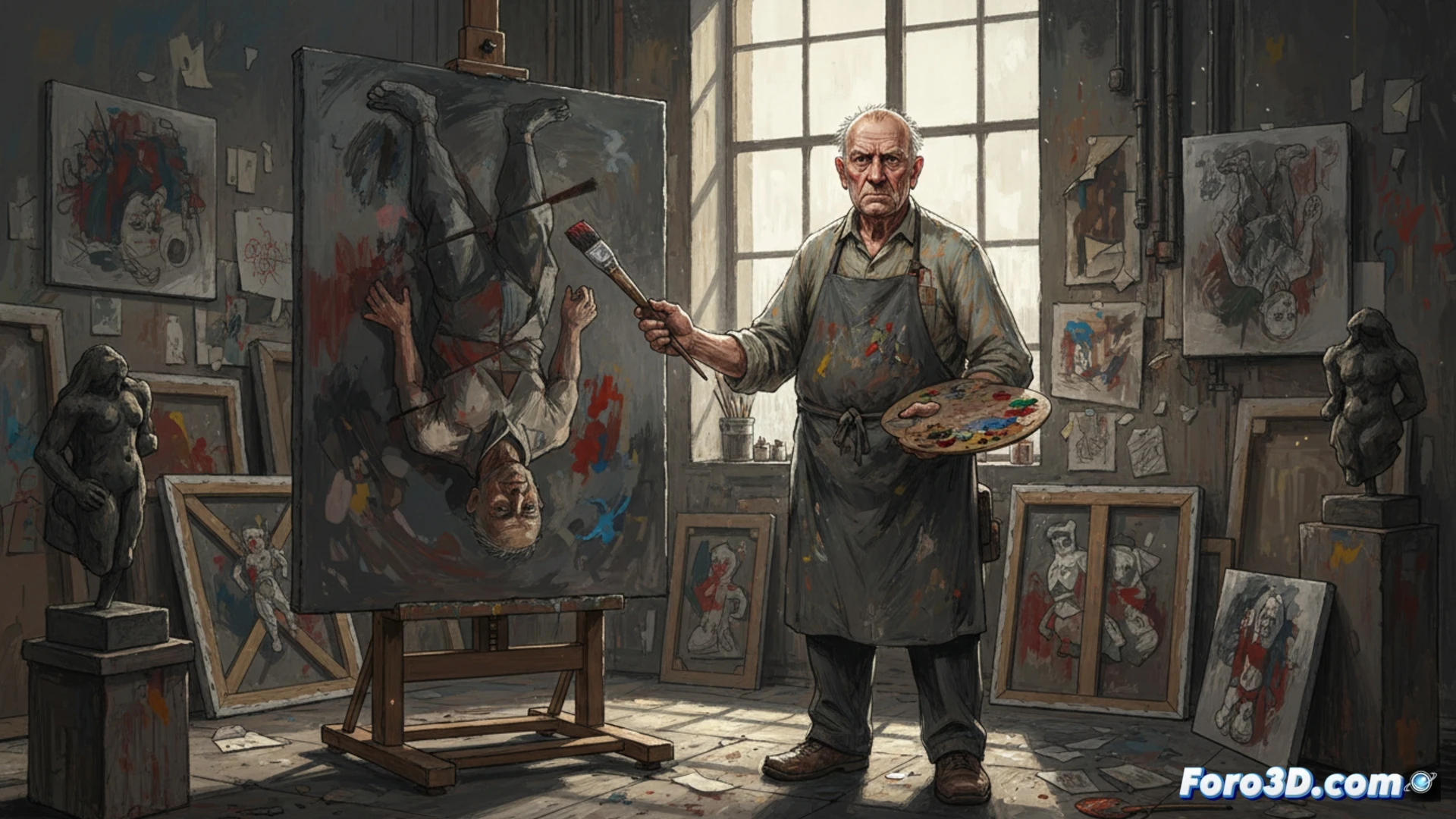
The inversion technique as a development tool 🔄
Baselitz developed his own method: painting human figures and landscapes, then turning them upside down. This inversion was not a visual trick, but a strategy to free painting from its narrative function. By rotating the canvas, he forced the viewer to focus on composition, texture, and color, leaving literal meaning behind. A technical approach that prioritizes craftsmanship over anecdote.
The upside-down trick that fooled no one 😏
Some critics thought painting upside down was a way to skip the sketch. But no, Baselitz took his time: first he painted it right-side up, then he flipped it. A process that, from the outside, seems like the perfect method to stop neighbors from asking what your painting means. After all, if it's not understood, you can always say to look at it from the other side.