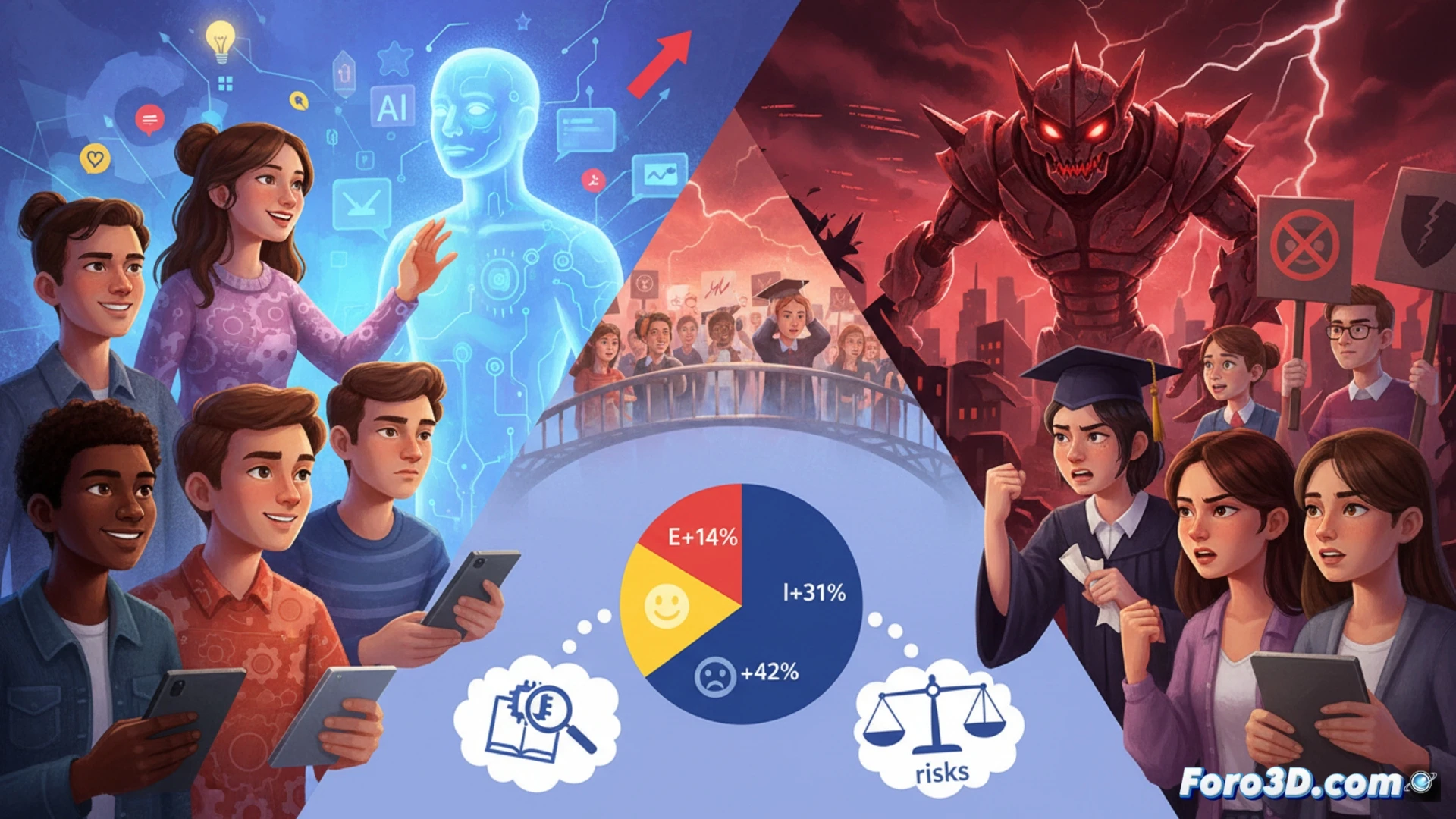
Generation Z has stopped seeing artificial intelligence as a promise of the future. A recent survey in the United States shows that enthusiasm for AI fell by 14% in one year, while anger rose to 31% and anxiety remains at 42%. Half of students want to learn how to use these tools, but believe the risks outweigh the benefits. Protests at commencement speeches, such as Eric Schmidt's in Arizona, reflect growing unease about the technology's impact on jobs.
The technical challenge of training a skeptical generation 🤖
The education sector faces a dilemma: teaching AI to students who doubt its usefulness. While 50% of young people want to be trained in these tools, distrust hinders adoption. Machine learning systems require a solid foundation in algorithms, data management, and ethics. Without a curricular integration that addresses both the benefits and job risks, rejection will continue to grow. Tech companies must adjust their strategies to avoid alienating their future workforce.
AI also gets uninvited from the graduation party 🎓
It seems robots not only threaten jobs, but also the chance to give an emotional speech. Arizona students made it clear they prefer listening to a human with doubts over a former Google CEO with artificial optimism. While anger rises to 31%, perhaps chatbots should prepare a Plan B: offer algorithmic comfort to the unemployed or, at least, learn to tell bad jokes at ceremonies. Next time, let Siri do the talking.