The work of a concierge, often invisible, exposes a vulnerable group to a lethal combination of physical and psychosocial risks. From overexertion due to luggage handling and forced postures to stress from customer service and the risk of aggression, traditional prevention falls short. 3D simulation and digital twins are emerging as key tools to model these environments and train workers in safe movements before injury occurs.
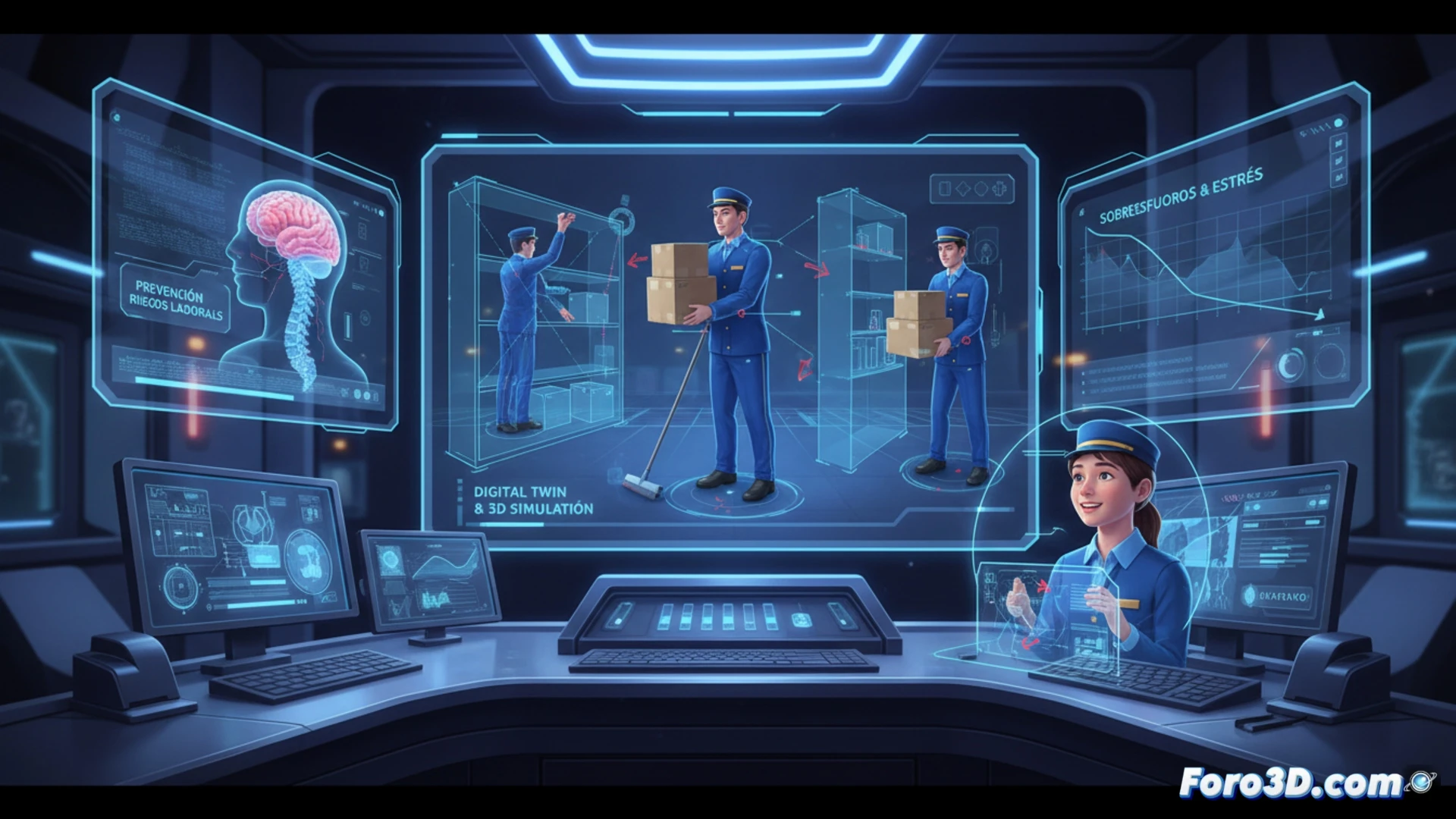
Preventive ergonomics through 3D modeling and posture analysis 🛠️
The main physical risk for a concierge is musculoskeletal disorder resulting from loads and repetitive movements. By 3D modeling a digital twin of the workstation, it is possible to analyze the biomechanics of each task: lifting suitcases, pushing carts, or bending down to clean. The simulation allows identifying critical angles of flexion and torque on the spine, proposing adjustments to the height of work surfaces or the location of objects. This virtual analysis, without exposing the worker, generates visual and interactive safe lifting protocols that significantly reduce overexertion injuries.
Virtual environments against aggression and work stress 🧠
Exposure to aggression and stress from multiple tasks require behavioral training that classic paper-based training cannot achieve. A virtual reality (VR) environment can recreate high-pressure scenarios: an aggressive client at the door or a simultaneous emergency. The concierge practices de-escalation protocols and task prioritization in a safe space. This immersion not only improves crisis response but also allows designing early warning systems integrated into the building's digital twin, proactively protecting this vulnerable group.
How could a digital twin of a building simulate in real time the ergonomic risks and exposure to chemical products that a concierge faces, allowing their routes and tasks to be redesigned to minimize injuries?
(PS: protecting the military is like protecting your Blender file: back it up or cry later)