The analysis of occupational risks in the profession of early childhood teacher reveals a complex exposure profile that combines physical, biological, and psychosocial factors. From forced postures when bending down or lifting children to vocal strain and chronic stress, these professionals face wear and tear that leads to burnout and musculoskeletal injuries. 3D technology offers key tools to model these scenarios and design safer environments.
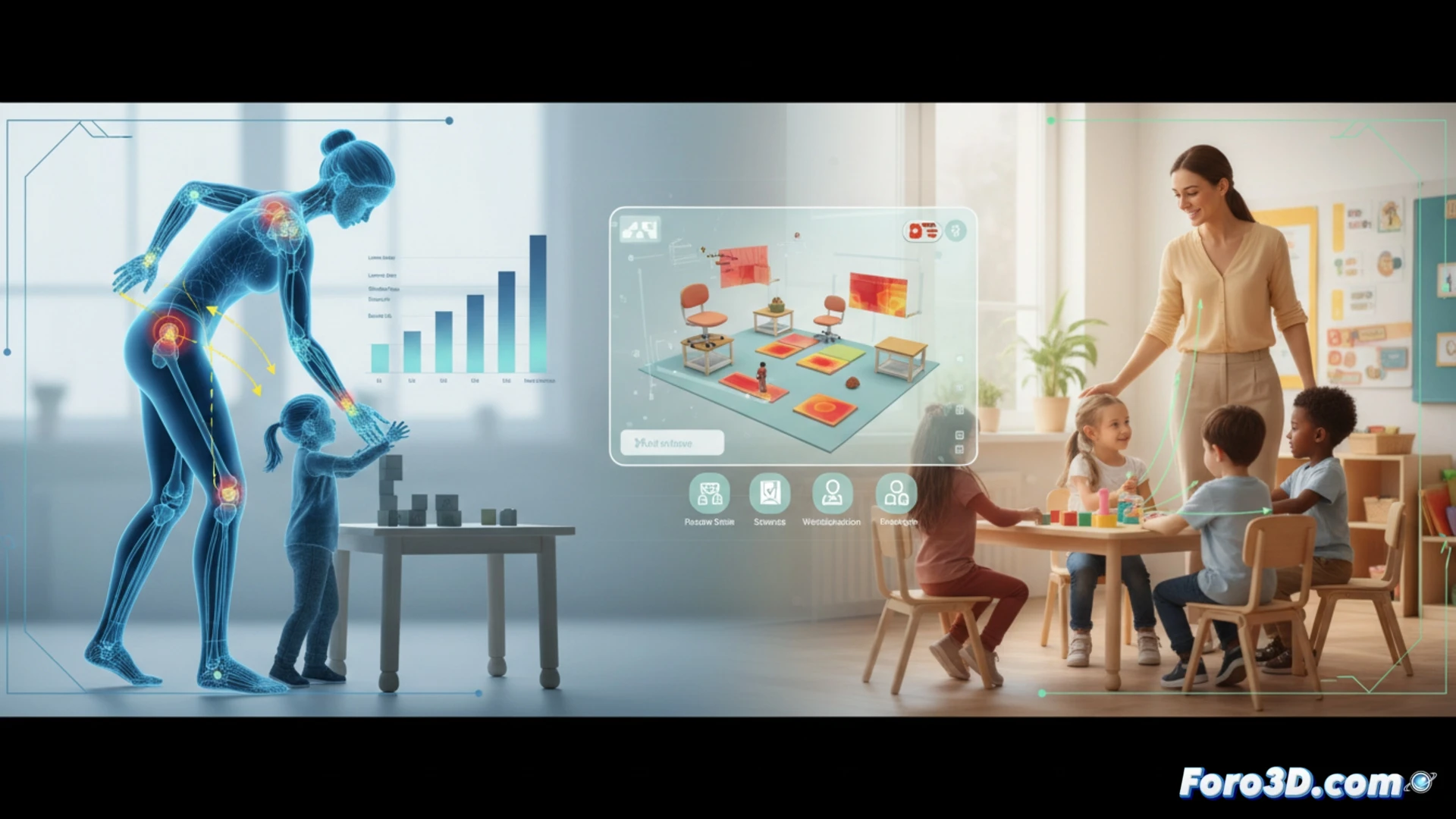
Ergonomic simulation and modeling of critical postures 🖥️
3D modeling of forced postures allows quantifying the biomechanical load on the educator's joints during tasks such as kneeling to attend to a child or mobilizing a small child with motor difficulties. Through digital twins of the classroom, it is possible to recreate the layout of furniture and daily routines to identify moments of greatest tension. This ergonomic simulation facilitates the redesign of spaces and the creation of assisted movement protocols, reducing the incidence of lower back pain and tendinitis. Additionally, sensors integrated into these models allow assessing exposure to infectious diseases by mapping air circulation and contact points.
Early warning systems for comprehensive well-being ⚠️
Beyond ergonomics, 3D technology can integrate biometric and behavioral data to anticipate stress and childhood aggression. A digital twin that collects indicators of vocal fatigue or erratic movement patterns of the teacher could trigger alerts for scheduled breaks or support intervention. This dual protection approach, which cares for both the educator and the child, transforms the classroom into an intelligent system where occupational risk prevention and the safety of the vulnerable group reinforce each other, complying with special protection regulations.
Can a digital twin of a preschool classroom predict and mitigate the risk of musculoskeletal injury in a teacher before they perform the physical activity that causes it?
(PS: the 28 affected soldiers are like 28 polygons with inverted normals: they shouldn't be like that)