The acting profession involves occupational risks that go beyond physical ones, including aesthetic pressure, vocal strain, night-time schedules, and exposure to aggression or harassment. Protecting this vulnerable group requires advanced tools to anticipate and mitigate these dangers. 3D technology offers precise solutions for evaluating and redesigning stage environments, ensuring regulatory compliance and the overall well-being of performers.
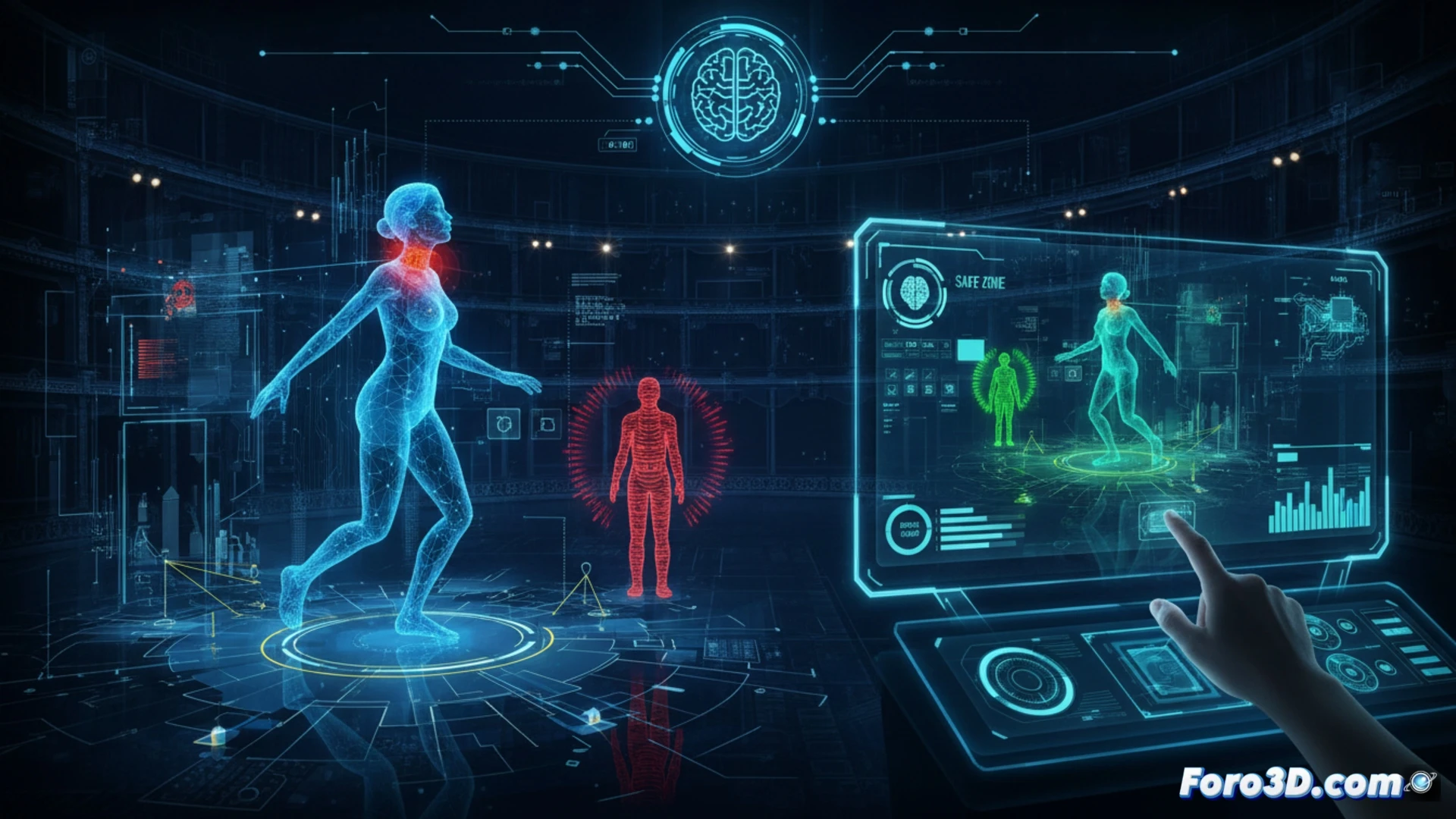
Scenario modeling and biomechanical simulation for injury prevention 🎭
Virtual reconstruction of sets allows for analyzing the geometry of the space, the height of staircases, or the location of obstacles to prevent falls. Through biomechanical simulations with personalized avatars, forced postures and muscle strain from repetitive movements can be evaluated, reducing musculoskeletal disorders. Additionally, 3D modeling of acoustics and lighting helps identify areas of excessive reverberation that force vocal strain, allowing set design adjustments before physical construction. Creating digital twins of dressing rooms and rest areas facilitates verification of visual and auditory privacy, a critical factor in preventing situations of harassment or aggression.
Towards a culture of prevention through the digitalization of the work environment 🛡️
Implementing digital twins in audiovisual production not only optimizes resources but transforms safety into a measurable parameter from the pre-production phase. Actresses can rehearse in virtual environments to familiarize themselves with the lighting and space, reducing anxiety associated with aesthetic pressure and night-time schedules. This technology allows prevention teams to audit compliance with anti-harassment protocols, ensuring that every corner of the set meets protection standards for a group that, due to its public exposure, deserves robust verification systems.
Could a digital twin predict and prevent vocal or emotional damage to an actress during a shoot before it occurs, simulating scenes of high risk?
(PS: protecting soldiers is like protecting your Blender file: back it up or cry later)