The biomedical engineer operates at the frontier between technology and health, facing multiple risks in laboratories and hospitals. From exposure to biological agents and ionizing radiation to overexertion from heavy equipment, their safety is a constant challenge. The emergence of 3D visualization tools and digital twins offers a way to mitigate these hazards without sacrificing clinical precision.
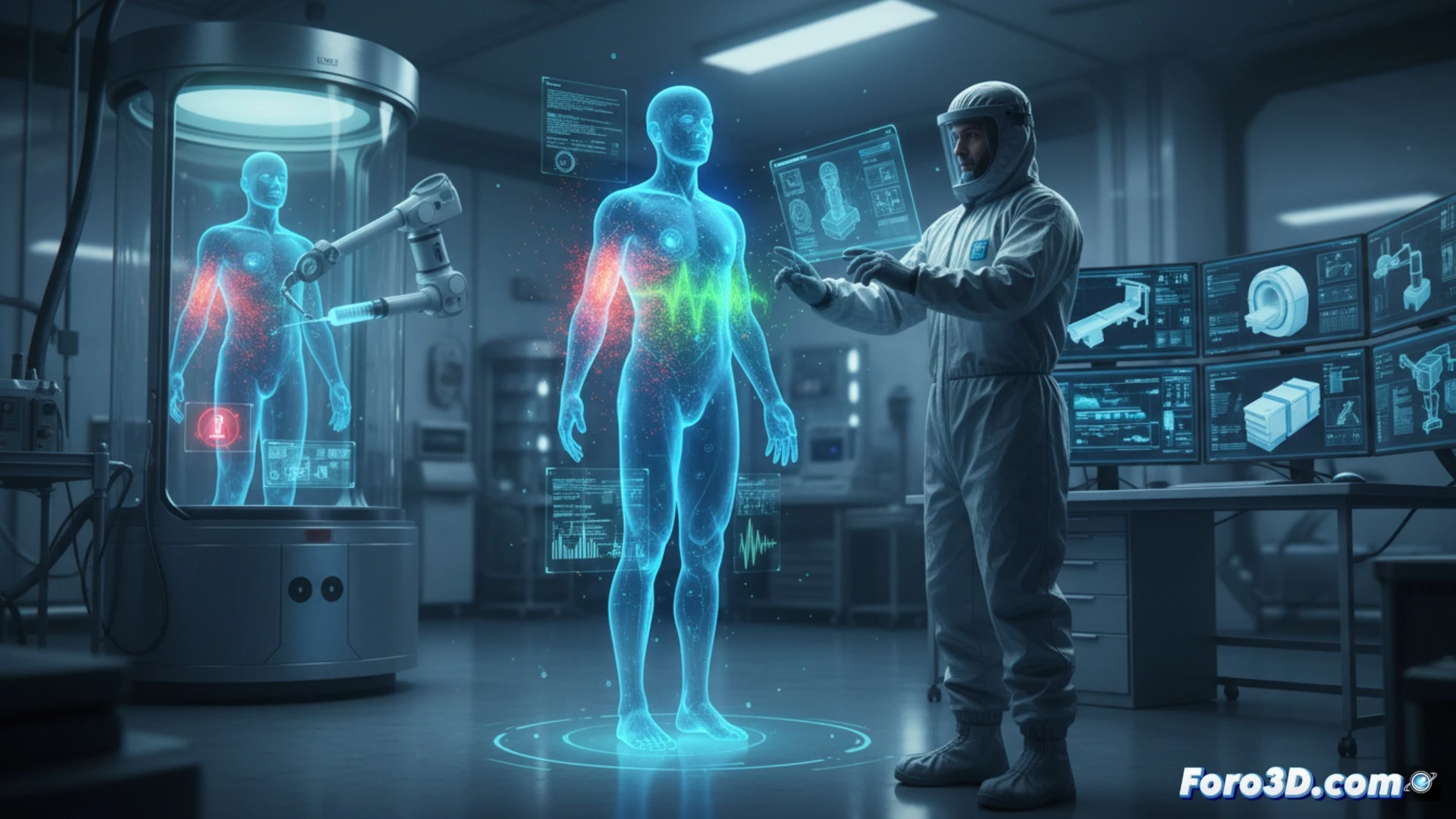
Technical mitigation through 3D models and remote maintenance 🛠️
Handling equipment such as MRI scanners or X-ray machines involves electrical and radiation risks. The implementation of digital twins allows the engineer to perform diagnostics and calibrations from a remote station, reducing the need for physical access to the source. Likewise, 3D printing of anatomical parts for surgical planning eliminates the urgency of direct testing with real devices, minimizing punctures and cuts. Virtual models of CT scans also optimize parameter configuration without exposing the technician to electromagnetic fields.
Responsibility is lightened with predictive simulation 🧠
The stress of responsibility for medical devices and the forced postures when repairing heavy equipment can become chronic. 3D simulation of workflows and augmented reality to guide manual interventions reduce physical and mental strain. By predicting failures in a virtual environment, the biomedical engineer anticipates biological and chemical risks without direct contact, transforming prevention into a digital process that protects both the professional and the patient.
Can a patient's digital twin accurately predict the surgical complications that a biomedical engineer must mitigate in real time during an intervention?
(PS: If you 3D print a heart, make sure it beats... or at least doesn't cause copyright issues.)