The air traffic controller endures extreme mental load where a second of distraction can be fatal. Chronic stress, visual fatigue from radar screens, and sleep disorders due to rotating shifts make this professional a vulnerable group requiring advanced technical protection. 3D technology offers precise solutions to monitor and mitigate these risks.
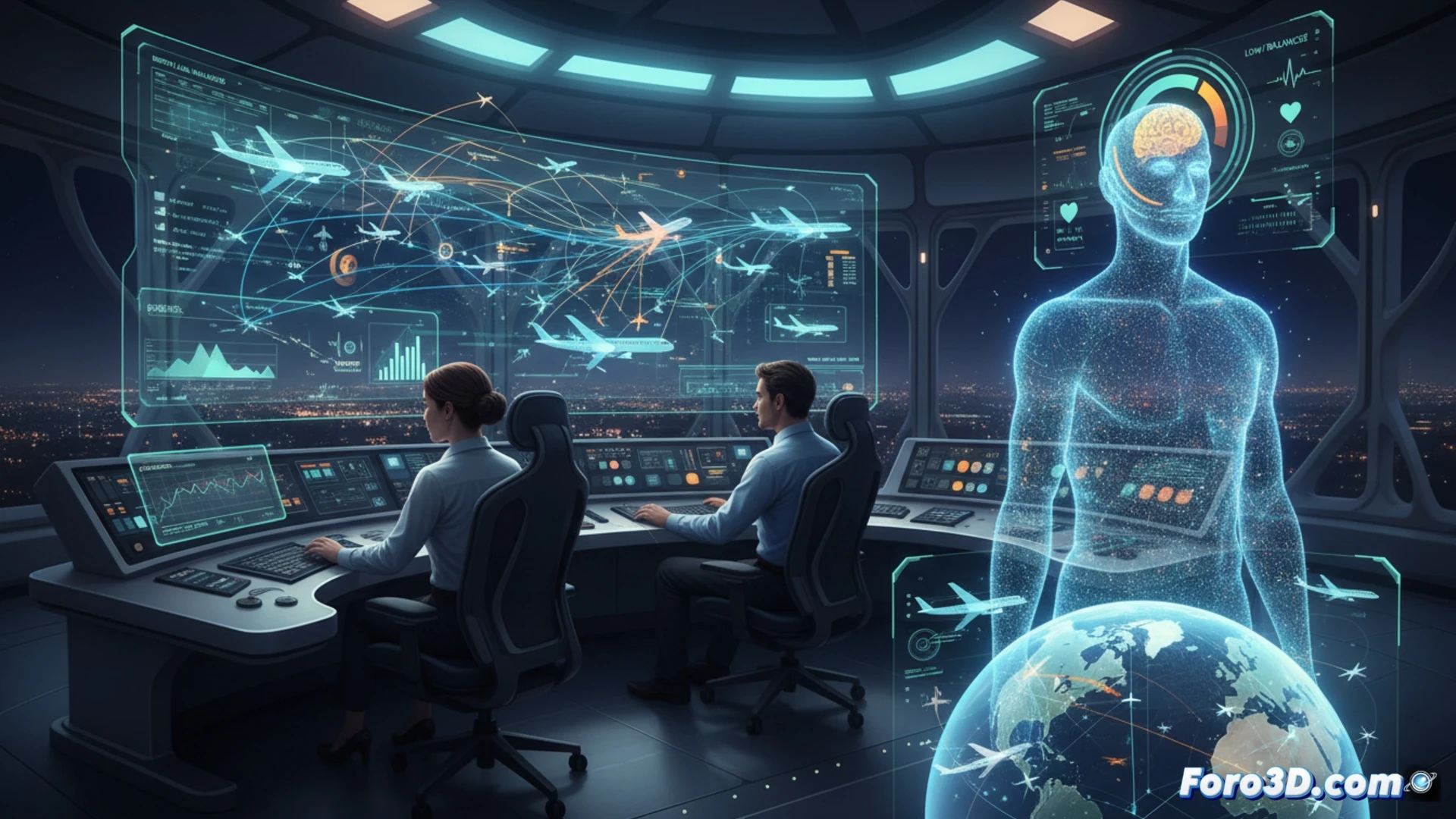
Immersive simulation and digital twins for fatigue monitoring 🧠
Virtual control towers based on digital twins allow replicating high-density traffic scenarios without real risk. These systems integrate biometric sensors that analyze the operator's pupil dilation and heart rate, activating early warnings when stress levels exceed safe thresholds. Furthermore, 3D visualization of visual fatigue through eye-tracking heat maps helps schedule mandatory breaks before performance declines. Virtual reality cabin simulation also trains personnel in crisis management, reducing human error during night shift conditions.
Rethinking shifts with volumetric data ⏰
Labor regulations for rotating shifts gain precision when supported by predictive 3D models. These systems analyze sleep patterns and cognitive load throughout the day, proposing schedules that minimize exposure to stress peaks. By integrating these tools into safety protocols, not only the controller's health is protected but also the integrity of thousands of passengers, demonstrating that 3D technology is an indispensable pillar for vulnerable groups.
How would you design a visual alert system that activates for protected profiles? 🛡️