Interface design has established itself as a profession with high cognitive and visual demands. However, prolonged screen exposure, the required millimeter precision, and tight deadlines make UI designers a group vulnerable to musculoskeletal disorders, chronic eye strain, and stress from mental overexertion. We analyze how 3D simulation and digital twins can redefine risk prevention for this professional profile.
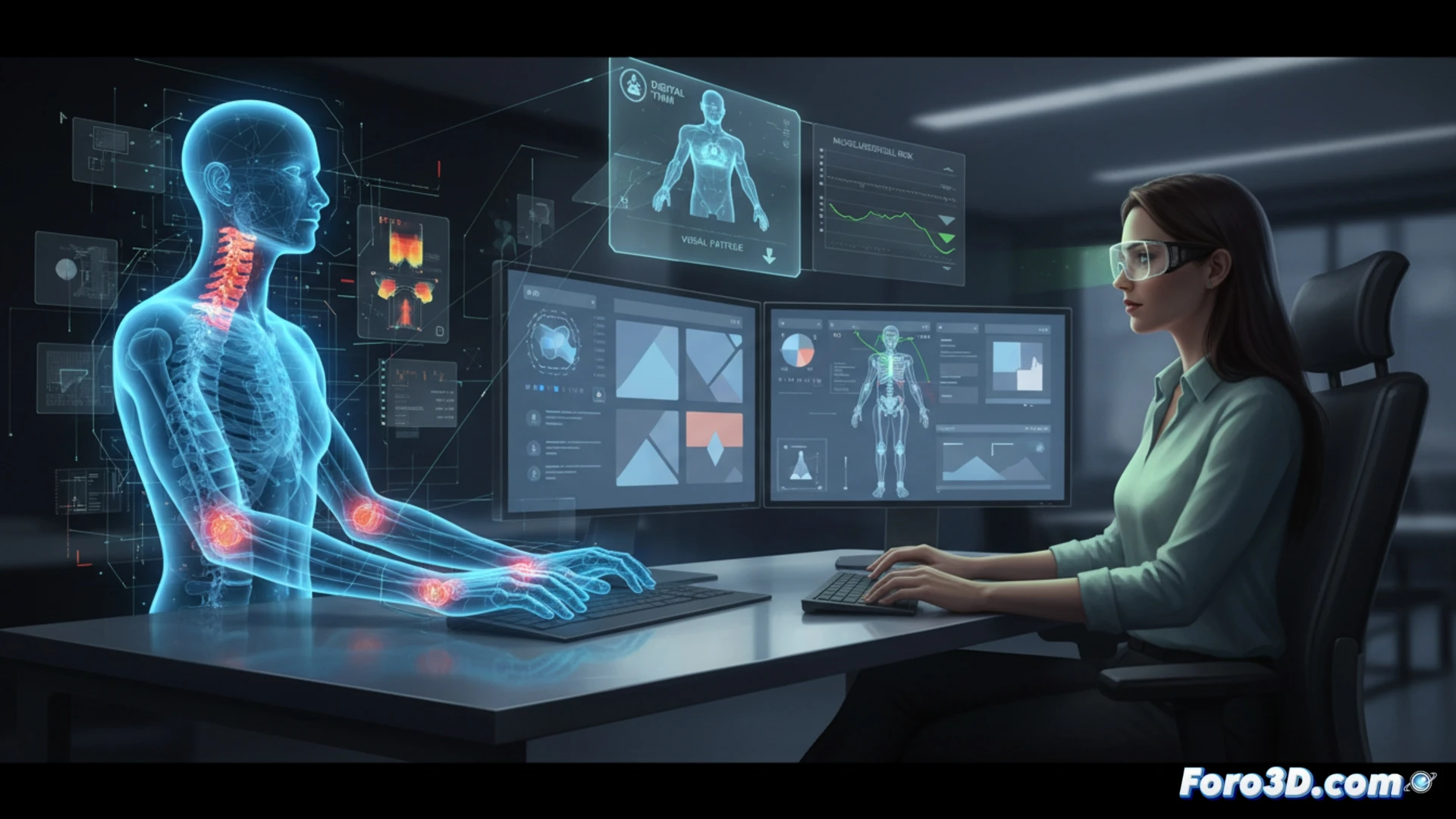
Ergonomic simulation and AI alert systems 🖥️
The implementation of digital twins of the workstation allows for 3D modeling of every element in the designer's environment, from the monitor tilt to the armrest height. These models, powered by IoT sensors and AI algorithms, detect forced postures and repetitive movements in real time, issuing early alerts to correct ergonomics. Predictive simulation also evaluates screen lighting and contrast, reducing eye strain before it becomes chronic damage. This technology allows adjusting the workspace to occupational risk prevention regulations without interrupting the creative flow.
Towards a protection standard for digital talent 🛡️
Anxiety over project delivery and stress from visual precision should not be normalized as part of the profession. By integrating digital twins and 3D simulations, companies can design work environments that prioritize the UI designer's health. This approach not only complies with regulations for protecting vulnerable groups but also improves productivity by reducing absenteeism due to injuries. The future of interface design depends on caring for those who create them.
How can a designer's digital twin, powered by biometric data and real-time 3D simulation, predict thresholds of visual and cognitive fatigue to dynamically restructure the interface before wear and tear affects the usability of a system aimed at vulnerable groups?
(PS: protecting soldiers is like protecting your Blender file: back it up or cry later)