Occupational therapists face a paradox: their work protects vulnerable groups, but their own health suffers from overexertion when mobilizing patients, forced postures, and exposure to biological risks. 3D technology offers concrete solutions. Through virtual reality simulations and digital twins, it is possible to train correct biomechanics and anticipate aggressive behaviors without putting the professional at risk. This article analyzes how three-dimensional modeling and verification systems can transform occupational risk prevention in this critical profession.
3D Simulation for Ergonomics and Behavioral Management 🧑⚕️
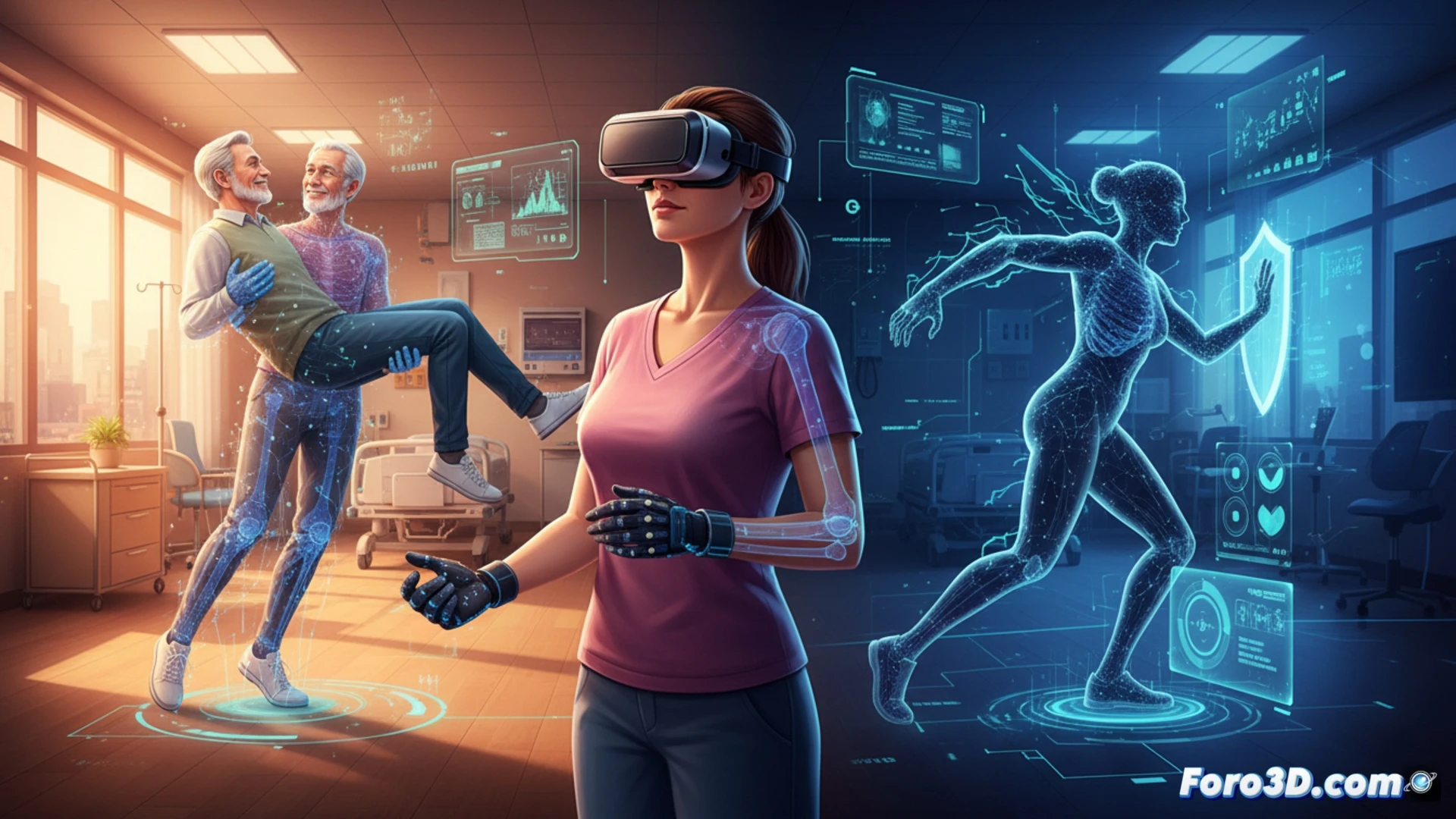
The main risk is work-related musculoskeletal injury from repetitive patient mobilization. A digital twin of the patient, scanned in 3D with anthropometric data, allows the therapist to practice transfers and turns in a virtual environment before executing them in reality. This reduces physical strain and allows for the identification of forced postures through real-time joint angle analysis. Additionally, virtual reality can recreate scenarios of behavioral agitation, training the professional in de-escalation techniques without real exposure to the risk of aggression. 3D modeling of biosafety protocols, visualized as superimposed layers in the workspace, facilitates regulatory compliance and infection prevention.
Towards a Preventive Culture with Digital Verification 🛡️
3D technology not only mitigates physical risks but also reinforces the protection of the therapist as part of the vulnerable group they serve. By integrating alert systems based on sensors and predictive models, postural fatigue and accumulated stress can be monitored. Digital verification of mobilization protocols, recorded in a digital twin of the work environment, provides traceability for safety audits. Investing in these tools is not a luxury, but an ethical necessity to sustain those who care for others.
Can a digital twin anticipate and redesign the movements of the occupational therapist to eliminate the risk of injury without compromising the quality of rehabilitation for the vulnerable patient?
(PS: at Foro3D we protect vulnerable groups... and unsaved files)