Military personnel face a unique combination of occupational hazards, ranging from direct exposure to enemy fire to the psychological toll of post-traumatic stress. Unlike other sectors, protecting this vulnerable group requires solutions that anticipate extreme scenarios without exposing the soldier to real danger. 3D technology emerges as a fundamental pillar to transform operational safety.
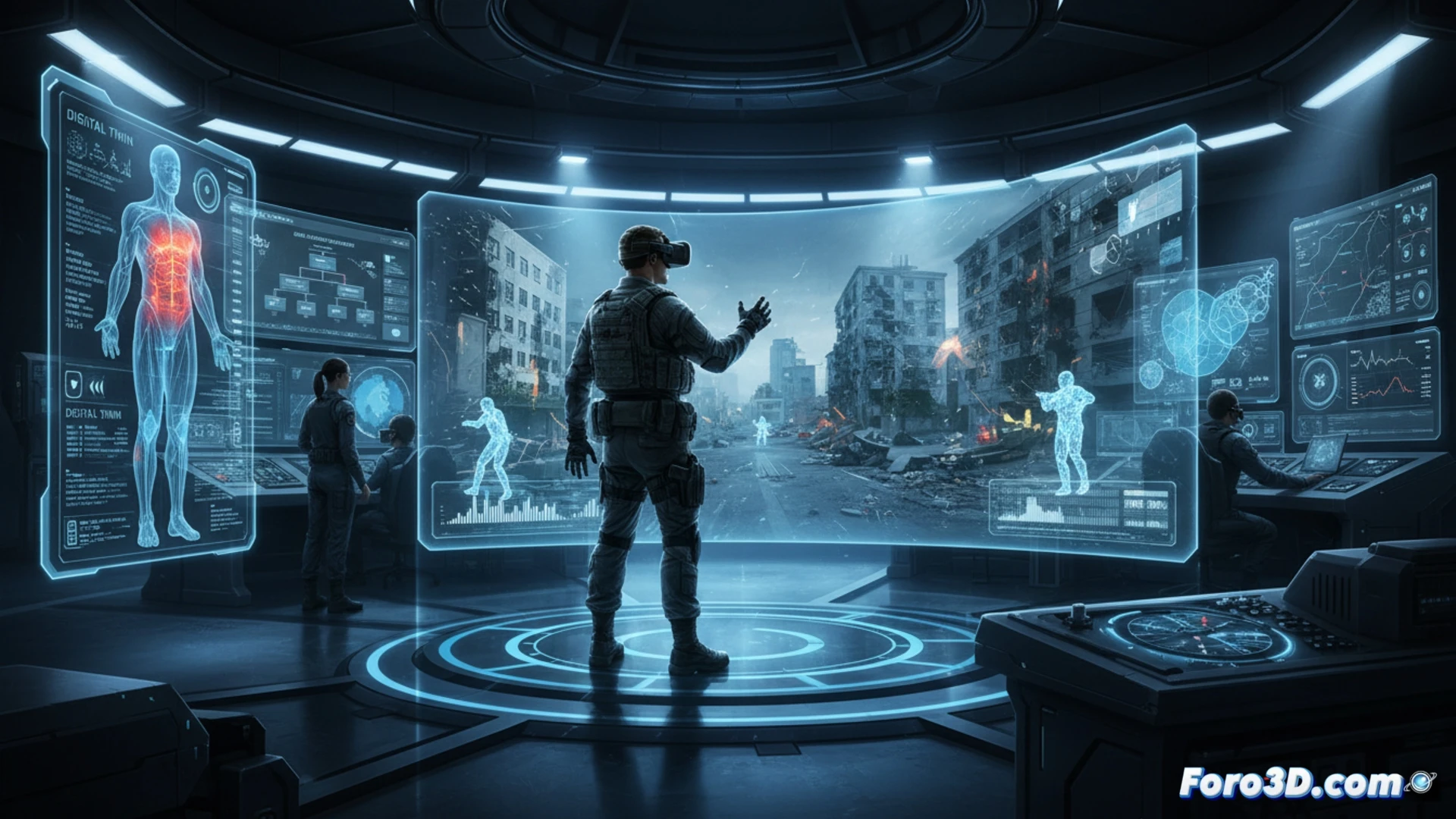
3D Simulation and Digital Twins: The Predictive Safety Layer 🛡️
The implementation of digital twins of military vehicles and explosive devices allows maintenance and ordnance disposal teams to train with exact virtual replicas, eliminating the risk of accidental detonations during instruction. Immersive virtual reality systems recreate combat environments with shrapnel and controlled explosions, preparing the soldier for response under fire without sustaining real injuries. Furthermore, simulating maneuvers in adverse terrain reduces falls and physical overexertion, as personnel can practice movement and rescue techniques in a digital environment before executing them on the ground.
Towards a Well-being Protocol Based on Volumetric Data 📊
Monitoring through sensors integrated into helmets and uniforms, combined with real-time 3D visualization, allows for the detection of fatigue levels and exposure to intense noise that exceed safe thresholds. This early warning system, based on three-dimensional models of the body and the environment, facilitates regulatory compliance for rest periods and rotations. By integrating spatial verification into every maneuver, the soldier's physical and mental integrity is protected, validating that 3D technology not only trains but saves lives.
How can digital twins and virtual reality simulate combat scenarios and hostile environments to train military personnel in identifying and mitigating specific risks that affect vulnerable groups, such as soldiers with physical disabilities or post-traumatic stress disorders, without exposing them to real dangers?
(PS: the 28 affected military personnel are like 28 polygons with inverted normals: they shouldn't be like that)