Speech therapy, an essential discipline for human communication, exposes its professionals to a constellation of occupational hazards ranging from forced neck and back postures to chronic vocal fatigue, stress, and exposure to biological agents. This analysis explores how 3D simulation technologies, digital twins, and virtual reality can redefine risk prevention for this group, protecting their health and extending their professional careers.
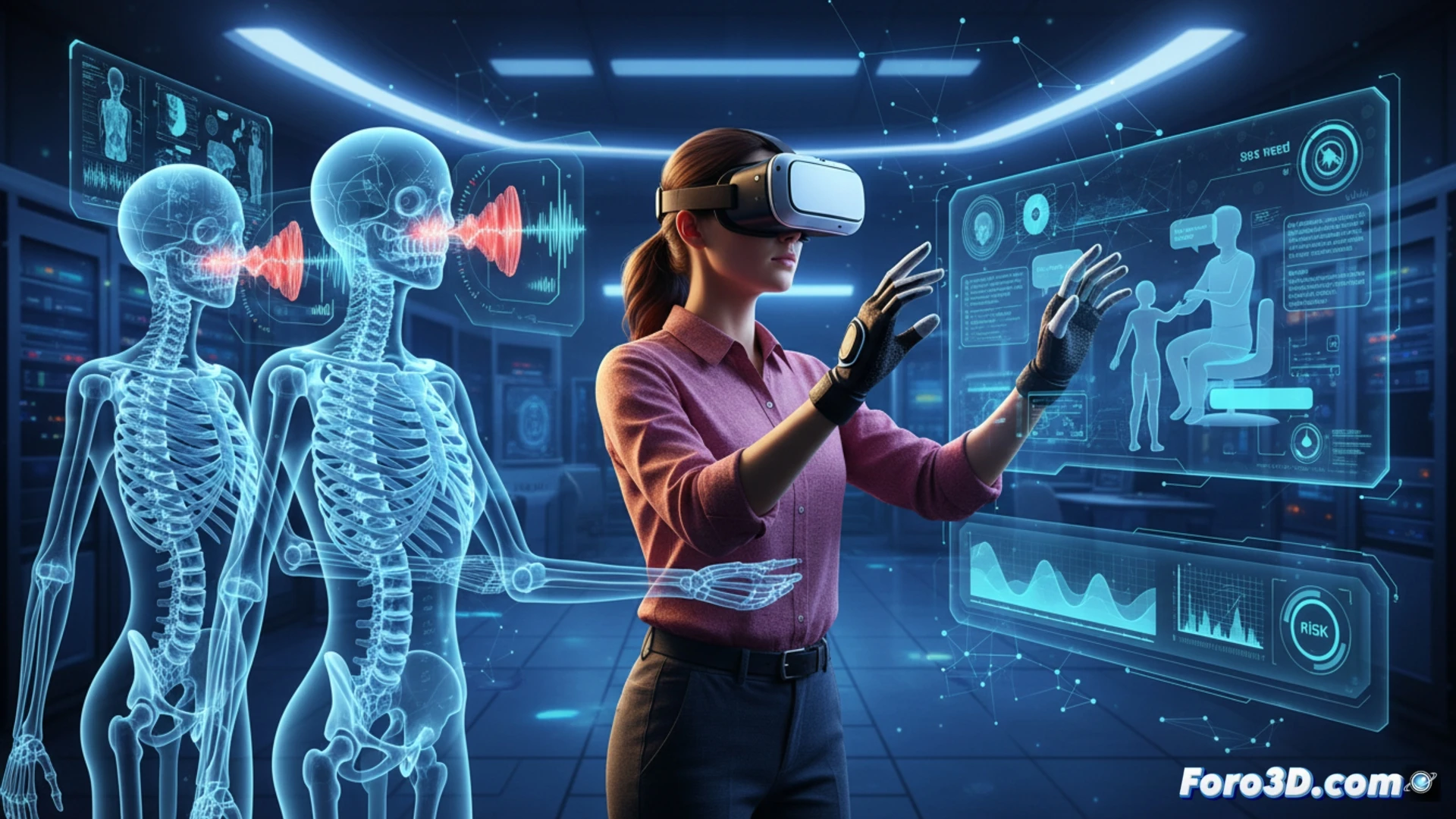
3D Simulation and Ergonomic Modeling for Musculoskeletal Prevention 🦴
The adoption of 3D biomechanical models allows for a detailed analysis of the forced postures a speech therapist adopts during a typical session. Through motion capture and simulation software, it is possible to identify critical joint angles in the neck and back that generate overload. The result is a digital twin of the professional that, by integrating data from wearable sensors, can predict the risk of injury before pain manifests. This approach allows for redesigning furniture and intervention techniques, establishing real-time ergonomic compliance alerts.
Beyond the Muscle: Vocal Fatigue and Stress as Invisible Threats 🎤
The voice is the speech therapist's main tool, but also their most fragile point. A digital twin that monitors fundamental frequency, sound pressure, and vocal cord vibration patterns can detect early signs of dysphonia. Combined with virtual reality simulations for training in vocal projection techniques and stress management, this system not only prevents injuries but also provides the professional with a safe scenario for practice. Protecting this vulnerable group requires technical solutions that integrate the human factor with data precision.
How can digital twins and virtual reality anticipate and mitigate the specific ergonomic and psychosocial risks of speech therapists during their rehabilitation sessions?
(PS: the 28 affected military personnel are like 28 polygons with inverted normals: they shouldn't be like this)