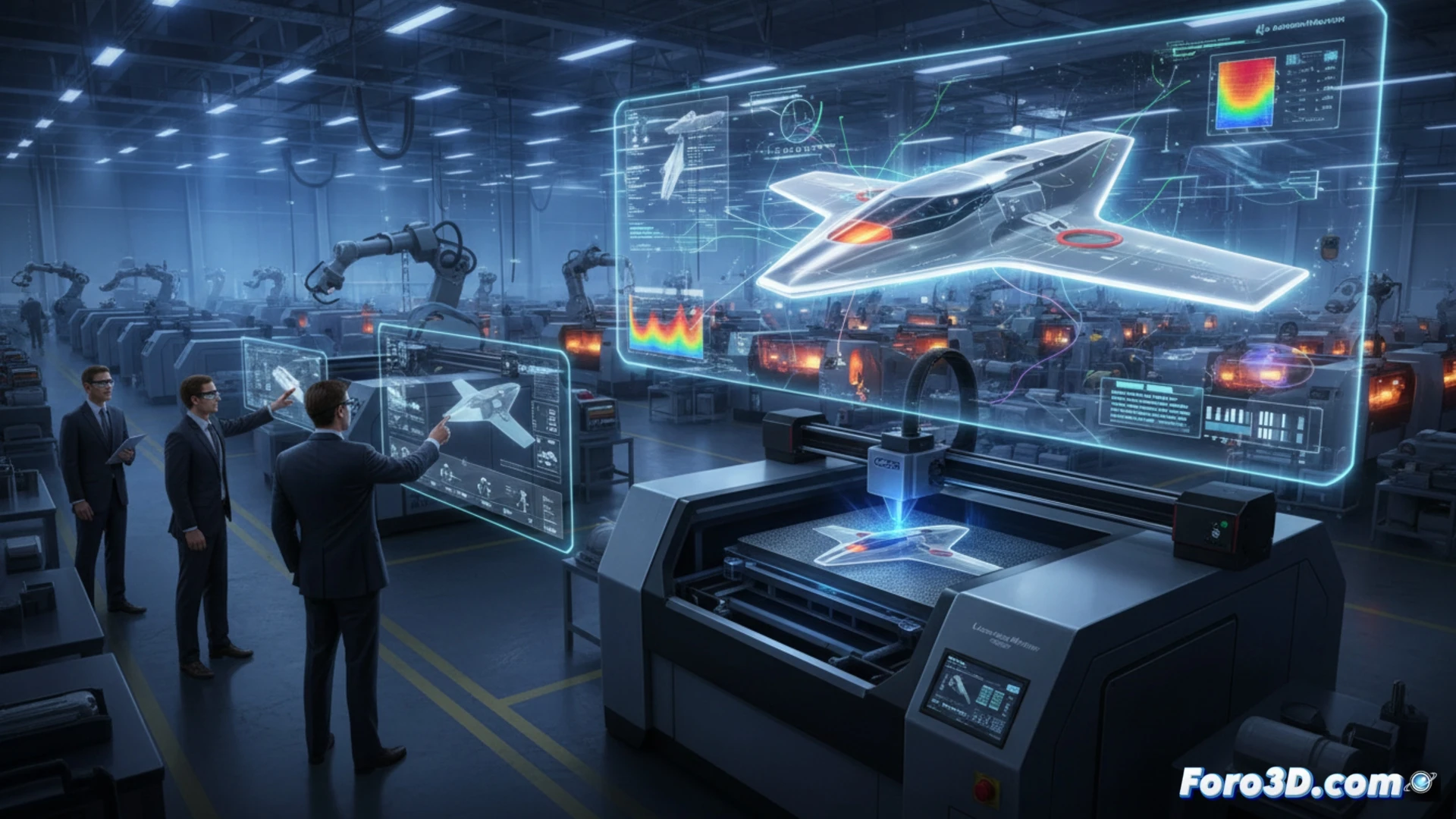
Lockheed Martin has opened a 1,500 square meter facility in Texas dedicated to laser powder bed fusion additive manufacturing. This center not only produces thermal management components for hypersonic systems and next-generation aircraft, but also integrates digital twins to simulate the behavior of each part before manufacturing. The virtual replica mimics thermal and mechanical conditions, eliminating costly physical iterations and shortening design-to-flight timelines. 🚀
Digital workflow integration 🔧
Lockheed Martin's strategy relies on a collaborative ecosystem with Sintavia, EOS, Nikon SLM Solutions, and nTop. nTop provides generative design software that feeds the digital twin with geometries optimized for heat transfer and structural strength. Sintavia and EOS contribute process standards and large-format machines, while Nikon SLM Solutions ensures laser repeatability. The entire cycle, from virtual simulation to final inspection, is digitally synchronized, enabling real-time deviation detection and ensuring each component meets reliability requirements without the need for additional physical prototypes.
Reliability without compromising speed ⚡
The combination of digital twins and additive manufacturing solves the traditional supply chain bottleneck. By virtually simulating the behavior of thermal management parts, Lockheed Martin avoids long casting and forging lead times and mitigates critical material shortages. This methodology allows for producing small batches with surgical precision, accelerating the operational readiness of hypersonic and electric propulsion platforms without sacrificing structural integrity. The result is a more agile development cycle and greater confidence in the final system performance.
How the integration of digital twins in Lockheed Martin's new additive manufacturing facility optimizes quality control and repeatability in the production of critical aerospace components
(PS: don't forget to update the digital twin, or your real twin will complain)