The opening of the Wyndham Portocolom in Mallorca, following a thorough renovation, represents a perfect case study for analyzing BIM workflows and 3D visualization applied to the hotel sector. The complex, located 150 meters from Cala Marçal beach, has transformed its accommodation model towards flexible residential units with studios and apartments. This typological change required precise digital planning to optimize limited spaces and ensure the integration of common areas.
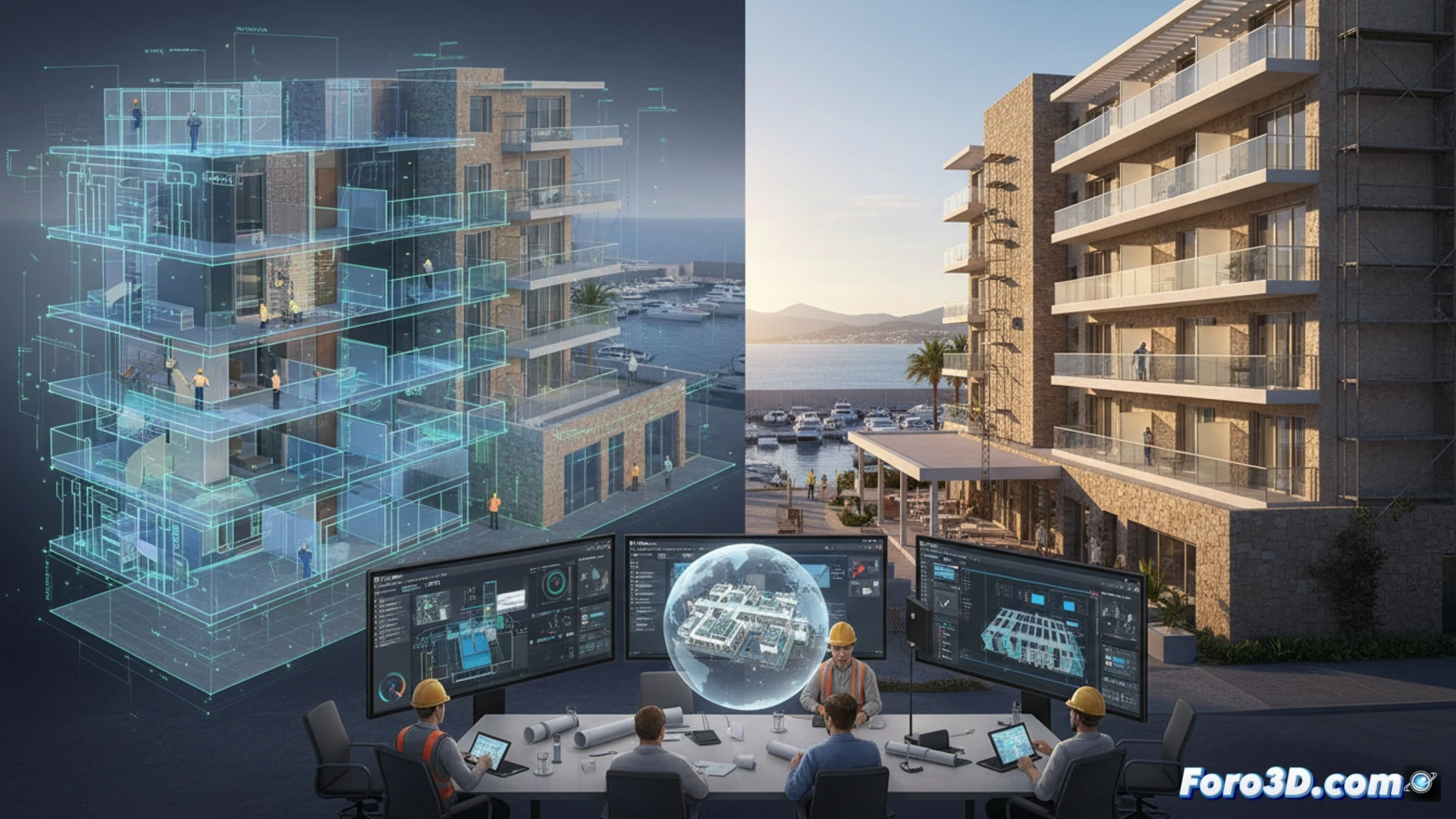
Parametric modeling and visualization of hotel facilities 🏗️
The resort renovation involved detailed BIM modeling of 150 accommodation units, each with a private balcony, living area, and open-plan kitchen. The generation of digital twins allowed architects to validate furniture layout and circulation flows in such tight spaces. For common facilities, such as the pool, sports court, and cinema, photorealistic renderings were used to simulate Mediterranean lighting and visual integration with the port of Cala Marçal. The 3D model also served to coordinate HVAC and plumbing systems, minimizing conflicts during construction.
From blueprint to marketing: the digital twin as a commercial tool 🎯
Beyond construction, the BIM model of the Wyndham Portocolom was reused as a marketing asset. Interactive virtual tours, generated from the digital twin, allow future guests to tour the apartments and coworking areas before booking. This strategy not only accelerates customer decision-making but also demonstrates how 3D technology closes the loop between architectural planning and hotel marketing, positioning IDILIQ Hotels & Resorts at the forefront of tourism digitalization.
How were digital twins integrated with the BIM methodology to optimize coordination between design and construction teams during the renovation of the Wyndham Portocolom, and what specific challenges arose when applying these technologies to a hotel rehabilitation project rather than new construction?
(PS: BIM is like having a building in Excel, but with nice windows.)