The profession of a diving instructor involves constant exposure to lethal dangers: decompression sickness, drowning, hypothermia, and encounters with aggressive marine life. Analyzing these risks from a catastrophe niche allows for the application of advanced 3D simulations to anticipate failures in pressure equipment and underwater currents. This article explores how to model dangerous dive profiles and recreate rescues on vessels, turning prevention into immersive and quantifiable training.
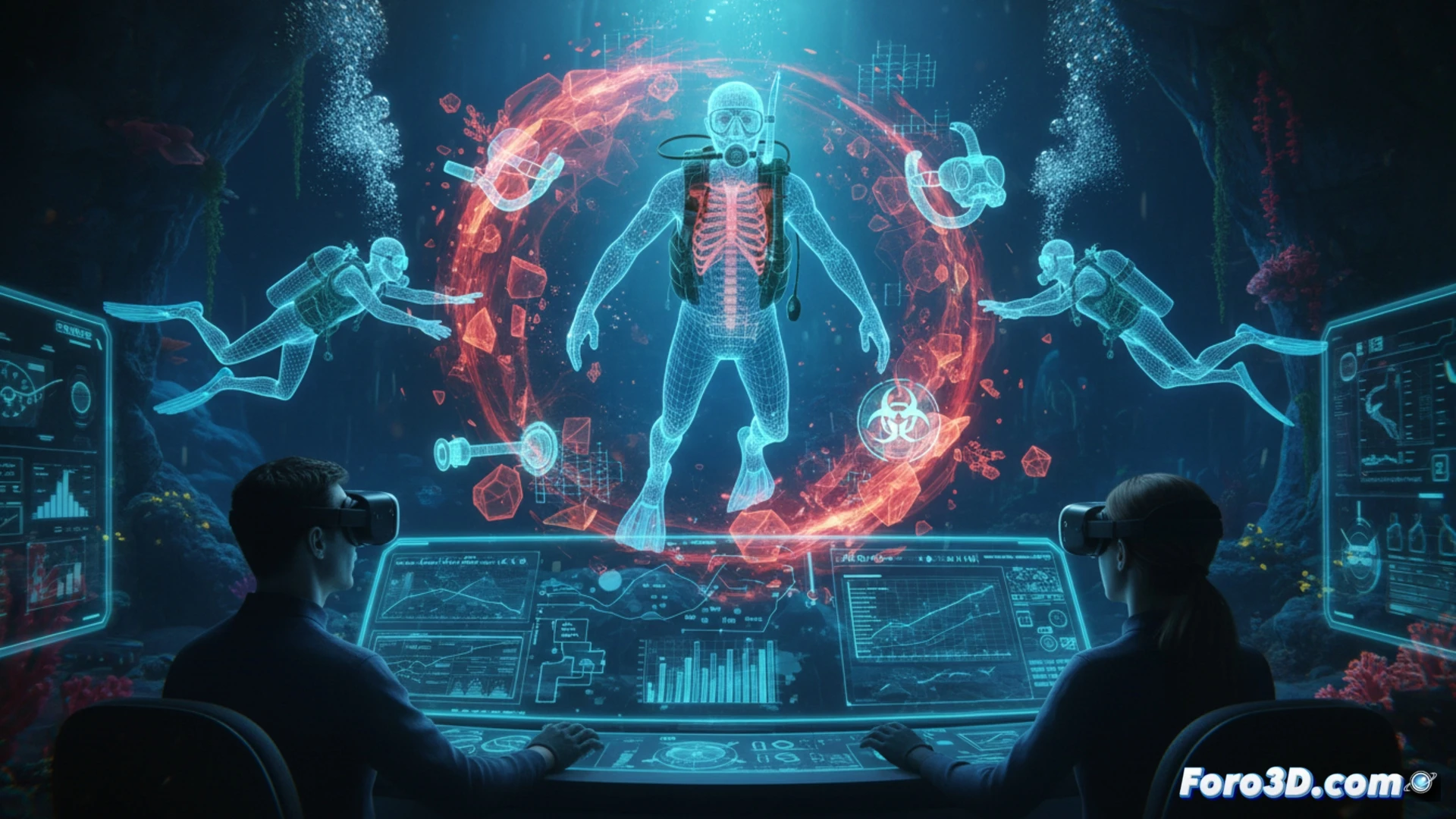
3D Modeling of Decompression Profiles and Barotrauma 🤿
To simulate decompression sickness, it is necessary to build digital twins of diving equipment: tanks, regulators, and dive computers. Using physics engines, rapid ascents that generate nitrogen bubbles in virtual tissues can be recreated, visualizing damage in real time. Additionally, modeling underwater currents and dangerous fauna (jellyfish, sharks) allows the instructor to practice emergency protocols without real risk. Integrating fatigue and stress sensors into the digital avatar helps measure decision-making under pressure, a critical factor in preventing underwater catastrophes.
Reflection: When Simulation Saves Real Lives 🧠
The line between a preventable accident and an underwater tragedy comes down to preparation. By transferring the occupational risks of a diving instructor to a controlled 3D environment, not only are reflexes for hypothermia or falls on rocks trained, but a safety culture is cultivated where error is allowed. In a profession where every second counts, digital twins become the invisible lifeline that separates simulation from a real catastrophe.
How can underwater digital twins predict and mitigate the risks of decompression sickness in diving instructors before a real dive occurs
(PS: Simulating catastrophes is fun until the computer crashes and you are the catastrophe.)