A silent failure in a hospital's ductwork has put simulation engineers on alert. The UV-C disinfection system, designed to eradicate pathogens, left intact zones where bacteria survived. The key to the discovery was not a physical inspection, but a digital twin created with Revit and simulated in Star-CCM+, which exposed how geometric shadows invalidate complete irradiation.
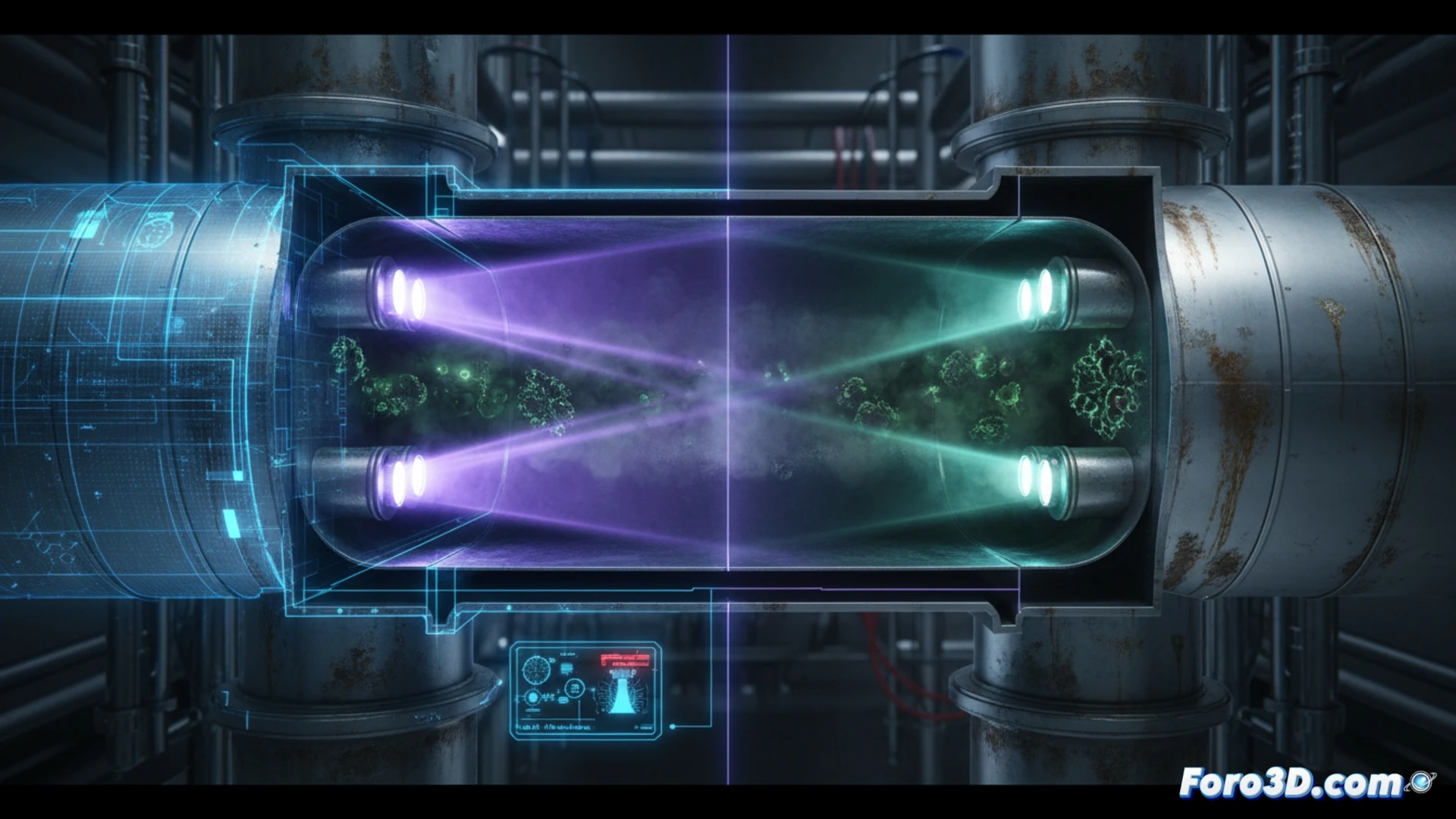
Radiation simulation methodology and blind spot detection 🔬
The digital twin integrated the exact duct geometry from Revit, modeling every curve, joint, and internal obstruction. In Star-CCM+, a UV-C radiation solver with ray tracing was implemented to calculate photon fluence on each surface. The results showed persistent shadow regions where the UV-C dose fell below the lethal threshold for bacteria such as Pseudomonas aeruginosa. These blind spots, invisible in 2D plans, were identified as bacterial survival niches, explaining the real system's failure. The simulation allowed quantifying the non-irradiated area and proposing strategic relocations of the lamps.
Prevention of nosocomial infections through predictive simulation 🏥
This case demonstrates that UV-C disinfection is not infallible if the duct design is not virtually validated. The digital twin not only saved costs on physical testing but also avoided a real risk of nosocomial infection. Without this virtual replica, the hospital would have trusted a seemingly functional system with dead zones. The lesson is clear: to ensure patient safety, simulation must precede installation, revealing shadows that intuition cannot foresee.
How can digital twins expose shadow zones in UV-C radiation within hospital ducts to prevent lethal disinfection failures?
(PS: My digital twin is right now in a meeting, while I am here modeling. So technically, I am in two places at once.)