The energy engineer faces a safety paradox: they must manage the integrity of industrial plants while exposing their own integrity to electrical, chemical, and height risks during site visits. Added to this is the stress of tight deadlines, eye strain from office work, and the dangers of commuting. Digital twin technology offers a way to mitigate these hazards, creating a virtual environment that replicates every variable of the plant to anticipate incidents.
IoT sensors and 3D modeling for real-time monitoring ⚙️
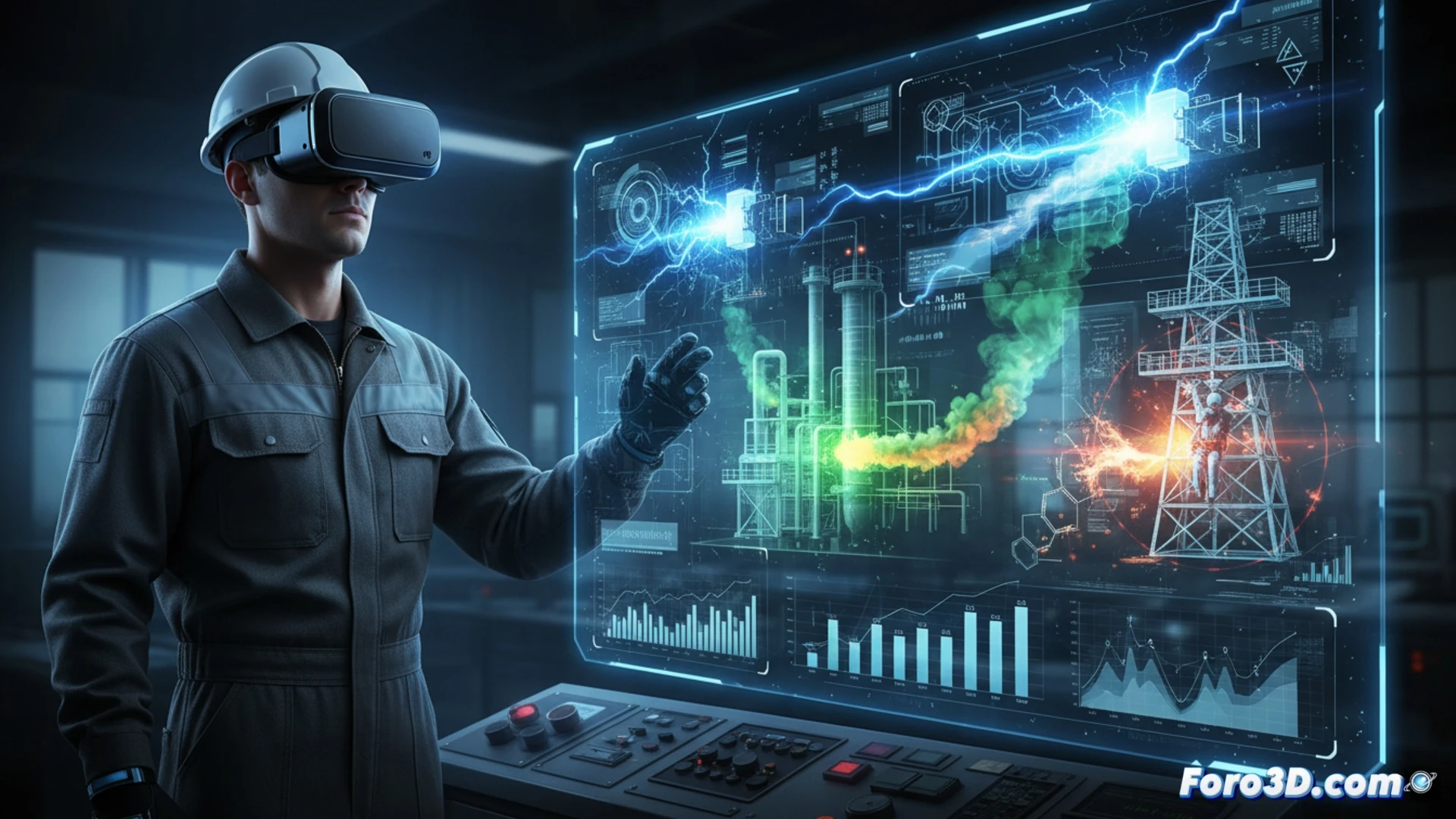
To build the digital twin, a network of IoT sensors is deployed in the physical plant, capturing data on temperature, voltage, gas concentration, and structural vibrations. This data feeds a high-fidelity 3D model that reflects the current state of the facility. The system allows simulating risk scenarios, such as a chemical leak or an electrical overload, and evaluating their impact on the engineer's evacuation routes. Additionally, luminosity and posture sensors are integrated into the virtual office to quantify eye strain and sedentary behavior, offering alerts when ergonomic safety thresholds are exceeded.
Active prevention beyond simulation 🛡️
The real value of the digital twin lies in its ability to train personnel in an immersive, risk-free environment. The engineer can practice emergency procedures, optimize their travel routes within the plant, and receive feedback on their posture in the virtual office before a real accident occurs. By cross-referencing structural stress data with project deadlines, the system also identifies high-pressure moments where human error is more likely, enabling proactive workload management.
How can a digital twin anticipate and mitigate the specific occupational risks of the energy engineer, such as exposure to arc flashes or explosive atmospheres, without generating a false sense of security in the actual operator?
(PS: don't forget to update the digital twin, or your real twin will complain)