Event organization is a profession that combines psychological pressure and physical wear and tear. Professionals in the sector face high stress from managing multiple suppliers, tight deadlines, and unforeseen contingencies, in addition to long hours in front of screens that cause eye strain and a sedentary lifestyle. Added to this are trips to venues, where the risk of falls or being run over is constant, and overexertion during the assembly of structures. Given this scenario, 3D technology emerges as a key tool to mitigate these dangers.
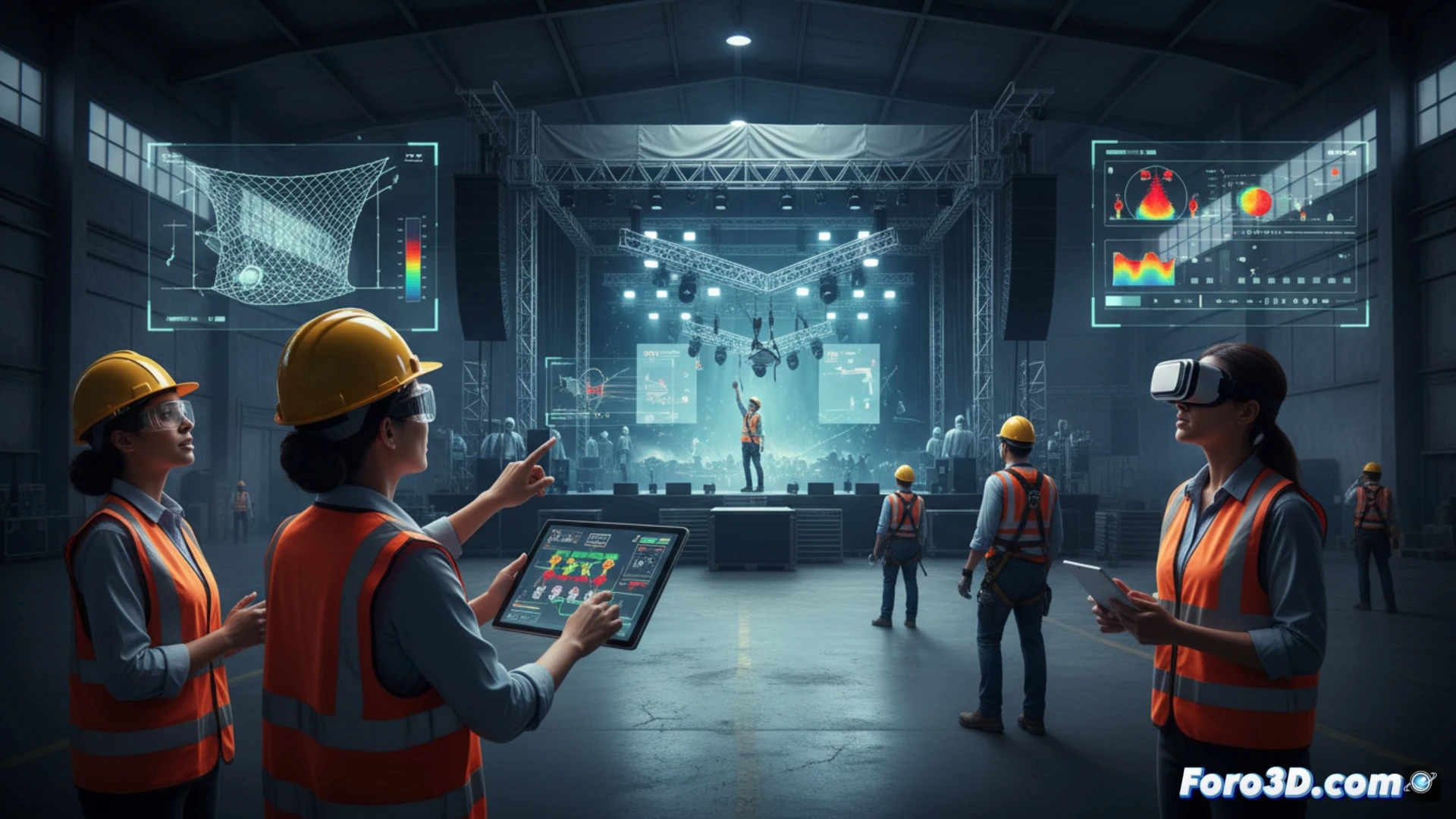
Assembly simulation and prevention of overexertion 🏗️
The implementation of digital twins of the stage allows planning each phase of the assembly before setting foot on the site. Using a precise 3D model, the organizer can identify critical points where forced postures or heavy lifting are required. This facilitates redesigning logistics to minimize physical effort, scheduling the use of auxiliary machinery, or redistributing the weight of scenic elements. Additionally, workflow simulation helps optimize technician schedules, reducing long working hours by anticipating bottlenecks and assigning realistic times to each task.
Route visualization and reduction of tactical stress 🧠
The prevention of falls and being run over during travel to the event directly benefits from the prior visualization of loading and assembly routes. By virtually touring the venue, the organizer can identify dangerous areas, such as unmarked steps or narrow corridors, and implement corrective measures before the event day. This detailed planning also reduces uncertainty and last-minute contingencies, lowering the high stress generated by managing unforeseen events. Ultimately, 3D not only improves physical safety but also protects the professional's mental health.
As a 3D set designer, what type of unforeseen variables in a live event do you think are the most difficult to model and simulate in a digital twin to anticipate real risks?
(PS: modeling an audience in 3D is easier than the real one: they don't complain, they don't record with their phones, and they always applaud)